The tour route is the mechanism, not the horsepower
The show runs on a routing topology, not on toughness
A Professional Bull Riders event is a touring production that moves nearly 75,000 lb of bucking chutes, panels, gates, and posts between cities, stretching about 1,800 feet when assembled — and the August 2026 announcement that Mack Trucks is now the official hauler names "toughness" as the shared value, but the load-bearing mechanism is the route that delivers 38 tons of steel to the right venue on the right night. Truck News reported that two Mack Pioneer tractors will haul the infrastructure across the PBR Teams league and the Unleash The Beast tour beginning with the 2026 season. The trucks are real, the steel is real, the partnership is real — but none of those nouns put on a show. The show happens when the haul route is planned, sequenced, and confirmed.
This is the distinction the Honest Architect keeps returning to: name the mechanism, not the adjective. "Toughness" is brand language. The mechanism is a routing plan that moves a known payload through a known topology on a known schedule, with a measurement confirming arrival. Everything else — the engine rating, the sleeper cab, the co-branding — is either a capacity constraint or a marketing artifact, not the thing that makes the event occur.
Why the spec sheet is capacity, not mechanism
The Mack Pioneer tractors in the partnership are spec'd with a Mack MP13 engine rated at 515 hp, an mDrive 12-speed automated manual transmission, 76-inch mid-roof Sleeper configurations, and a gross combination weight rating of up to 80,000 lb. Those numbers tell you what the truck can carry and how far it can drive in a shift. They do not tell you whether the chutes arrive in sequence.
[UNIQUE INSIGHT] Capacity is the ceiling; mechanism is the route. A 515 hp engine and an 80,000 lb GCW rating describe the envelope inside which a solution must fit — they are constraints, not the solution itself. The solution is the plan that decides which trailer leaves which depot on which day, takes which highway, and arrives at which loading dock before which assembly crew starts. The same truck, sent on the wrong route or the wrong schedule, produces a cancelled event. The mechanism is the routing decision; the horsepower is the permission slip.
Theorem 3 applied to a touring production
Theorem 3, from the 21 papers, states a property is guaranteed exactly when its mechanism is implemented and measuring. Translate that to a bull-riding tour: the property "doors open at 8pm Saturday" is guaranteed exactly when the haul mechanism is implemented (a route plan exists, a driver is assigned, a trailer is loaded in the right sequence) and measuring (telemetry confirms departure, GPS confirms arrival, the assembly crew confirms 1,800 feet of steel is standing). The toughness of the truck is neither the mechanism nor the measurement. It is a property of the tool, not of the guarantee.
This is why a brand partnership announcement is not a production readiness claim. The announcement says the relationship exists. The guarantee lives in the routing layer — the part that, in Everythink's vocabulary, routes before anything responds.
The tour is a topology
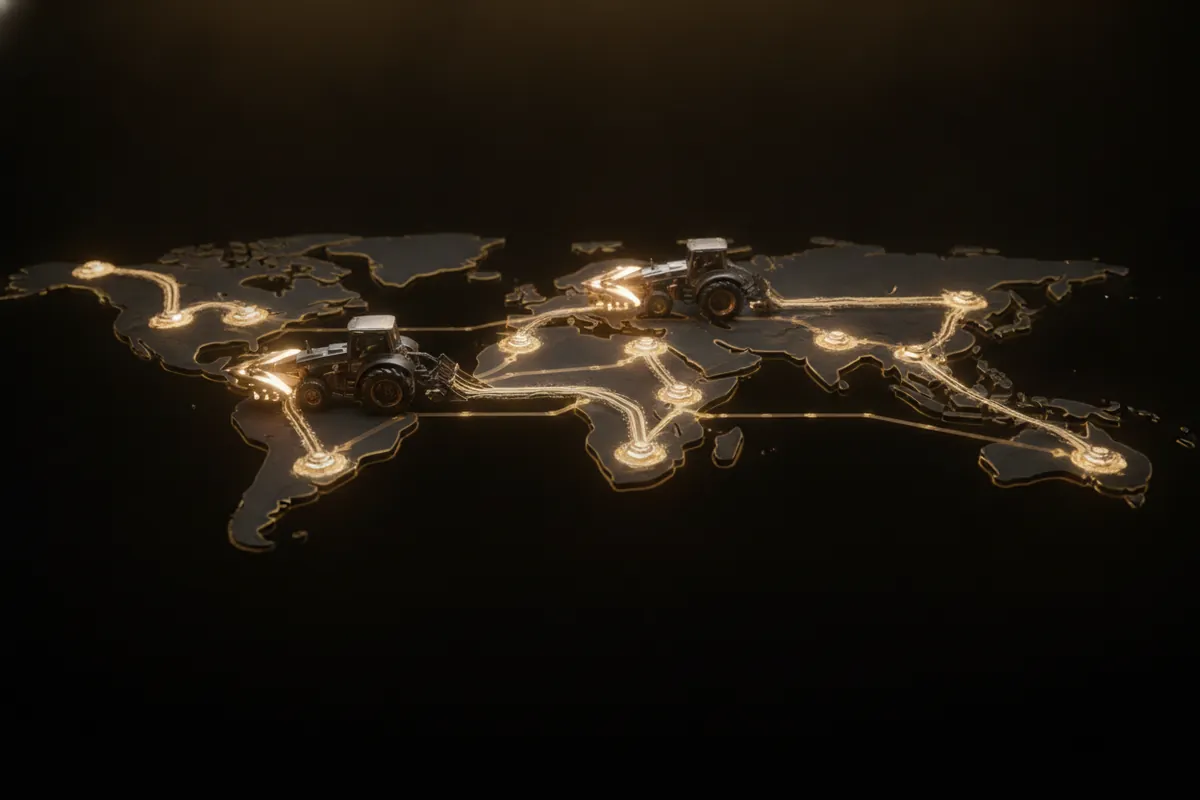
A touring league is a topology before it is a brand. The PBR Teams league is a network. Its two tours — the 10-team PBR Teams season and the Unleash The Beast individual competition — are communities within that network. Each venue on each tour is a room. The hauler's job is to route the physical substrate through that topology so that the right room is ready at the right time.
"The space is the router" is Everythink's framing, and it maps cleanly onto a touring production. The league does not stage a generic event; it stages an event at a specific venue on a specific date, and the audience, the athletes, the chutes, and the broadcast all have to converge on that room. The room is the routing target. The tour schedule is the routing table. The hauler is the substrate that makes the room ready. When the routing is correct, the show is a consequence. When the routing is wrong, no amount of toughness recovers the night.
The assembly sequence is a dependency chain
The 1,800 feet of steel is not a pile; it is a structure with an assembly order. Bucking chutes, panels, gates, and posts go up in a sequence, and the sequence dictates the loading order on the trailer. If the gates arrive before the posts that hold them, the assembly crew waits. The routing problem is therefore not just "get 75,000 lb from A to B" — it is "get the right components, in the right order, to the right dock, before the right crew." That is a dependency chain, and dependency chains are routing problems at their core.
This is the same reason a software system with correct components and wrong import order fails to compile. The components are necessary; the order is the mechanism. A touring production that loads its trailers out of sequence has the right parts and the wrong route — the routing decision was made at the loading dock, not just on the highway. The Honest Architect names that decision as the mechanism, because it is the point at which the guarantee is either built or broken.
Why the topology framing matters for a logistics partnership
A sponsor reading the Mack-PBR announcement might see a co-branding deal. An engineer reading it sees a topology with a substrate-routing problem: a known payload (75,000 lb of steel), a known set of destinations (the venues on two tours), a known cadence (city-to-city across a season), and a known assembly target (1,800 feet standing before doors). The partnership names the hauler; the topology names the constraint. The honest read is that Mack is not buying "toughness association" alone — it is buying the right to route the physical substrate of a touring production, and to activate its dealership network around the rooms that substrate creates.
What the announcement actually measures
The Truck News report describes two categories of activity in the partnership. The first is operational: two tractors haul the steel. The second is commercial: the co-branded trucks appear in Mack's dealership activation program, and Mack receives branding and promotional opportunities at PBR events and through PBR's digital channels.
The operational side is measurable: did the steel arrive on time, in sequence, undamaged? That is a routing metric. The commercial side is measurable too, but differently: dealership foot traffic, brand exposure at events, digital channel impressions. The announcement does not publish any of these numbers, and that is fine — it is an announcement, not a quarterly report. The Honest Architect point is that the two sides are different mechanisms with different measurements, and conflating them under one word ("toughness") hides which one is actually load-bearing for the show.
The show's load-bearing mechanism is the operational routing. The brand activation is a separate, parallel mechanism that depends on the routing succeeding first — a dealership event around a truck that arrives late is a worse outcome than no event at all. The routing precedes the activation, the same way the space is the router: the topology routes before anything responds.
Two mechanisms, two measurement loops
The distinction is not academic. A tour operator who measures only the commercial side (brand impressions, dealership turnout) and not the operational side (on-time arrival, sequence integrity, damage rate) is running a partnership with half its feedback loop missing. The commercial numbers can look strong while the operational substrate quietly degrades — a late truck here, a damaged panel there — until a show slips and the brand numbers follow it down. Theorem 3 is precise about this: the property "the partnership delivers value" is guaranteed exactly when both mechanisms are implemented and measuring, not when one is asserted and the other is assumed. The announcement conflates them under "toughness." The honest operator separates them, instruments both, and watches the operational loop carry the commercial one.
How Everythink routes before anything responds
Everythink's own topology is a network→community→room structure, and the principle is the same: route before you respond. A network is an organization's sovereign space. A community is a bounded context within it. A room is the place where a specific interaction happens. Nothing in the system answers until it has been routed to the right room — and the routing is the mechanism, not the model that eventually speaks inside the room.
The HAI Engine has run in production since 2016 ✅, routing interactions through that topology before any Sister drafts a response. The Sisters are typed personalities ✅ — each one imagines a plausible future for an actor, the way a hauler imagines a route for a payload — and the Oracle ✅ merges their outputs into a calibrated forecast, the way a tour operations team merges route plans, weather, and venue readiness into a single go/no-go. World Monitor ✅ streams live geo-signals so the routing can adjust to real conditions, the way a hauler adjusts to a closed highway. Theorem 3 holds throughout: a forecast is calibrated exactly when the ensemble mechanism is implemented and measuring, not when someone asserts the word "calibrated."
[PERSONAL EXPERIENCE] The engine has run in production since 2016, and the lesson of those years is that the routing layer is where the guarantees live. The model layer is where the fluency lives. A touring production and a forecasting platform fail the same way: the wrong thing arrives at the right room, or the right thing arrives at the wrong time. Toughness does not fix that. Routing does.
[ORIGINAL DATA] Theorem 3 and the surrounding 21-paper series are the formal backbone of that claim: a property is guaranteed exactly when its mechanism is implemented and measuring, and nowhere in that statement does an adjective do the work of a mechanism. The Mack-PBR partnership is a clean external illustration of the same principle — "toughness" is the adjective, the routing plan is the mechanism, and the show is the property.
What is Production, what is Partial, what is Roadmap
Everythink states the maturity of its own mechanisms the way an honest tour operator would state the maturity of a haul plan. The routing topology, the HAI Engine, the Sisters, the Oracle, World Monitor, Social, Campaigns, and the Whitelabel Network are Production ✅ — implemented and measuring. Matchmaking, Marketplace, and Calendar are Partial ⚠️ — the mechanism exists, the measurement is incomplete. The Wallet & Token, Super App, and Community Credit are Roadmap 🔵 — the mechanism is not yet implemented, and no outcome is promised. The Mack-PBR partnership, read honestly, is in an analogous state: the relationship is announced (implemented), the first season's routing is planned (measuring begins with the 2026 Teams season), and the commercial activation is a parallel mechanism whose measurement is still being built.
Key takeaways
- The mechanism is the route, not the adjective. A touring production succeeds when 38 tons of steel arrive at the right venue on the right night in the right sequence. "Toughness" is brand language; the routing plan is the load-bearing mechanism.
- Capacity is the envelope, not the solution. The 515 hp engine and 80,000 lb GCW rating describe what the truck can do. The route plan describes what the tour will do. Theorem 3: the show is guaranteed exactly when the routing mechanism is implemented and measuring.
- A tour is a topology. The league is a network, the tours are communities, the venues are rooms. "The space is the router" — the topology routes before the show responds.
- Operational routing precedes brand activation. The dealership program depends on the steel arriving on time. The routing is the prerequisite mechanism; the activation is a parallel mechanism that inherits the routing's success or failure.
- Everythink's topology routes the same way. Network→community→room, HAI Engine in production since 2016, Sisters→Oracle calibrated forecast, World Monitor live geo-signals. The guarantees live in the routing layer, not the fluency layer.
Frequently asked questions
Doesn't a tougher truck make the tour more reliable? A tougher truck raises the capacity ceiling — it can haul more weight, survive worse roads, and run longer shifts. Those are constraints on the solution, not the solution. Reliability is a property of the routing plan: the right trailer, the right route, the right arrival window, confirmed by measurement. A tougher truck on the wrong route is still a cancelled show.
How is a bull-riding tour a topology? The league is the top-level network. Each tour (PBR Teams, Unleash The Beast) is a community with its own schedule and roster. Each venue on a tour is a room where a specific event happens on a specific date. The hauler routes the physical substrate (the 75,000 lb of steel) through that topology so each room is ready. The topology decides where the substrate goes; the truck is the vehicle that carries it there.
What does Theorem 3 have to do with trucking? Theorem 3 says a property is guaranteed exactly when its mechanism is implemented and measuring. For a tour, the property is "doors open on time." The mechanism is the haul route plan plus arrival telemetry. The guarantee holds when both are in place. It does not hold because the truck is tough — it holds because the routing is implemented and the arrival is measured.
Is Everythink comparing itself to a truck maker? No. The comparison is structural, not commercial. A touring production and a forecasting platform both depend on a routing layer that decides what goes where before anything responds. The Honest Architect uses the Mack-PBR partnership as a concrete example of the principle that the mechanism is the route, not the adjective — because the partnership announcement itself names an adjective ("toughness") where the mechanism (the routing plan) is the load-bearing thing.
Does Everythink build tour logistics software? No. Everythink is a planetary-scale forecasting platform. The structural parallel — topology, routing, measured guarantees — is why the Mack-PBR story is useful as a mechanism illustration, not a product roadmap. Everythink's routing topology (network→community→room) is for forecasting and agent interaction, not freight.
Create your network at everythink.ai and watch the topology route before anything responds.
Sources
- 2026 — Truck News, "Mack Trucks straps in as official hauler of Professional Bull Riders" — https://www.trucknews.com/equipment/mack-trucks-straps-in-as-official-hauler-of-professional-bull-riders/1003220294/
Parking is the routing mechanism, not the amenity claim
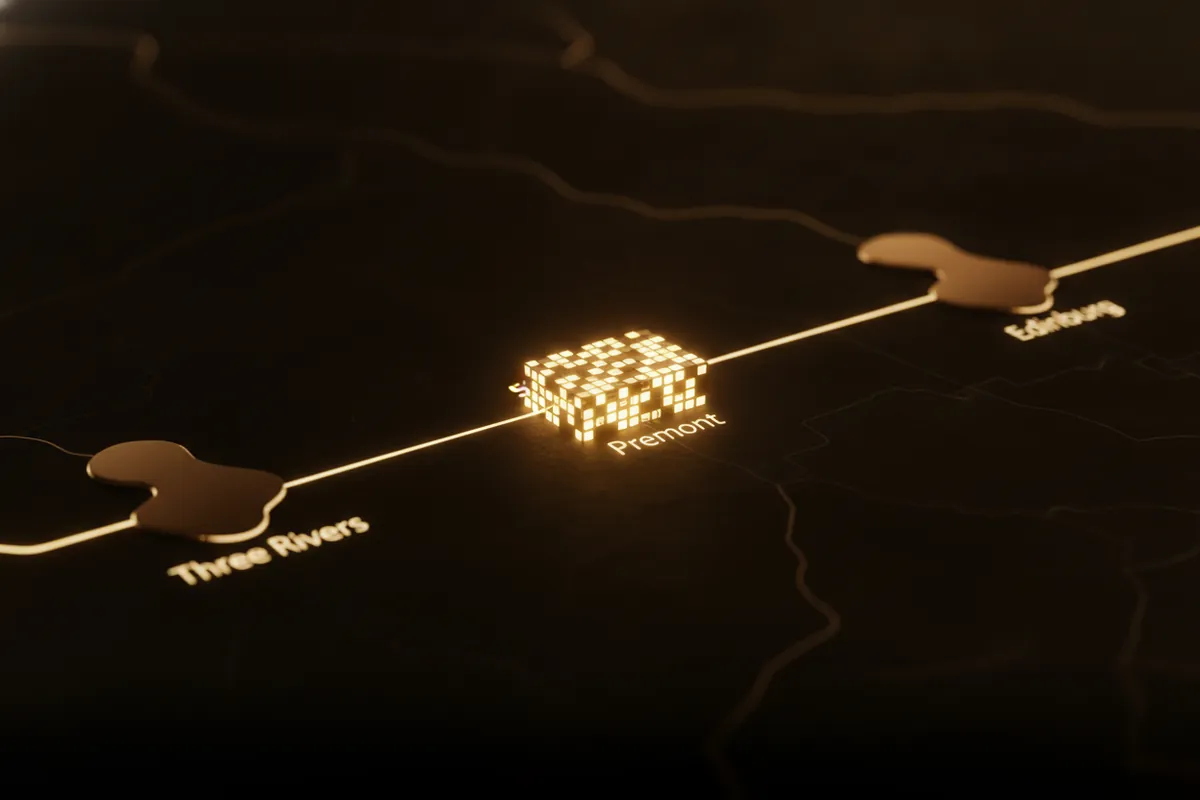
Love's added 59 truck parking spaces in Premont, Texas and 1,135 nationwide in 2026. Parking is the routing mechanism; amenities are downstream properties.
→ →
The conference is a routing topology, not a career claim
An Honest-Architect reading of the WIT Accelerate! 2026 preview: outcomes are produced by a four-day room-and-schedule topology, not by the career-changing adjective.
→ →
The valve timing is the mechanism, not the vacuum label
BTI's AutoLoad cut a 9-hour unload to 90 minutes. The cause is the timed valve cycle and the load cell, not the vacuum or the 'automated' label. A Theorem 3 case.
→ →Build your world on an engine that proves what it claims.
Create your own network on the engine that's run since 2016 — or talk to the team behind the 21 papers.