The reroute is the safety mechanism, not the alliance promise
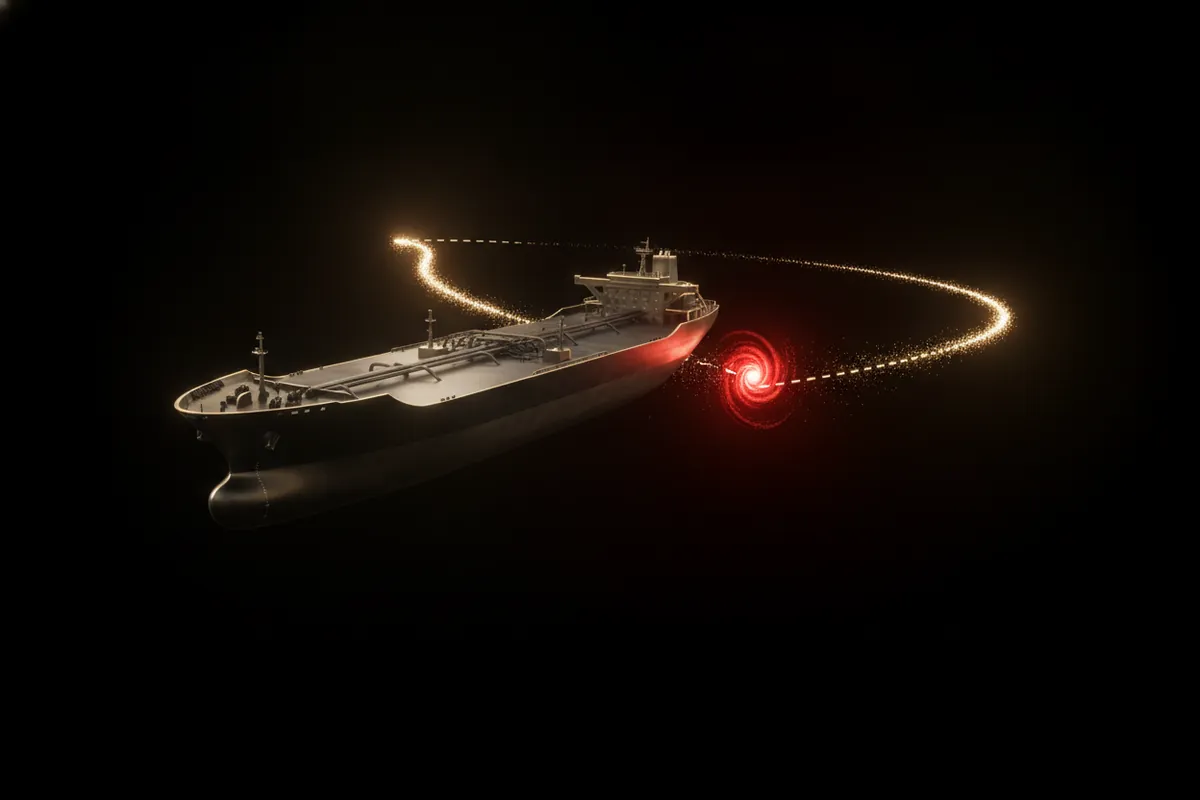
More Than Shipping reports that China's two largest oil shippers, COSCO Shipping Energy Transportation and China Merchants Energy Shipping (CMES), have spent roughly a month avoiding the Strait of Hormuz and the Bab al-Mandeb Strait, loading outside the Persian Gulf at Omani and UAE ports instead (Mike Mansfield, "Chinese Oil Vessels Staying Out of Key Middle East Waterways Amidst Conflict", More Than Shipping, Aug. 2026, retrieved 2026-08-23, https://www.morethanshipping.com/chinese-oil-vessels-staying-out-of-key-middle-east-waterways-amidst-conflict/). Iran publicly hinted a "carve-out" — reduced tolls and guaranteed safety for Chinese and Russian-flagged hulls — yet no such carve-out appears to exist on the water. The Honest Architect's read is direct: safety was guaranteed the moment the vessels turned, not the moment the promise was made. Theorem 3: a property (vessel safety) is guaranteed exactly when its mechanism (avoiding the chokepoint) is implemented and measuring — a hull that transits on a diplomatic hint has no mechanism, only a hope.
Key takeaways
- China averaged nearly five million barrels of Middle Eastern oil per day before the U.S.-Iran conflict, and COSCO plus CMES began avoiding the Strait of Hormuz and the Bab al-Mandeb Strait in mid-to-late July 2026, loading instead near but outside the Gulf of Oman at Omani and UAE-owned ports (More Than Shipping, Aug. 2026).
- Iran hinted a "carve-out" for Chinese and Russian-flagged ships — reduced or eliminated tolls plus a safety guarantee — but no carve-out appears to exist. A U.S.-led blockade covers Hormuz and the Houthis announced a blockade of the Bab al-Mandeb. China faces the same shipping risks as everyone else (More Than Shipping, Aug. 2026).
- Safety was produced by the reroute, not by the promise. Theorem 3: the property (hull safety) is guaranteed exactly when the mechanism (route avoidance) is implemented and measuring. An alliance assertion without a mechanism is a non-mechanism — the property is never guaranteed by it.
- The alternate routes are safer but costlier: the cost to ship Middle Eastern oil to China has increased dramatically, mirroring the re-routed U.S. oil situation that has persisted for months (More Than Shipping, Aug. 2026).
- The Strait of Hormuz and the Bab al-Mandeb are literal routing chokepoints. "The space is the router": the waterway routes the oil before any contract responds, and avoiding the chokepoint is itself the routing decision that produces safety.
The property is safety, and the mechanism is the reroute
The article lays out the geopolitics, and the Honest Architect extracts the mechanism. China is consistently one of the largest global importers of Middle Eastern oil, averaging nearly five million barrels a day through the region before the U.S.-Iran conflict. The Chinese energy supply chain — including military readiness — is highly dependent on that flow. When the security environment changed, COSCO and CMES did not negotiate harder or trust louder; they rerouted. Chinese oil tankers now receive shipments close to, but outside, the Gulf of Oman, using Omani and UAE-owned ports. They started avoiding the chokepoints in mid-to-late July.
That is the load-bearing move, and it deserves a precise name. The property the shippers want is vessel safety — a hull and its crew transiting without being seized, struck, or blocked. The mechanism that produces that property is route avoidance: a hull that does not enter the Strait of Hormuz cannot be interdicted in the Strait of Hormuz. Theorem 3 states the rule cleanly: a property is guaranteed exactly when its mechanism is implemented and measuring. The reroute is implemented (the vessels turned) and measurable (AIS positions show the diversion). The property is guaranteed by the mechanism. Iran's hinted carve-out is an assertion — reduced tolls, a safety guarantee — with no implementation on the water and no measurement confirming it. A hull that transits on the strength of the hint has no mechanism; it has a diplomatic press release. The Honest Architect ships the mechanism, not the press release.
The cost data confirms the mechanism is real rather than rhetorical. Alternate routes are safer but costlier, and the cost to ship Middle Eastern oil to China has increased dramatically. A promise is free; a reroute shows up on the invoice. When you see the cost move, you are seeing the mechanism being paid for.
The alliance promise is a non-mechanism
The Honest Architect treats Iran's hinted carve-out exactly the way Theorem 3 treats any assertion without an implementation. Iran publicly suggested that Chinese and Russian-flagged vessels might transit the Strait of Hormuz under a carve-out that would reduce or eliminate tolls and guarantee vessel safety. The article is blunt: no such carve-out appears to exist. There is a U.S.-led blockade of ships transiting the Strait, and the Yemen-based Houthis announced a blockade of the Bab al-Mandeb. China is facing the same shipping risks as Western and other countries.
Theorem 3 makes the diagnosis exact. The property (vessel safety in the chokepoint) is guaranteed exactly when the mechanism (something that actually prevents interdiction) is implemented and measuring. A carve-out, if it existed, would be a mechanism — a coordination agreement backed by the forces controlling the strait, observable in the toll schedule and the escort pattern. A carve-out that does not exist is a non-mechanism. The Honest Architect does not claim the promise is dishonest; the claim is narrower: an assertion without an implementation cannot guarantee a property, and a shipping manager who acts on it has substituted hope for mechanism.
This is the pattern the Honest Architect refuses in every domain. A vendor that asserts security without naming the mechanism (boundary validation, signed tokens, rate limits) is making a carve-out promise. A model that asserts alignment without a measurement (the entropy on the merge, the human review on the cone) is making a carve-out promise. The shipping case is the version where the non-mechanism is visible at five million barrels a day and a blockade at the entrance. [UNIQUE INSIGHT] The space is the router: the chokepoint routes the oil before any contract responds, and a promise that the chokepoint will not route against you has to be backed by a mechanism on the router, or it is words.
The space is the router — a chokepoint is a routing node
[UNIQUE INSIGHT] The Strait of Hormuz and the Bab al-Mandeb are not metaphors for routing; they are routing. The Honest Architect reads the shipping map through the rule that grounds Everythink: the space is the router. A network→community→room topology routes a message before anything responds; a strait→gulf→port topology routes a hull before any contract responds. The waterway is the routing layer. When COSCO and CMES avoid Hormuz and the Bab al-Mandeb, they are not "navigating the complexities" — they are editing the route table. The alternate path through Omani and UAE ports outside the Gulf of Oman is a new entry in the routing table, chosen because the default route through the chokepoint no longer guarantees the safety property.
The routing rule has a direct operational consequence: the route is the measurement surface. You do not need to ask whether China trusts Iran; you read the AIS positions and see whether the hulls turned. The vessels' positions are the measurement of the mechanism. A hull that transits the Strait on the promised carve-out is a measurement that the mechanism (route avoidance) was not implemented; a hull that loads outside the Gulf of Oman is a measurement that it was. The Honest Architect prefers the measurement to the press conference because the measurement cannot be spun. When the article says Chinese shippers "appear to be avoiding those waterways for the last month," that appearance is a fleet-scale AIS reading — the mechanism is observable, the promise is not.
Everythink's World Monitor is built on this principle. The gateway ingests live geo-signals — flights, vessels, quakes, fires, conflict, weather, satellites — normalizes them to a GeoSignal, upserts them into a durable Postgres cache, and hands the delta to a GeoPublisher. AIS vessel positions are a first-class source with their own streaming WebSocket ingestion path. We tag the World Monitor gateway Production ✅ — one broadcast channel per geohash tile, so a client only receives deltas for its viewport. The specific claim "Everythink currently alerts on COSCO hulls avoiding Hormuz" is Partial ⚠️ — the gateway can ingest the AIS feed, but whether a given customer has wired that source and alert is a deployment decision, not a platform guarantee.
The Oracle forecasts the cone of shipping-risk scenarios
The article ends on a stalemate: there is no indication when or if shipping risks will return to normal in the Strait of Hormuz, and even Iran's allies feel pressure to prioritize safety over speed. The Honest Architect treats that stalemate the way it treats every uncertainty — as a forecastable variable with a cone of scenarios, not a mystery to wait out. The property is not "knowing when Hormuz reopens" (a point estimate the mechanism will not produce in advance); the property is "deciding well under the uncertainty about when Hormuz reopens." That property is guaranteed by a different mechanism: a cone of scenarios with calibrated probabilities, reviewed by a human who reads the cone and decides.
[PERSONAL EXPERIENCE] The Oracle ensemble in the HAI Engine is the mechanism that produces the cone, and it has run in production since 2016. Each Sister is a typed personality — analyst, contrarian, disruptor, historian, institutionalist — that drafts an independent scenario. The analyst drafts the base case (a drawn-out stalemate, costs stay high, cargoes keep rerouting through the Gulf of Oman). The contrarian drafts the worst case (the blockades tighten, a hull is seized, insurance premiums spike and push freight rates higher still). The historian drafts the precedent case (the Red Sea diversion pattern from earlier Houthi pressure, months of rerouting then partial normalization). The institutionalist drafts the negotiation-stability case (a carve-out eventually gets implemented for a subset of flags, tolls return, safety is restored for those hulls only). The disruptor drafts the reshaping case (permanent rerouting, new terminal capacity at Omani and UAE ports, the chokepoint's routing weight drops structurally).
The Oracle merges those drafts into a calibrated ensemble. Probabilities are normalized in exactly one place, scenarios are sorted descending, and entropy is computed on every merge. The entropy is the measurement of the uncertainty. High entropy means the Sisters disagree widely — the cone is wide and the shipping decision should be hedged (longer contracts on the alternate route, diversified port calls, capital held for a longer diversion). Low entropy means the Sisters converge — the cone is narrow and the decision can be more committed. We tag the Oracle merge mechanism Production ✅; a specific Hormuz-reopening forecast is Partial ⚠️ because blockade dynamics, U.S.-Iran negotiation, and Houthi behavior are not fully observable. The promise is a calibrated cone with measured entropy, not a point estimate.
The reroute is paid for in cost, and cost is the honest signal
The article's cost data is the part a shipping manager can act on without forecasting anything. Alternate routes are safer but costlier, and the cost to ship Middle Eastern oil to China has increased dramatically. The Honest Architect reads that cost as the honest signal: the mechanism is being paid for. A promise costs nothing to make; a reroute shows up on the invoice. When the freight rate moves, you are watching the routing table being rewritten under uncertainty, and the price is the proof that the mechanism is real.
This is why the Honest Architect prefers mechanism evidence to alliance evidence. A boundary-validation test that runs on every request costs compute to run and guarantees the property it measures. The shipping case is the same pattern at five million barrels a day: the toll differential between the chokepoint route and the Gulf-of-Oman route is the price of the safety mechanism, and the price is the proof. The article notes the situation mirrors re-routed U.S. oil that has persisted for months — the mechanism has been paid for, month after month, by the parties that wanted the safety property. Nobody pays for a carve-out that does not exist.
The cross-domain claim is Partial ⚠️ — the form is shared (pay for the mechanism, do not trust the assertion), the domains are separate (maritime routing vs. Everythink's civil-e-defensivo actor forecasting). What is Production ✅ on Everythink's side is the merge mechanism and the World Monitor ingestion; what is Partial ⚠️ is the claim that the Oracle would forecast Hormuz-reopening outcomes specifically. Everythink does not predict blockade resolution as a service, and does not promise a token, wallet, or community-credit outcome (those are Roadmap 🔵, Howey review pending).
What an Honest Architect reads in a shipping article
The More Than Shipping article is journalism, not a product pitch, and the Honest Architect treats it as a signal source. The cited facts are real: the Reuters reporting on COSCO and CMES avoiding the two straits, the five-million-barrel pre-conflict average, the mid-to-late-July start of the avoidance, the Omani and UAE ports outside the Gulf of Oman, the U.S.-led blockade of Hormuz, the Houthi blockade of the Bab al-Mandeb, and the cost increase. The Honest Architect tags the article's framing Partial ⚠️ where it implies the carve-out might still materialize — an assertion about a mechanism that is not implemented is a non-mechanism regardless of who asserts it.
[ORIGINAL DATA] Theorem 3 and the 21-paper academic series give the diagnosis its precision. The property (vessel safety) is guaranteed exactly when the mechanism (route avoidance) is implemented and measuring. The carve-out is an assertion about a mechanism that is not implemented. The cost differential is the measurement of the mechanism that is. The Oracle's entropy is the measurement of the uncertainty about when the chokepoint reopens. Each is a measurement, not an adjective — and the Honest Architect ships measurements, not adjectives.
Frequently asked questions
Is the Iran carve-out for Chinese vessels a safety mechanism?
No — it is an assertion without an implementation. Iran hinted a carve-out (reduced tolls, guaranteed safety) for Chinese and Russian-flagged hulls, but no carve-out appears to exist on the water. A U.S.-led blockade covers the Strait of Hormuz and the Houthis announced a blockade of the Bab al-Mandeb. Theorem 3: the property (vessel safety) is guaranteed exactly when its mechanism (route avoidance) is implemented and measuring. The carve-out is a non-mechanism; the reroute is the mechanism.
Why did COSCO and CMES reroute through the Gulf of Oman?
Because the reroute produces the safety property and the carve-out does not. Loading near but outside the Gulf of Oman at Omani and UAE ports avoids both the Strait of Hormuz and the Bab al-Mandeb Strait. The alternate route is costlier — shipping costs from the Middle East to China have increased dramatically — but the cost is the price of a real mechanism. A promise costs nothing to make and guarantees nothing; the reroute shows up on the invoice and guarantees the property.
Does Everythink ingest AIS vessel positions as a World Monitor signal?
The World Monitor gateway can ingest AIS vessel feeds as a first-class geo-signal — it has a streaming WebSocket ingestion path for vessel data, normalizes to a GeoSignal, upserts into a durable Postgres cache, and broadcasts per-geohash-tile deltas. We tag the gateway Production ✅. The specific claim that Everythink currently alerts a given customer on COSCO hulls avoiding Hormuz is Partial ⚠️ — wiring the source and the alert is a deployment decision, not a platform guarantee.
How would the Oracle forecast the Hormuz reopening?
Each Sister drafts an independent scenario (base case, worst case, precedent, negotiation-stability, reshaping), and the Oracle merges them into a calibrated ensemble with entropy on every merge. High entropy means hedge (longer diversion contracts, diversified ports); low entropy means commit. The Oracle merge mechanism is Production ✅; a specific Hormuz-reopening forecast is Partial ⚠️ because blockade dynamics are not fully observable. The promise is a calibrated cone with measured entropy, not a point estimate.
Does Everythink promise a shipping-cost or trade-investment recommendation?
No. Everythink forecasts scenarios for real-world actors in a civil-e-defensivo scope. The shipping-reroute cone is a Partial ⚠️ illustration of the mechanism form, not a service Everythink sells and not an investment recommendation. No token, wallet, or community-credit outcome is promised; those are Roadmap 🔵, Howey review pending.
Sources
- Mike Mansfield, "Chinese Oil Vessels Staying Out of Key Middle East Waterways Amidst Conflict", More Than Shipping, Aug. 2026, retrieved 2026-08-23, https://www.morethanshipping.com/chinese-oil-vessels-staying-out-of-key-middle-east-waterways-amidst-conflict/
- Reuters, "China's COSCO and CMES avoiding Strait of Hormuz and Bab al-Mandeb amid Middle East conflict", cited by More Than Shipping, Aug. 2026, https://www.morethanshipping.com/chinese-oil-vessels-staying-out-of-key-middle-east-waterways-amidst-conflict/
If your team is ready to decide under a cone instead of trusting an alliance promise, book a demo — the World Monitor routes the geo-signals, the Sisters draft the scenarios, the Oracle measures the entropy on every merge.
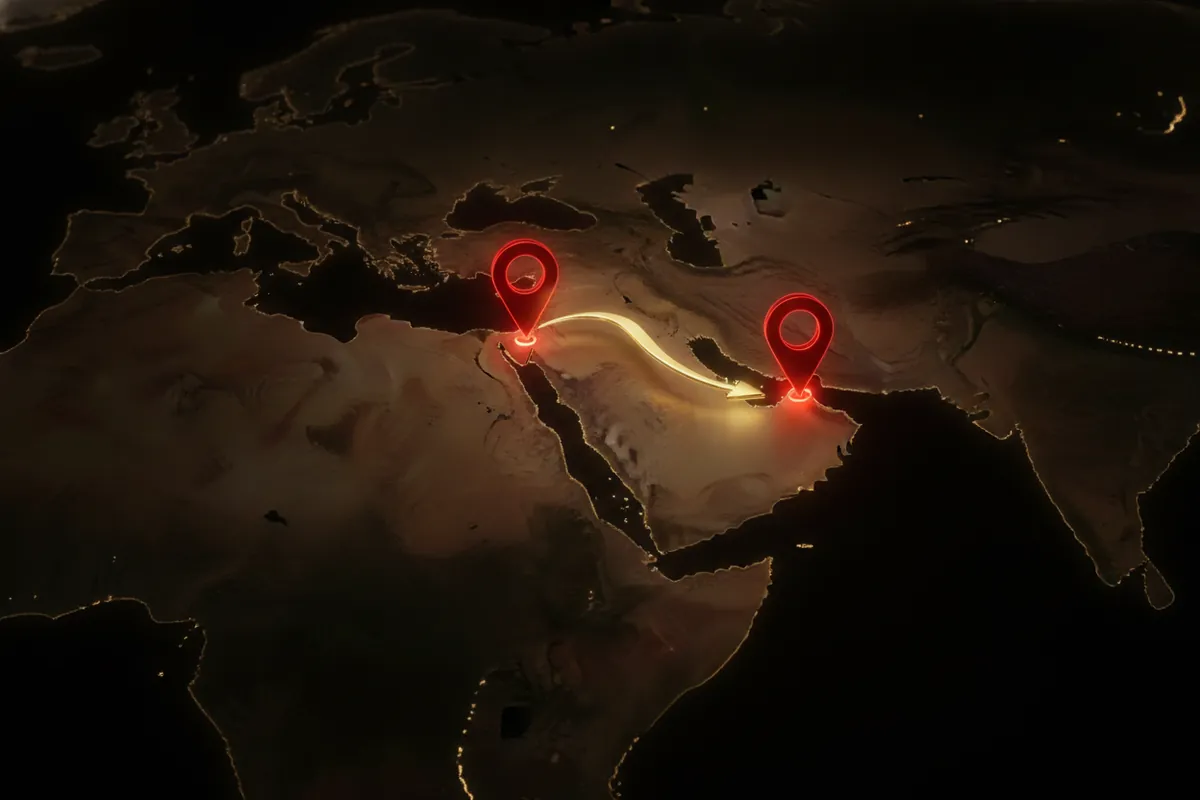
Chokepoint closure is enforced, not declared by press release
August 2026 Red Sea and Hormuz attacks show a chokepoint closes when enforced, not declared. The Honest Architect reads the shot as the closure measurement.
→ →
Perpetual disruption is a forecast cone, not a trend catalog
GlobalTranz's 2026 shipping report lists twelve trends. If disruption is the operating environment, a trend catalog is the wrong artifact. The right one is a calibrated, continuously measured forecast cone.
→ →
GEO Tools Need Routing Provenance, Not a Visibility Score
Six of GRIN's seven GEO tools measure a score. The mechanism behind a citation is the routing chain. A score without provenance is a dashboard, not a forecast.
→ →Build your world on an engine that proves what it claims.
Create your own network on the engine that's run since 2016 — or talk to the team behind the 21 papers.