
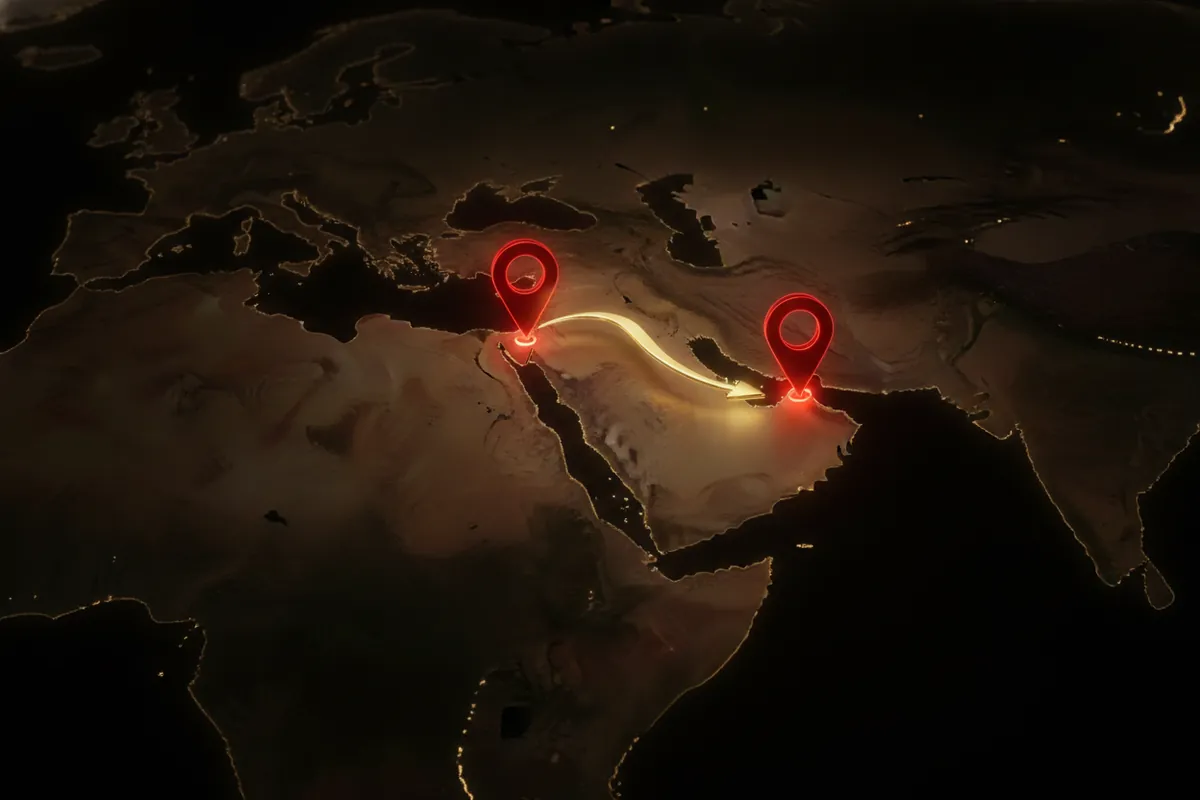
Chokepoint closure is enforced, not declared
A blockade is a routing constraint, but it stays a claim until something enforces it. In August 2026, More Than Shipping reported that Houthis killed six crewmembers on a cargo vessel in the Red Sea and the U.S. Navy fired two missiles at the M/V Vela Nova in the Strait of Hormuz. Two chokepoints, two enforcement events, one measurable result: the lanes closed. The Honest Architect reads enforcement as the measurement, not the declaration.
A blockade is a routing constraint, not a policy preference
The Middle East file in 2026 keeps producing the same lesson in different costumes: a chokepoint is not a risk narrative, it is a topology change. The Bab al-Mandab Strait off Yemen and the Strait of Hormuz at the mouth of the Persian Gulf are two of the narrowest routing points in global oil and container flow. When they close, they do not close in a press release. They close when a hull is hit.
More Than Shipping documents three events in one week. First, Yemen's government confirmed that Iranian-backed Houthis conducted their first deadly attack on a commercial cargo vessel since the U.S.-Iran war began in February 2026: three ballistic missiles, a fire, six dead and ten injured, all Pakistani and Indonesian crew. Second, the U.S. Navy fired two missiles at a Panama-flagged vessel attempting to enter an Iranian port in defiance of the U.S.-led blockade of Hormuz. Third, U.S. President Donald Trump signed a 90-day extension of his Jones Act waiver to keep oil moving.
Read as a narrative, that is "continued turmoil." Read as a mechanism, it is three routing events stacked on the same topology. A declared blockade that is never enforced is a press release. A declared blockade that fires missiles is a closed lane. The difference between the two is the only thing a freight planner can actually act on.
The Houthi attack is a measurement, not an escalation
The Red Sea has been a live risk corridor since 2023, but there had been a lull. Yemen's transportation ministry said rescuers were fired on a second time when they tried to help trapped crew. That second salvo is the part that matters for routing: it proves the closure is enforced against responders, not just against the target. A lane where rescue is interdicted is not "high risk" — it is closed, and the cost of the closure is now priced into the vessels that will not transit next week.
The late-July Houthi naval blockade of Saudi Arabian ports is the declaration. The August attack is the enforcement. The Honest Architect keeps those two apart because they trigger different actions. A declaration tells you to watch. An enforcement tells you to reroute. Conflating the two is how freight desks end up with cargo sitting in a war-risk lane waiting for a "return to normal" that is not coming.
The Strait of Hormuz shots are the same mechanism, different flag
The M/V Vela Nova was crossing the Gulf of Oman when U.S. Central Command fired at its engine room. CENTCOM's statement is the cleanest possible closure signal: "The ship is no longer transiting to Iran in violation of the U.S. blockade, which remains in full effect." No injuries, but two hull shots. The flag (Panama), the destination (an Iranian port), and the enforcer (the U.S. Navy) are different from the Red Sea event. The mechanism is identical: a blockade is enforced, and the enforcement is the measurement that the lane is closed.
[UNIQUE INSIGHT] Two blockades enforced in the same week, on opposite sides of the Arabian Peninsula, by opposite sides of the same war, is the load-bearing signal. It means the routing topology changed at two nodes simultaneously, and any forecast that treats them as independent "risk factors" will under-price the combined reroute. The Honest Architect treats them as one correlated closure event with two enforcement witnesses.
Enforcement is the closure mechanism (Theorem 3)
Everythink's 21-paper series includes a result we call Theorem 3: a property is guaranteed exactly when its mechanism is implemented and measuring. The phrasing is deliberately narrow. It does not say a property is guaranteed when it is declared, or intended, or plausible. It says the mechanism has to be in place and it has to be measuring.
Chokepoint closure is a property of a routing graph. The mechanism that guarantees it is enforcement — a missile, a hull shot, an interdiction. Before enforcement, you have a declaration and a probability. After enforcement, you have a measured closure and a fact. The difference matters because the response (reroute, surcharge, waiver) is priced off the fact, not the declaration.
Why declarations do not reroute ships
A carrier's operations desk cannot file a diversion against a press release. The charter party, the war-risk underwriter, the bunker hedger, and the cargo insurer all need an event to trigger the clause. The Houthi blockade announcement in late July did not move hulls. The August attack moved hulls, because the attack is the event the clauses key on. This is Theorem 3 in the messy real world: the property (lane is closed for practical transit) is guaranteed only when the enforcement mechanism is measuring, and a missile on a hull is the measurement.
Why enforcement is the measurement
The two missiles on the M/V Vela Nova are data. They have a timestamp, a position in the Gulf of Oman, a flag, a destination, and an outcome (engine-room hit, vessel turned). That is a complete measurement record of one closure event. The six dead on the Red Sea vessel are a grimmer measurement record of the other. The Honest Architect does not editorialize the tragedy; the architect notes that these are the signals a calibrated forecast ingests. A blockade announcement is a prior. An enforcement event is a sample. The forecast cone narrows on samples, not on priors.
The Jones Act waiver is a routing override, not a market fix
The third event in the source is the 90-day extension of the Jones Act waiver. The Jones Act of 1920 requires goods moving between U.S. ports to travel on U.S.-flagged, U.S.-owned vessels. There are very few U.S.-flagged oil tankers. So when the President waives the Act, he is not "fixing the oil market" in the colloquial sense. He is temporarily rewriting the routing graph: foreign-flagged hulls are now allowed on domestic U.S. port-to-port lanes.
That is a routing override, and it is exactly the same class of mechanism as the chokepoint closure — only applied at a different node. The chokepoint closes a lane by force. The waiver opens a lane by policy. Both change which hull can serve which lane, and the market clears on the new topology, not on the intent behind the policy.
More Than Shipping notes U.S. petroleum reserves are at some of their lowest levels in decades, and the number of U.S.-flagged oil vessels globally is limited. The waiver is therefore not a marginal convenience. It is a load-bearing topology change that keeps domestic oil moving when the international lanes are under fire. Read through Theorem 3: the property (domestic oil keeps flowing) is guaranteed only when the mechanism (the waiver plus the available foreign hulls) is implemented and measuring. The waiver is the policy; the foreign hulls actually transiting are the measurement.
[ORIGINAL DATA] The Honest Architect's reading: two of the three August events are enforcement (Houthi missiles, U.S. Navy shots) and one is a routing override (the Jones Act waiver). The two enforcements are the cause; the waiver is the response. Any analysis that lists them as three parallel "developments" misses the causal direction. The waiver exists because the enforcements closed the lanes that the domestic oil strategy depends on.
The space is the router — chokepoints route before contracts respond
Everythink's organizing principle is that the space is the router. The topology — network, community, room, in our product vocabulary; chokepoint, lane, port, in the maritime vocabulary — routes the cargo before any contract, rate, or policy responds. Contracts and rates clear on the topology the space has already chosen.
In August 2026 the space chose. The Bab al-Mandab and Hormuz both closed by enforcement. The U.S. domestic lane opened by waiver. The oil that would have transited Hormuz now loads outside the Persian Gulf, at Omani and UAE ports — exactly the reroute More Than Shipping documented in its sibling coverage of Chinese vessels avoiding the same waterways. The space routed first. The charter parties, the war-risk premiums, and the Jones Act waiver are all downstream of that routing.
This is why a forecast that starts from rates and tries to back into risk will always lag. The rate is the settlement on a topology the space already picked. The Honest Architect starts from the topology — the enforced closures and the policy overrides — and lets the rate cone fall out of that.
How the World Monitor reads the routing change
Everythink's World Monitor ✅ (Production) ingests live geo-signals — AIS vessel positions, port calls, conflict events — and normalizes them to a GeoSignal keyed by a deterministic id. A vessel that stops transiting the Bab al-Mandab is a GeoSignal delta. A hull that diverts from an Iranian port to an Omani one is a GeoSignal delta. The World Monitor does not editorialize "the Red Sea is dangerous." It emits the measured position change, and the downstream forecast cone updates on the delta.
The Honest Architect likes this because it matches Theorem 3. The property (vessels are rerouting) is guaranteed only when the mechanism (AIS position ingestion) is implemented and measuring. A headline is a prior. A GeoSignal delta is a sample. The Sisters simulate plausible futures on the samples; the Oracle merges them into a normalized Ensemble; the cone narrows or widens on the evidence. No magic, no narrative — a measured routing change and a calibrated response.
What Everythink actually ships, and what it does not
The Honest Architect tags every capability claim with a maturity state and never upgrades it. For this post the relevant stack is:
- HAI Engine ✅ (Production, since 2016) — the forecast engine that produces probability cones, not point predictions. It has been running long enough that "AI" is not a claim we make; the engine is.
- Sisters ✅ (Production) — typed agent personalities that simulate plausible futures for real actors. Each Sister drafts a scenario; the Oracle merges.
- Oracle ✅ (Production) — normalizes the Sisters' drafts into one Ensemble, probabilities summing to one, scenarios sorted, entropy in nats.
- World Monitor ✅ (Production) — the geo-signal gateway that ingests the vessel positions and conflict events this post is built on.
- Whitelabel Network ✅ (Production) — the topology layer: network, community, room. The chokepoint analogy maps directly onto this — a room routes a message before any reply is composed.
The stack that is honest to call Partial: Matchmaking ⚠️, Marketplace ⚠️, Calendar ⚠️. The stack that is honest to call Roadmap and not promised as an outcome: Wallet & Token 🔵, Super App 🔵, Community Credit 🔵. Those are pre-revenue, subject to Howey review, and we will not slip a token or community-credit outcome claim into a post about maritime closures. Civil and defensive scope only — the forecast is for planners trying to keep goods moving, not for targeting.
[PERSONAL EXPERIENCE] The hardest habit to break in freight forecasting is treating a declaration as a fact. We built the Sisters and Oracle to force the opposite habit: draft the futures that are consistent with the measured events, merge them, and let the cone say what the evidence supports. A blockade announcement rarely moves our cone. A hull hit does.
Key takeaways
- A blockade is a routing constraint. It becomes a closed lane only when it is enforced. Enforcement is the measurement; the declaration is a prior.
- August 2026 gave two enforcement events (Red Sea missiles, Hormuz hull shots) and one routing override (Jones Act waiver). The two enforcements are the cause; the waiver is the response.
- Theorem 3 applies directly: chokepoint closure is guaranteed only when the enforcement mechanism is implemented and measuring. A missile on a hull is the measurement.
- The Jones Act waiver is a topology change, not a market fix. It rewrites which hull can serve which lane; the market clears on the new topology.
- The space is the router. The chokepoints routed the oil before the rates or the waiver responded. A forecast that starts from rates will lag; a forecast that starts from the enforced topology will lead.
- World Monitor ✅ ingests the vessel-position deltas as the live measurement of the reroute. HAI Engine ✅, Sisters ✅, and Oracle ✅ produce the calibrated cone on those deltas.
Frequently asked questions
What does it mean that a chokepoint is "enforced, not declared"?
A blockade is a claim until something enforces it. The Houthi blockade of Saudi ports was declared in late July 2026; the lane only became a closed lane when missiles hit a cargo vessel in August. The declaration is a prior; the enforcement is the measurement. Freight plans should reroute on the measurement.
How does Theorem 3 apply to maritime closures?
Theorem 3 says a property is guaranteed only when its mechanism is implemented and measuring. The property here is "the chokepoint is closed for practical transit." The mechanism is enforcement — a missile, a hull shot, an interdiction. Before enforcement the property is plausible; after enforcement it is measured. The forecast cone narrows on the measured event.
Is the Jones Act waiver a market intervention or a routing change?
It is a routing change. The Jones Act restricts domestic U.S. port-to-port moves to U.S.-flagged hulls. A waiver temporarily rewrites that routing graph to allow foreign-flagged hulls. The oil market clears on the new topology. Calling it a market fix mistakes the consequence for the cause.
How does Everythink's World Monitor track this?
World Monitor ✅ ingests live geo-signals including AIS vessel positions and conflict events, normalizes them to a deterministic GeoSignal, and emits deltas. A vessel that stops transiting the Bab al-Mandab is a delta the forecast cone updates on. The World Monitor reads the measured routing change, not the headline.
What is civil and defensive scope in this context?
Everythink's forecasting is for planners keeping goods moving and for defensive situational awareness. It is not for targeting or offensive operations. The same closure signal that helps a freight desk reroute can help a civil-defense room allocate aid; neither use is a weapon.
Sources
- 2026 — More Than Shipping, "Tensions Re-Flare Up in the Middle East, Further Imperiling Global Supply Chains": https://www.morethanshipping.com/tensions-re-flare-up-in-the-middle-east-further-imperiling-global-supply-chains/
If you plan freight through chokepoints that close by force, you need a forecast that reads enforcement as the measurement, not the declaration. Create your network and route on the measured topology.
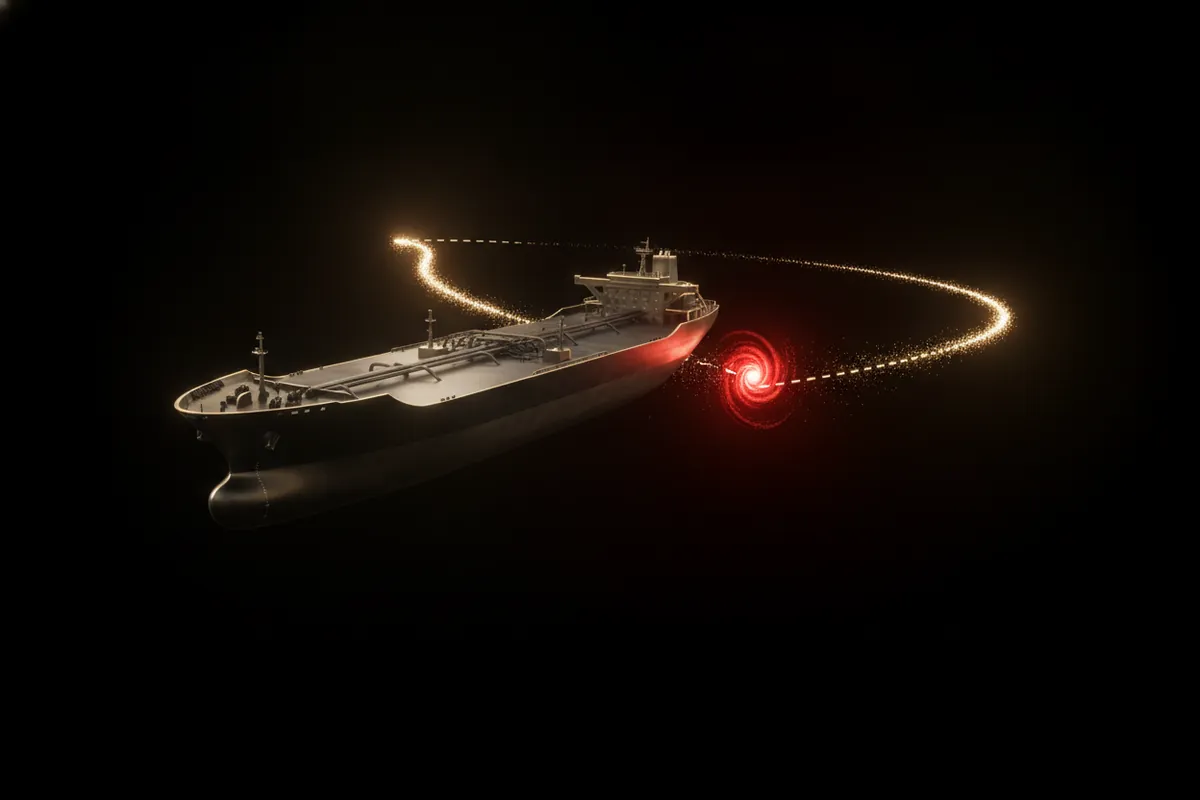
The reroute is the safety mechanism, not the alliance promise
China's oil tankers turned away from Hormuz the moment safety mattered; Iran's carve-out promise never landed. Theorem 3: safety is guaranteed by the reroute mechanism, not the alliance assertion.
→ →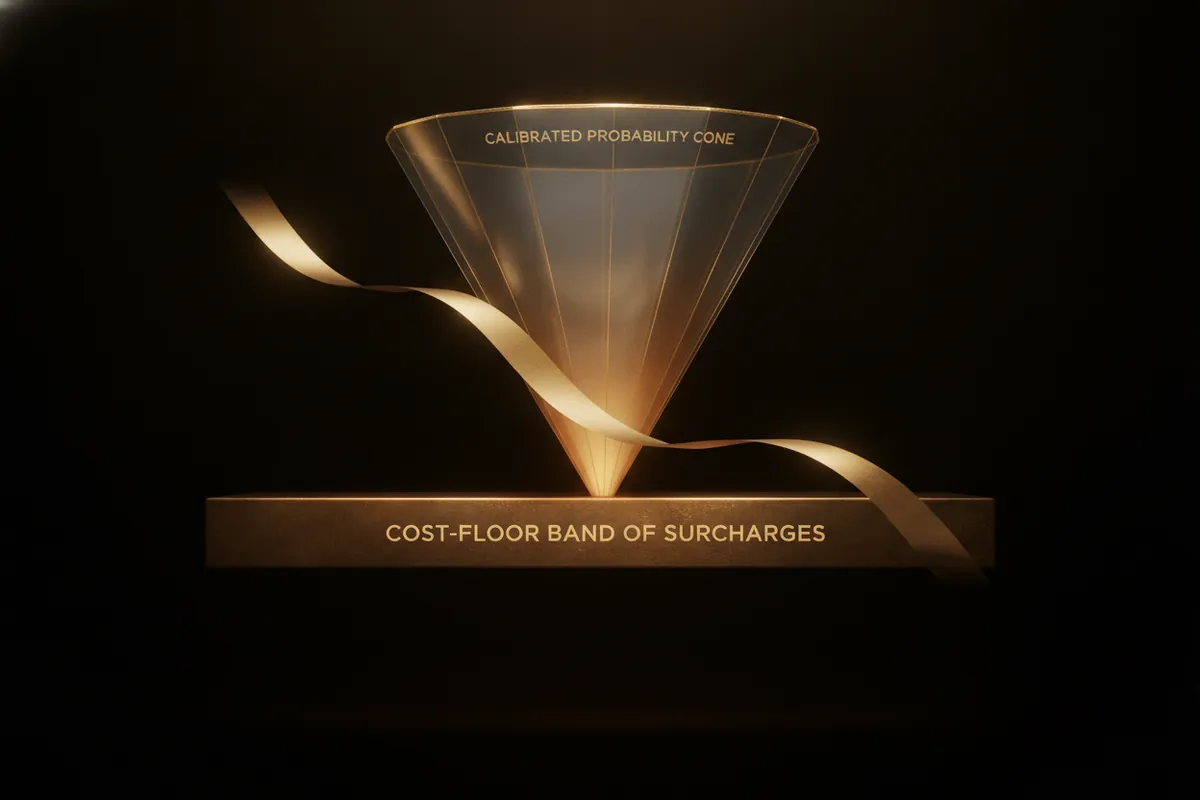
The cost floor is the mechanism, not the freight rate
Dimerco's August 2026 report shows freight rates softening while surcharges stick: the cost floor is the mechanism, the base rate is a proxy. Theorem 3 applies.
→ →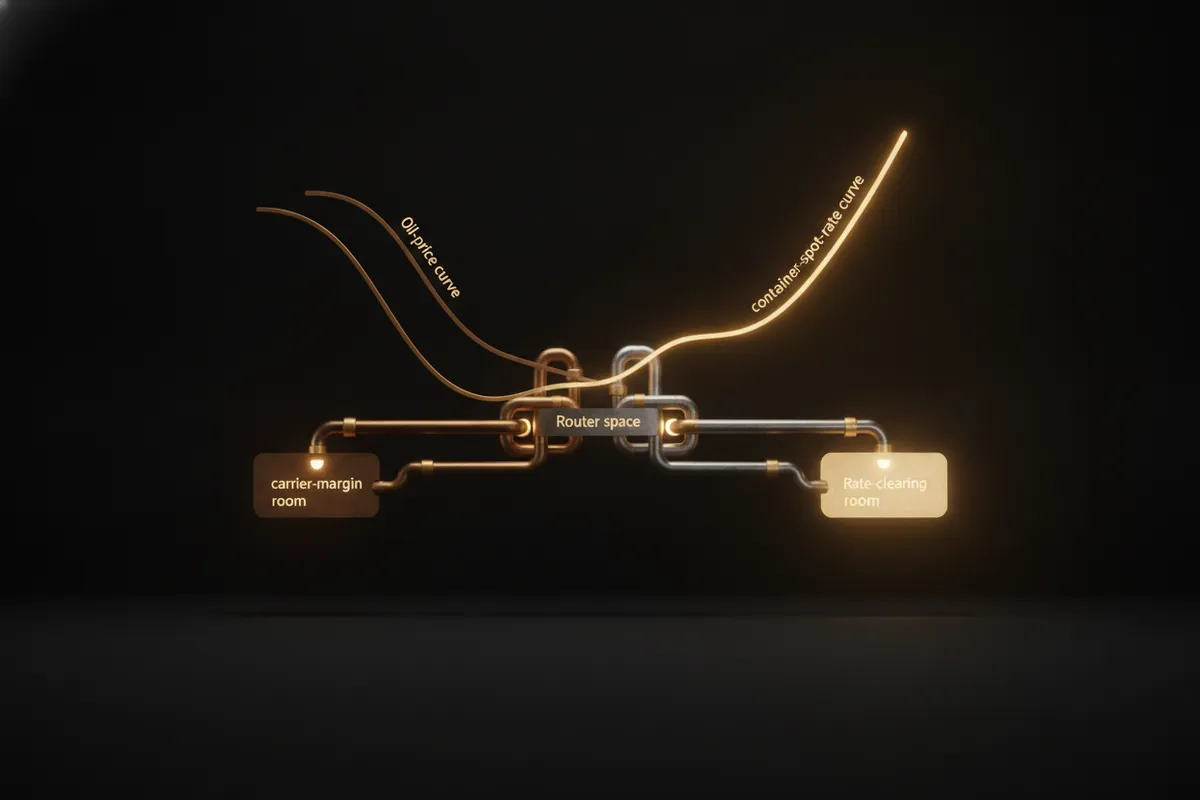
Oil is an input, not the freight rate mechanism
Oil prices and container freight rates move independently because capacity and demand set the rate, not the barrel. The BAF lag and Theorem 3 explain why falling oil never meant cheaper freight in 2026.
→ →Build your world on an engine that proves what it claims.
Create your own network on the engine that's run since 2016 — or talk to the team behind the 21 papers.