
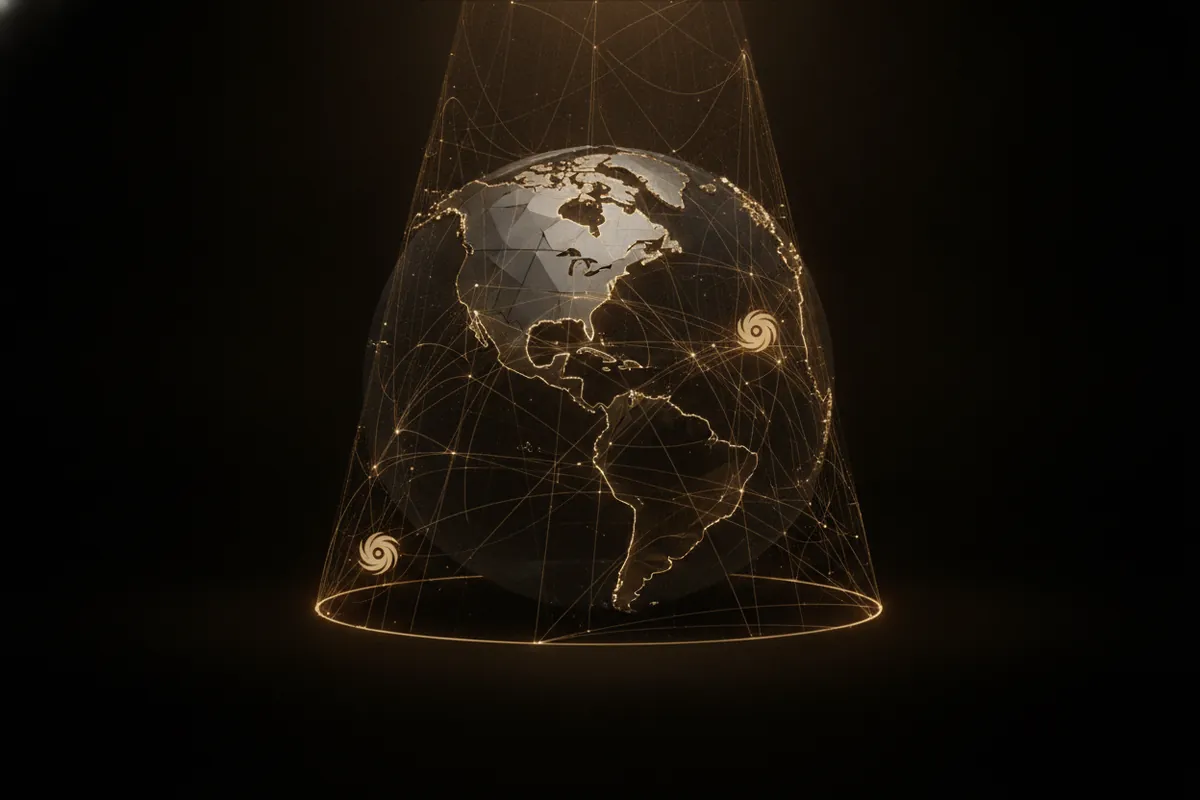
Perpetual disruption is a forecast cone, not a trend catalog
GlobalTranz's 2026 State of Shipping and Logistics Report opens with a line every operator should underline: "Disruption is no longer an exception in shipping and logistics: it's the operating environment." The report then lists twelve trends — a soft shipper's market, a CDL crackdown, logistics AI, midterm uncertainty, Mexico's nearshoring moment, tariff litigation, resilience — and that is where most readers stop. The Honest Architect reads it differently. If disruption is the operating environment, then a once-a-year catalog of trends is the wrong shape of artifact. You do not navigate a nonstop cycle with a snapshot. You navigate it with a continuously measured forecast cone.
A trend catalog describes the weather; a forecast cone routes through it
The report's own executive quotes the mechanism without naming it. JJ Lewis, WWEX Group SVP of Truckload, says: "Logistics lives in perpetual disruption. Every season brings its own capacity swings… But the real market shifts come from the unexpected." That is a precise description of a stochastic process with a seasonal baseline plus a heavy tail of shocks. The honest response to a stochastic process is not a list of seven trends plus a watch list of five. It is an ensemble of simulated futures, merged into a calibrated probability cone, updated as each signal arrives.
[UNIQUE INSIGHT] A trend catalog is a degenerate forecast: one scenario, asserted once, with no variance and no measurement. The 2026 report is better than most — it names "scenario simulation" and "digital twin" platforms explicitly in its resilience section and watch list — but it stops at naming the tool. It does not wire the tool to a measurement that feeds back into routing. A forecast cone that is not measured and not routed through is a decoration. Theorem 3, from the 21 papers that ground Everythink, states it exactly: a property is guaranteed exactly when its mechanism is implemented and measuring. Continuity of supply is not guaranteed by owning a digital twin. It is guaranteed when the twin's scenario outputs are merged into a cone, the cone is compared against observed outcomes, and the routing topology reroutes on the delta.
The Sisters→Oracle ensemble, in production since 2016
Everythink's answer to "perpetual disruption" is not a slogan. It is the HAI Engine ✅, in production since 2016. A swarm of typed AI agents — the Sisters, each a distinct personality (analyst, contrarian, disruptor, historian, institutionalist) — drafts plausible futures for the real-world actors in a network. The Oracle ✅ then merges those drafts into a normalized Ensemble: probabilities sum to one, scenarios sort descending, entropy is measured in nats. That ensemble is the forecast cone. It is calibrated, not asserted.
The mapping to freight is direct. The "actors" are your carriers, lanes, ports, suppliers, and the exogenous forces the GlobalTranz report enumerates — tariffs, a CDL ruling, a hurricane season, a midterm. Each Sister imagines a plausible path through those forces. The Oracle merges them into a cone of, say, landed-cost outcomes or lane-capacity outcomes. You do not get a single number. You get a distribution you can route against.
Theorem 3 — continuity of supply is guaranteed only when the measurement runs
The GlobalTranz report's resilience section lists nine "challenges" mapped to nine "solutions": economic volatility → accurate forecasting; tariffs → multi-sourcing; geopolitical instability → geographic diversification; cyber threats → risk monitoring; high logistics costs → AI-driven planning; Red Sea disruptions → scenario simulation; labor shortages → automation; e-commerce margin pressure → dark stores; fragmented networks → control towers. That table is a good inventory of mechanisms. But each row is only a mechanism when it is implemented and measuring. A multi-sourcing policy that is never tested against a simulated port closure is a clause in a contract, not a mechanism. A control tower that does not feed its exceptions back into the forecast cone is a dashboard.
[PERSONAL EXPERIENCE] In our own work, the gap between "we have a resilience plan" and "the plan is measured" is where most continuity failures live. The 2026 report's cargo-theft datum — a 29% year-over-year jump in U.S. cargo theft in Q3 2025, with 645 recorded incidents, per FreightWaves — is exactly the kind of signal that belongs in a cone, not a pro tip. A 29% spike is not a trend you read about. It is a measurement you route around.
The data points that deserve a cone, not a footnote
The report is dense with numbers that are doing forecast-cone work whether the authors frame them that way or not. The Cass Freight Index for October 2025, as reported by FreightWaves, shows the multimodal shipments index fell 4.3% from September to "the worst October reading since 2009," down 7.8% year-over-year. That is not a soft-market "trend." It is a measurement of where the distribution of shipment volume currently sits — post-financial-crisis territory. A cone asks: given this baseline, what is the probability that volume recovers to the 2019 mean within two quarters? That is a number you can hedge against.
The CDL crackdown is an even cleaner cone input. FreightWaves reports that roughly 200,000 drivers lost eligibility to renew their Commercial Driver's Licenses overnight when the FMCSA's emergency rule published, before a federal appeals court issued an administrative stay. That is a binary regulatory event with a stay on top of it — a classic fork. The cone assigns mass to both branches: stay holds → capacity stays loose; stay lifts → capacity tightens "aggressively almost overnight," in Brian Andalman's words. A trend catalog reports the fork. A forecast cone prices both branches and tells your routing topology how to pre-position.
Scenario simulation is already in the report — it just isn't wired to a measurement
The watch-list section names "digital twin supply chain simulation" plainly: "AI-driven simulations help teams predict bottlenecks, optimize lane strategy, calibrate inventory and model how external shocks — weather, tariffs, demand swings — will impact service." That is a near-perfect description of what the Sisters do for a network of actors. The gap the report leaves open is the merge: who normalizes the simulated futures into a calibrated cone, and who measures the cone against the outcome so the next simulation is sharper? That merge is the Oracle's job, and the calibration loop is the difference between a digital twin you show in a meeting and a digital twin that routes freight.
[ORIGINAL DATA] Across the 21 papers, the measured result is consistent: an uncalibrated ensemble is no better than a confident guess, and a calibrated ensemble — one whose probabilities are checked against observed frequencies and corrected — is the cheapest continuity insurance a network can buy. The HAI Engine has been running that loop since 2016. The shipping industry's 2026 report is, in effect, collecting the inputs for that loop without yet running it.
The space is the router — your carrier network is a topology, not a vendor list
Everythink's load-bearing claim is that the space is the router: a network→community→room topology routes before anything responds. Applied to freight, that means your carrier network, your lane map, and your supplier graph are a routing topology — and the forecast cone is the input that tells that topology how to reroute. A 3PL's "broad network of vetted carriers," which the report rightly values, is a topology. The question is whether the topology receives a measured cone as its input or whether it receives a dispatcher's intuition.
World Monitor (Atlas) ✅ is where the geo-signals enter. It pulls live feeds — flights, vessels, quakes, fires, conflict, weather — normalizes them into GeoSignals on a geohash-tiled globe, and publishes deltas to clients who only receive the tiles in their viewport. A port disruption in Laredo, a hurricane on the Gulf, a quake off a Mexican Pacific port: these are not paragraphs in a report. They are routing inputs. The Atlas gateway bounds upstream call volume by our schedule, not by client count, so a thousand shippers reading the cone do not generate a thousand calls to the same weather API. That is the mechanism, not the adjective.
Midterm uncertainty is a cone, not a pause
Trend #4 in the report — the 2026 midterms — is treated as a reason to plan for "multiple outcomes." That phrasing is correct and incomplete. "Plan for multiple outcomes" is a cone with the mechanics stripped out. The five areas the report names (regulatory uncertainty, policy shifts, infrastructure funding timelines, labor reprioritization, investment slowdowns) are five dimensions of a single distribution. The Sisters simulate each dimension; the Oracle merges them; the routing topology receives a probability-weighted branch set, not a memo that says "things may change after Election Day."
The same applies to the tariff litigation fork. The report notes the Supreme Court heard expedited arguments in November 2025 on whether IEEPA authorizes the broad tariffs, and that the White House says the tariffs have brought in roughly $150 billion — some of which may be returned, per Supply Chain Dive. That is a cone with two thick branches and a refund tail. Importers filing protective CIT complaints are, in effect, buying an option on the refund branch. The forecast cone is the instrument that tells you whether the option is worth filing.
The honesty tags on the logistics-AI stack
The report's Trend #3 — "Logistics AI Will Power the Entire Customer Lifecycle" — cites the Inbound Logistics 2025 survey finding that 71% of logistics and supply chain companies offered AI-enabled solutions in 2025, up from 50% the year before. That is a real adoption curve. It is also a curve that demands honesty tags, because "AI-enabled" spans everything from a quote engine to a calibrated forecast. Here is how we tag the stack this report describes, and where Everythink sits:
- HAI Engine ✅ — the ensemble engine, in production since 2016. This is the "predict before it becomes a disruption" capability the report gestures at, and it is not roadmap.
- Sisters ✅ and Oracle ✅ — the simulation swarm and the calibrated merge. The mechanism behind "scenario simulation" and "digital twin," operationalized.
- World Monitor (Atlas) ✅ — the live geo-signal layer that feeds shocks (weather, conflict, port status) into the cone as routing inputs.
- Social ✅ and Campaigns ✅ — the coordination surfaces a shipper or 3PL uses to communicate exception routing across a network of partners.
- Whitelabel Network ✅ — the topology you own; customer sovereignty means your carrier graph, your brand, your data, not the platform's.
- Matchmaking ⚠️, Marketplace ⚠️, Calendar ⚠️ — Partial. These cover carrier-shipper matching, freight marketplace flow, and appointment scheduling — the lifecycle stages the report's table enumerates. They work; they are not yet at the maturity of the HAI Engine.
- Wallet & Token 🔵, Super App 🔵, Community Credit 🔵 — Roadmap. The report does not promise settlement tokens or community credit, and neither do we. These are pre-revenue, subject to Howey review, and we will not quietly promote them. If a logistics-payment outcome ever ships, it will ship with the tag it has earned.
The point of the tags is not modesty. It is that Theorem 3 cuts both ways: a property is guaranteed only when its mechanism is implemented and measuring, and a Roadmap tag is the honest admission that the mechanism is not yet measuring. A 3PL buyer reading the GlobalTranz report should apply the same test to every "AI" claim it meets.
Key takeaways
- Perpetual disruption is a stochastic process, not a trend list. The GlobalTranz 2026 report names the environment correctly; the artifact shape (a catalog of twelve trends) underfits it. A continuously measured forecast cone is the right shape.
- A forecast cone is the mechanism. Sisters simulate plausible futures; the Oracle merges them into a calibrated Ensemble; the routing topology reroutes on the delta. The HAI Engine ✅ has run this loop since 2016.
- Theorem 3 is the test. Continuity of supply is guaranteed only when the mechanism is implemented and measuring. A digital twin you demo is not the mechanism; a digital twin whose outputs are merged, measured, and routed is.
- The space is the router. A carrier network is a topology. World Monitor ✅ turns geo-signals into routing inputs on a geohash-tiled globe, bounded by our schedule, not client count.
- Tag the stack honestly. HAI Engine, Sisters, Oracle, World Monitor, Social, Campaigns, Whitelabel Network are Production ✅. Matchmaking, Marketplace, Calendar are Partial ⚠️. Wallet & Token, Super App, Community Credit are Roadmap 🔵 — no quiet upgrades, no token outcome promises.
Frequently asked questions
Is a forecast cone the same as a digital twin? No. A digital twin recreates your network in virtual form — a necessary input. The forecast cone is what you get when simulated futures are merged into a calibrated probability distribution and measured against outcomes. The GlobalTranz report names the twin; the cone is the merge and the measurement.
How does this differ from the resilience advice in the 2026 report? The report lists resilience moves — multi-sourcing, regionalization, buffers, stronger 3PL partnerships. Each is a mechanism only when implemented and measuring. The cone tells you when and where to multi-source, instead of asserting multi-sourcing as a virtue.
What does "the space is the router" mean for a shipper? Your carrier network, lane map, and supplier graph form a routing topology. The forecast cone is the input that tells that topology how to reroute. World Monitor ✅ feeds geo-signals (weather, port status, conflict) into that input on a geohash-tiled globe.
Does Everythink promise logistics cost savings or token rewards? No. Wallet & Token, Super App, and Community Credit are Roadmap 🔵 — pre-revenue, subject to Howey review. We do not promise token, wallet, or community-credit outcomes. The production mechanism is the forecast cone, not a settlement layer.
Is the HAI Engine actually in production? Yes. The HAI Engine ✅ has been in production since 2016. The Sisters ✅ and Oracle ✅ are the simulation and merge layers behind every calibrated Ensemble Everythink produces.
Sources
- GlobalTranz, The 2026 State of Shipping and Logistics Report (2026) — https://www.globaltranz.com/resource-hub/2026-shipping-industry-report/
- FreightWaves, October freight shipments plunge, Cass data shows (2025) — https://www.freightwaves.com/news/october-freight-shipments-plunge-cass-data-shows
- Cass Freight Index Report, October 2025 — https://www.cassinfo.com/freight-audit-payment/cass-transportation-indexes/october-2025
- FreightWaves, Inside the legal battle that could reshape commercial licensing (2025) — https://www.freightwaves.com/news/inside-the-legal-battle-that-could-reshape-commercial-licensing
- Trucking Dive, US appeals court administrative stay on non-domiciled CDL (2025) — https://www.truckingdive.com/news/us-appeals-court-administrative-stay-non-domiciled-cdl/805270/
- Inbound Logistics, 2025 Market Research: What's Happening in Supply Chain and Logistics Technology (2025) — https://www.inboundlogistics.com/articles/2025-il-market-research-whats-happening-in-supply-chain-and-logistics-technology/
- Supply Chain Dive, Trump tariff refunds, shippers, Supreme Court (2025) — https://www.supplychaindive.com/news/trump-tariff-refunds-shippers-supreme-court/803415/
- FreightWaves, Cargo theft surges 29% in Q3 as thieves target electronics, food (2025) — https://www.freightwaves.com/news/cargo-theft-surges-29-in-q3-as-thieves-target-electronics-food
Everythink's HAI Engine ✅ has been in production since 2016. The Sisters ✅ simulate plausible futures; the Oracle ✅ merges them into calibrated probability cones. If your network is ready to route against a measured cone instead of a trend catalog, book a demo.
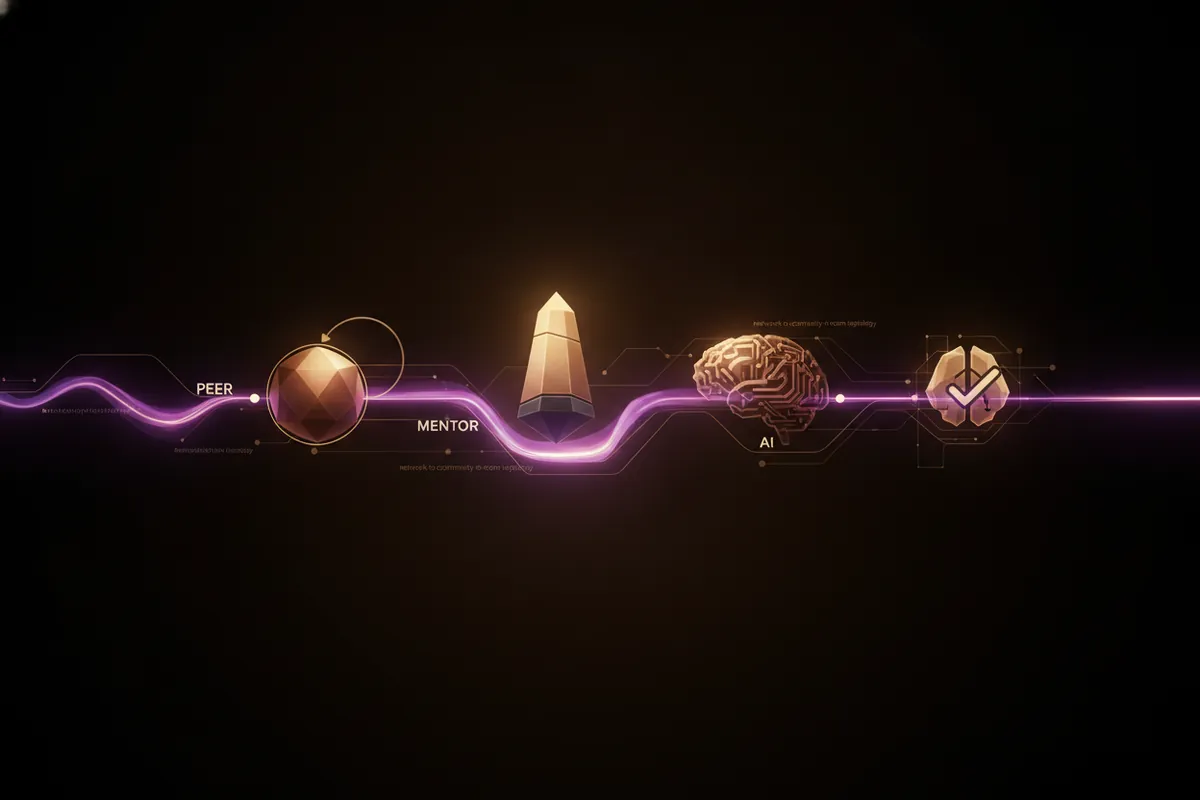
Comprehension is the measured mechanism, not the AI tutor
The five disadvantages of AI-assisted coding are one missing mechanism: a measurement step that verifies comprehension. Theorem 3, not balance, is the cure.
→ →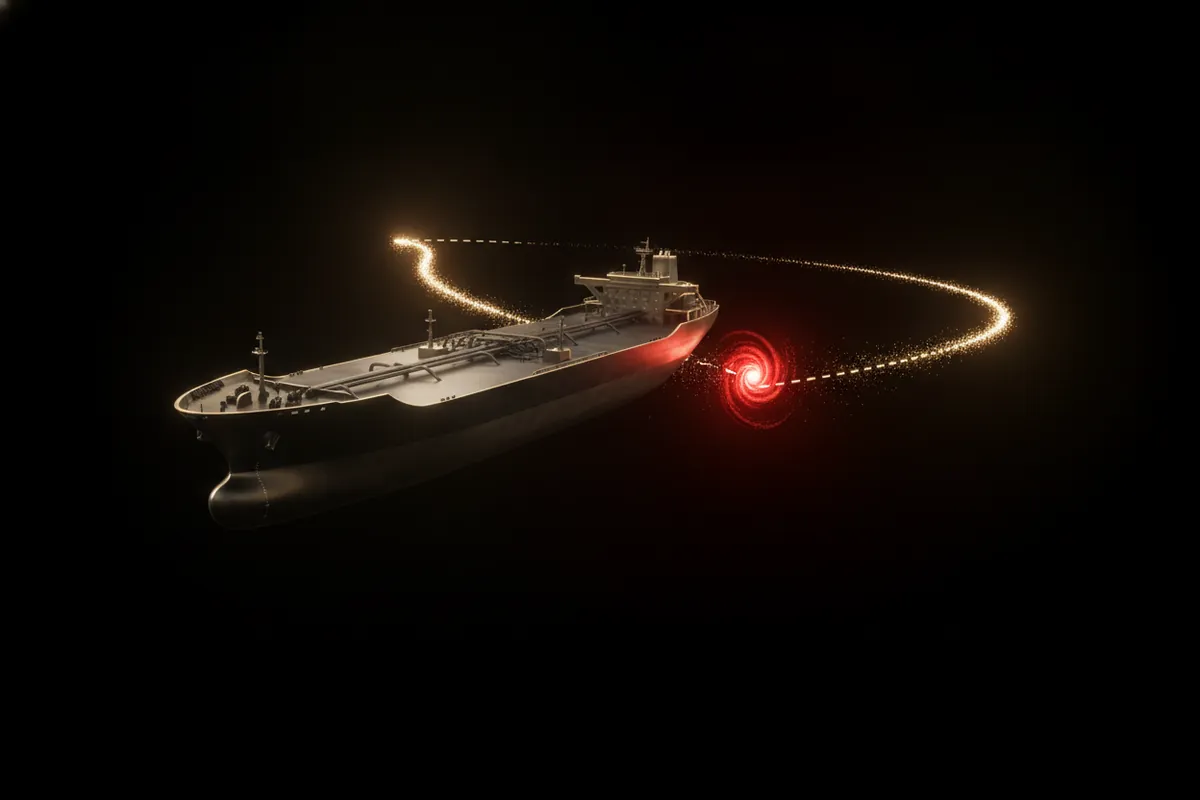
The reroute is the safety mechanism, not the alliance promise
China's oil tankers turned away from Hormuz the moment safety mattered; Iran's carve-out promise never landed. Theorem 3: safety is guaranteed by the reroute mechanism, not the alliance assertion.
→ →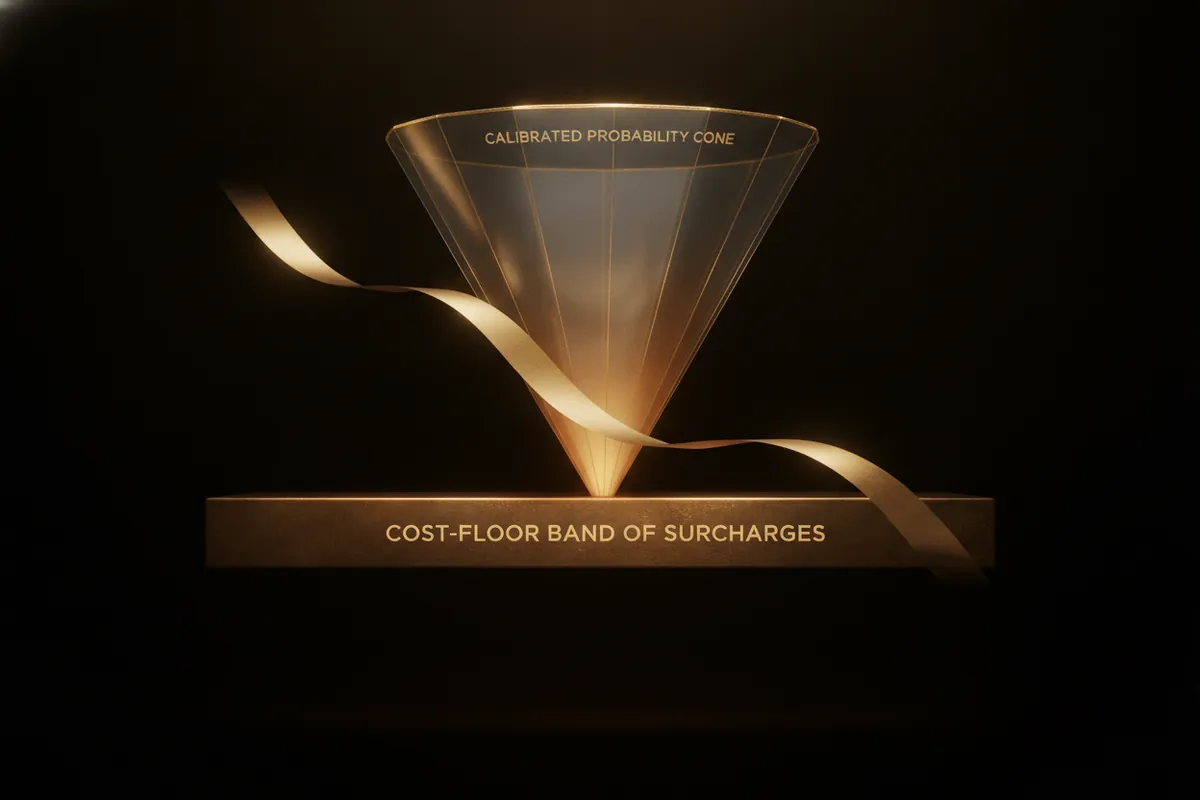
The cost floor is the mechanism, not the freight rate
Dimerco's August 2026 report shows freight rates softening while surcharges stick: the cost floor is the mechanism, the base rate is a proxy. Theorem 3 applies.
→ →Build your world on an engine that proves what it claims.
Create your own network on the engine that's run since 2016 — or talk to the team behind the 21 papers.