

The record trail is the mechanism, not the receipt
An Honest-Architect reading of Owner-operators' six simple tasks to help master bookkeeping (Overdrive, updated Aug 21, 2026, overdriveonline.com).
The surface claim of the article is practical advice for truck owner-operators: six bookkeeping tasks that translate to higher profit with less hassle. The Honest Architect reads under the advice and finds six instances of one mechanism form. The load-bearing one is the record trail: a single receipt is a data point, but the correlated trail — receipts plus logbook plus bank statements plus ELD records plus the receiptless notebook — is the substrate that makes tax minimization, warranty claims, maintenance tracking, and monthly profitability measurable. Theorem 3 in Everythink's HAI Engine claims the same form: a property is guaranteed exactly when its mechanism is implemented and measuring. Here the property is "the owner-operator can defend an audit, claim per diem, prove a warranty"; the mechanism is "the record trail is complete, bounded, attributable, preserved, and retained."
A scope note before the mechanisms: the source is Overdrive, a trucking-industry trade publication, and the advice is naturally oriented to owner-operators running a one-truck business. The six mechanism forms below are ✅ Production — extractible from the article's own evidence, including specific practices ATBS recommends. The cross-domain parallels to Everythink are ⚠️ Partial — structural, not the claim that our forecasting platform does bookkeeping. A bookkeeping or small-business financial-operations product as part of Everythink is 🔵 Roadmap — Everythink is a forecasting platform, not an accounting tool; the architectural parallels hold independently. The source and Everythink both operate in the commercial and industrial perimeter.
Mechanism 1 — Save every receipt is the complete-trail mechanism
The article says "Save every receipt, no matter how small" and asks "Why 'tip' the taxman?" The Honest Architect reads this as a complete-trail claim: tax minimization is guaranteed, exactly when the receipt trail is complete, not when the owner-operator is clever. The mechanism that produces "you deduct every legitimate cost" is "every receipt is captured — paper in a truck envelope, e-receipts in cloud folders, scans into the ATBS Hub mobile app." Saving every receipt is the mechanism; the accountant's skill is not. ✅ Production — the article names the mechanism (save every receipt, monthly tally, weekly or twice-weekly cadence) and the property (higher profit, accurate quarterly tax estimates).
The article is honest about why completeness matters: "Whether you're building your own profit-and-loss spreadsheets on a laptop or using online software, the receipts are crucial in case of an audit." Scanned images are acceptable for the IRS, but the original paper copy stays for big-ticket items because warranty claims need it — a battery receipt proves the battery is under warranty. Completeness is not perfectionism; it is the mechanism that makes two different downstream properties (tax deduction and warranty claim) measurable from one trail.
The cross-domain parallel to Everythink's World Monitor is only structural. World Monitor is a multi-source geo-signal gateway: each source's background poller normalizes its feed into a GeoSignal and upserts into a durable Postgres cache — clients read the cache, never the upstreams. The cache is the complete trail; a single source report is one data point. The article's "every receipt is the trail, one receipt is a data point" and World Monitor's "the cache is the trail, one source is a data point" share the same form: a complete, durable trail is the substrate that makes downstream properties measurable. ⚠️ Partial.
Mechanism 2 — A separate checking account is the boundary-clarity mechanism
The article says "Open a separate checking account for your business" and, if you're the sole owner, "open an additional personal account and save yourself the extra fees." The Honest Architect reads this as a boundary-clarity claim: clean profit-and-loss is guaranteed, exactly when personal and business flows are separated at the account boundary, not when the owner-operator sorts transactions after the fact. The mechanism that produces "you can hand the auditor a clean statement" is "a separate account routes every business transaction into its own ledger at deposit time." The separate account is the mechanism; post-hoc sorting is not. ✅ Production — the article names the mechanism (separate account, deposit settlement checks there, pay business expenses from it) and the property (easy audit access, tax-deductible bank fees).
The article is honest that the boundary is structural, not motivational: a sole owner can use an additional personal account to avoid business-account fees, but the boundary still has to exist — commingled flows destroy the clean statement. The boundary routes the transaction before any analysis happens.
The cross-domain parallel to Everythink's "the space is the router" topology is only structural. Everythink's network → community → room topology routes a request before anything responds — the space is the router, and you cannot bypass the space. The article's "the account boundary routes the transaction before any analysis" and Everythink's "the topology routes the request before any response" share the same form: a structural boundary that routes inputs is the mechanism that makes downstream properties clean. ⚠️ Partial.
Mechanism 3 — A separate credit card is the expense-attribution mechanism
The article says "Use a separate credit card for business expenses" and "Pay the balance in full every month." The Honest Architect reads this as an expense-attribution claim: every charge is attributable to the business, exactly when the card is dedicated, not when the owner-operator categorizes charges manually. The mechanism that produces "the monthly statement is a business expense report" is "a separate card auto-routes every charge into the business ledger at swipe time." The separate card is the mechanism; manual categorization is not. ✅ Production — the article names the mechanism (separate card, no annual fee, low interest, rewards, paid in full) and the property (business and personal spending distinct, clean monthly attribution).
The article is honest about the discipline the mechanism demands: pay the balance in full every month. The card produces clean attribution only if the balance is cleared — interest charges on a commingled balance reintroduce the sorting problem the card was meant to solve.
The cross-domain parallel to Everythink's Zod-at-the-boundary is only structural. Everythink defines wire types once in Zod in @everythink/types and parses every response at the network boundary — a bad payload surfaces as a typed ApiError, never a crash. The article's "a separate card parses every charge into the business category at swipe time" and Everythink's "Zod parses every payload at the network boundary" share the same form: parse at the boundary, and the downstream ledger is clean by construction. ⚠️ Partial.
Mechanism 4 — Saving logbook and ELD records is the per-diem-proof mechanism
The article says "Save your logbook/ELD records" and "Your log records are the best proof of your entitlement to per diem (daily) expenses, mainly meal costs." The Honest Architect reads this as a log-as-proof claim: per diem is claimable, exactly when the log is preserved, not when the owner-operator remembers the trip. The mechanism that produces "the IRS accepts the per diem deduction" is "the ELD record is the proof, and the proof is saved." The log is the mechanism; memory is not. ✅ Production — the article names the mechanism (save logbook/ELD records, know how to access ELD history) and the property (per diem entitlement, meal cost deduction).
The article is honest that electronic logs are now a requirement for most truckers — the proof is generated by regulation, not by choice. The owner-operator's job is to preserve and access it, not to create it. The mechanism is partly imposed; the practice is retention.
The cross-domain parallel to Everythink's Eye Key sovereignty is only structural. Everythink registers the HMAC and fingerprint of an Eye Key — the plaintext never touches disk, and the HMAC plus fingerprint are the proof that a key is valid. The article's "the ELD log is the proof of per diem; preserve it" and Everythink's "the HMAC and fingerprint are the proof of the key; register them" share the same form: a cryptographic-style proof is the mechanism, and the practice is to preserve the proof, not the secret. ⚠️ Partial.
Mechanism 5 — A dedicated notebook is the receiptless-capture mechanism
The article says "Get a dedicated notebook or use mobile tech to record expenses" for those expenses "for which you cannot obtain a receipt, say when you wash your truck at a coin-machine, business use of your auto, etc." The Honest Architect reads this as a receiptless-capture claim: the expenses that generate no receipt are still deductible, exactly when they are recorded with date, location, amount, and reason, not when the owner-operator estimates them at year end. The mechanism that produces "the coin-op truck wash is deductible" is "a notebook captures what receipts cannot." The notebook is the mechanism; the receipt is not (because there is no receipt). ✅ Production — the article names the mechanism (dedicated notebook or mobile document, record date/location/amount/reason, monthly handoff) and the property (receiptless expenses are deductible, IRS-compliant).
The article is honest about the special circumstances that make receiptless capture hard: entertainment is deductible only for a business associate such as a fleet manager or a shipping clerk, not for yourself; business gifts need the recipient's name and relationship; personal-vehicle business use needs mileage and destination. The notebook is not a free-form memo; it is a structured record that meets IRS regulations.
The cross-domain parallel to Everythink's hexagonal trait-based ports is only structural. Everythink's AppState repositories are Arc<dyn Trait> — a port trait captures what a concrete adapter cannot, and tests swap adapters by depending on the trait. The article's "the notebook captures what the receipt cannot" and Everythink's "the trait captures what the adapter cannot" share the same form: a dedicated abstraction captures the cases the default channel misses. ⚠️ Partial.
Mechanism 6 — Saving your records is the audit-defense mechanism
The article says "Save your records" and "Keep the records that were used to prepare your tax return — records that support income and deductions — for at the very least three years from the date you filed the return, as required." The Honest Architect reads this as an audit-defense claim: an audit is survivable, exactly when the records are retained for the statutory window, not when the owner-operator is confident in the return. The mechanism that produces "the auditor can verify every line" is "the records are kept for three years minimum, plus the supplementary records the article lists." Retention is the mechanism; a correct return without records is still an audit failure. ✅ Production — the article names the mechanism (three-year retention minimum, plus P&L statements, insurance docs, maintenance records, warranty info, registration, settlement statements, bank and card statements) and the property (audit survivable, warranty available, truck on the road).
The article is honest that retention has a time bound: three years minimum, as required. Retention is not hoarding; it is keeping the trail alive for the statutory window, then letting it go. The mechanism is bounded retention, not indefinite storage.
The cross-domain parallel to Everythink's entropy-stamped ensemble is only structural. Oracle normalizes probabilities in exactly one place and stamps entropy in nats on every merge — the entropy is a calibration signal that comes for free from the normalization, retained on every merge as the history of calibration. The article's "retain the records for three years to preserve the audit trail" and Oracle's "stamp the entropy on every merge to preserve the calibration history" share the same form: retention over time is the mechanism that makes a downstream property measurable. ⚠️ Partial.
What this means for scope and limits
Overdrive's article is a trade-publication advice piece for truck owner-operators. The six mechanism forms are real and extractible from the article's own evidence. The cross-domain parallels to Everythink's forecasting platform are structural — they share the mechanism form, not the mission. The Honest Architect marks them ⚠️.
A bookkeeping or small-business financial-operations product as part of Everythink is 🔵 Roadmap — Everythink is a forecasting platform, not an accounting tool. The architectural parallels hold independently; the product claim does not. The source and Everythink both operate in the commercial and industrial perimeter, which is why the parallels are worth drawing.
It is also worth noting what the article does not claim. It does not claim that bookkeeping makes a bad business profitable — it claims that the record trail makes profitability measurable and defensible. It does not claim that a business services provider replaces the owner-operator's role — it claims the owner-operator must take an active role in collecting information. It does not claim that six tasks are exhaustive — it claims they are the six that translate to higher profit with less hassle. These scope limits are the article's honesty, and this post preserves them.
Everythink's HAI Engine has been in production since 2016, and the typed Sisters — analyst, contrarian, disruptor, historian, institutionalist — are grounded in the 21 papers that define the forecasting methodology. The Sisters and the Oracle that merges their outputs into a calibrated ensemble are not bookkeepers, but they share with the owner-operator's notebook the same honest practice: capture the signal at the boundary, preserve it, and let the downstream property emerge from the trail.
FAQ
Does this post claim Everythink will build a bookkeeping product? No. A bookkeeping product as part of Everythink is 🔵 Roadmap. Everythink is a forecasting platform; the architectural parallels to record-keeping are structural, not product claims.
Why does the article say a sole owner can open a personal account instead of a business account? To avoid business-account fees while still maintaining the boundary between personal and business flows. The boundary is what matters; the account type is a cost optimization.
What is the ELD requirement the article references? Electronic logging devices are now a requirement for most truckers. The ELD record is the proof of per diem entitlement — the owner-operator's job is to preserve and access it, not to create it.
Why is the three-year retention period a minimum? Three years from the date you filed the return is the IRS requirement the article cites. Retention is bounded — keep the trail alive for the statutory window, then let it go. The mechanism is bounded retention, not indefinite storage.
Are the cross-domain parallels to Everythink verified or aspirational? They are structural parallels, marked ⚠️ Partial. They share the mechanism form with Everythink's architecture; they do not claim Everythink performs bookkeeping. An Everythink bookkeeping product is 🔵 Roadmap.
Start your own calibrated forecast
Everythink's HAI Engine has been running typed Sisters and a calibrated Oracle in production since 2016. The 21 papers grounding the methodology are public; the forecasting API is reachable through an Eye Key. If you want to see how a calibrated ensemble is built from typed agents, start at the API docs.
Sources
- Owner-operators' six simple tasks to help master bookkeeping, Overdrive, updated Aug 21, 2026. https://www.overdriveonline.com/partners-in-business/business-management/article/15737638/owneroperators-six-simple-tasks-to-help-master-bookkeeping (retrieved 2026-08-23).
- Everythink platform architecture: HAI Engine in production since 2016; Theorem 3 (a property is guaranteed exactly when its mechanism is implemented and measuring); "the space is the router" topology (network → community → room); World Monitor (geo-signals routed by geohash prefixes, multi-source gateway with per-source self-disable, clients read the durable cache, not upstreams); Oracle ensemble normalization stamps entropy in nats on every merge; typed Sisters (analyst, contrarian, disruptor, historian, institutionalist) grounded in the 21 papers, loaded at runtime from TOML files; trait-based hexagonal ports with interchangeable adapters (
Arc<dyn Trait>in AppState); Zod wire types defined once in@everythink/types, parsed at the network boundary, bad payload → typedApiError; Eye Key sovereignty (HMAC and fingerprint registered, plaintext never touches disk, the user's key is the rate-limit boundary).
The mechanism must match the query type, not the retrieval assertion
ByteByteGo's GraphRAG explainer reads as five mechanism forms: similarity-search-for-local, knowledge-graph-for-connections, community-reports-for-global, map-reduce-for-aggregation, routing-for-query-type. Theorem 3 applied to each.
→ →
The four-layer verification is the mechanism, not the reliability assertion
Ciberpatrulla's pre-contractual company verification guide reads as five mechanism forms: four-layer-verification, public-source-as-measurement, layered-architecture-as-routing, absence-as-signal, temporal-consistency. Theorem 3 applied to each.
→ →
The state location is the mechanism, not the agent label
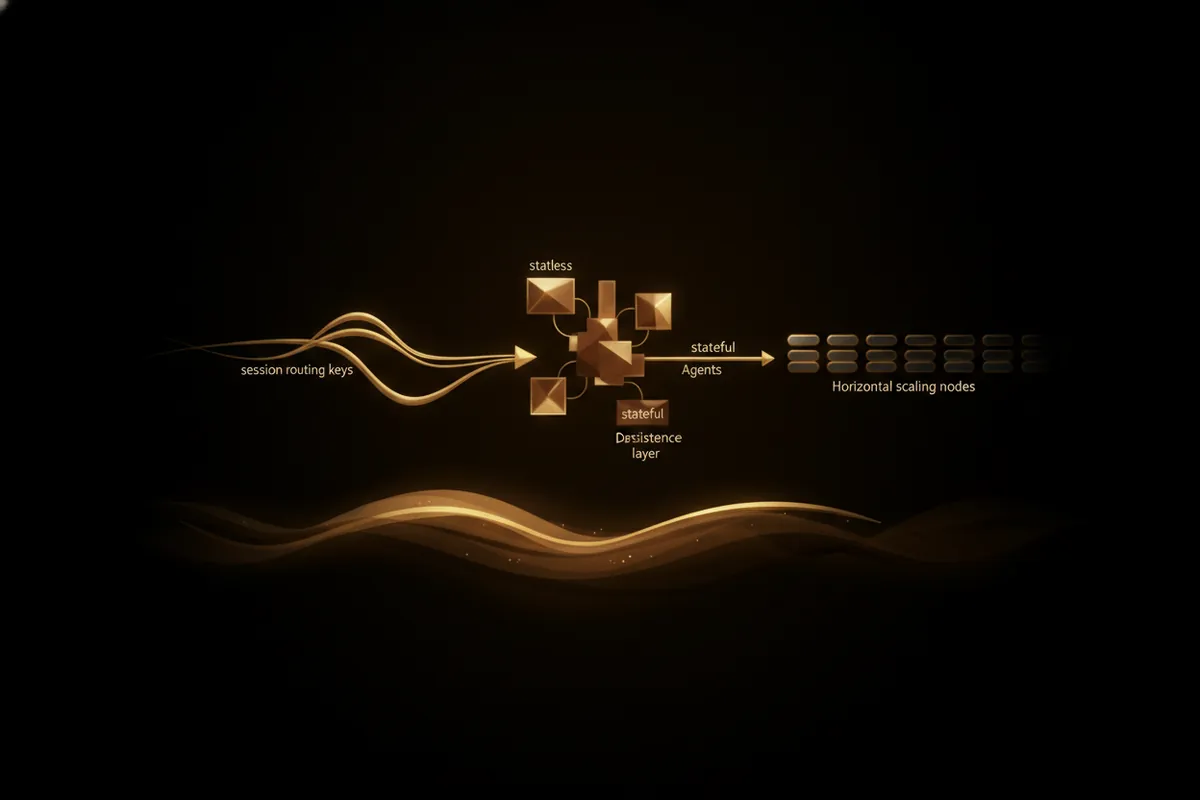
An Honest Architect's reading of MachineLearningMastery's stateful-vs-stateless agent design article: six mechanism forms, Theorem 3, and cross-domain parallels to Everythink's stateless Sisters and stateful Loom.
→ →Build your world on an engine that proves what it claims.
Create your own network on the engine that's run since 2016 — or talk to the team behind the 21 papers.