
The Graduation Route Is the Mechanism, Not the Thesis
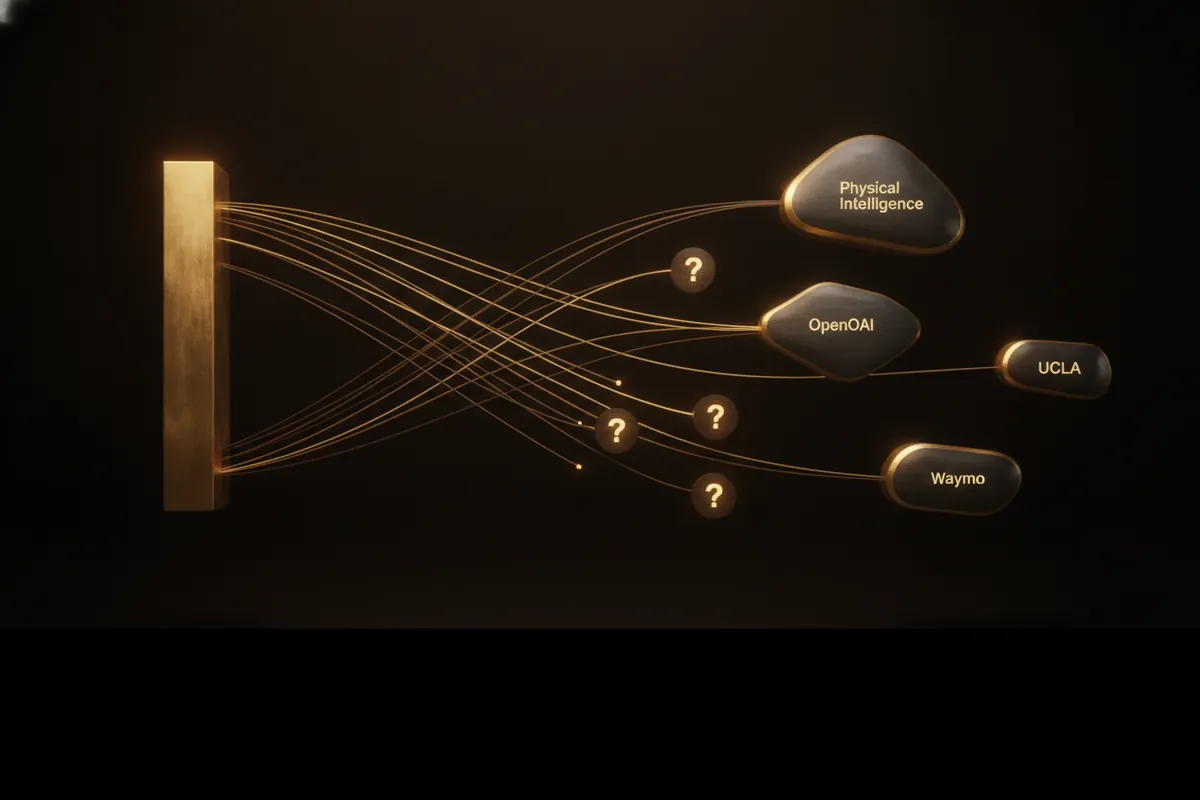
The 2026 BAIR Graduate Showcase lists 31 Berkeley PhDs and, next to each name, a single line that matters more than the thesis title: where they go next. Read mechanically, that line is a routing table. The mechanism that turns a dissertation into a deployed system is the route — Physical Intelligence, OpenAI, Anthropic, Waymo, a UCLA faculty line, a startup, or "looking for" — not the abstract. A thesis becomes production capability only when it lands in an organization that can implement and measure it.
That is the honest reading of the 2026 BAIR Graduate Showcase (Berkeley Artificial Intelligence Research Lab, July 2026). The showcase is a celebration, and it should be. But for anyone building systems from research, it is also a map of which mechanisms survive the trip from bench to deployment, and which ones are still waiting for a destination address.
The "what's next" line is the routing field
Every entry in the showcase carries the same two fields: a research blurb (the source address) and a "what's next" line (the destination address). The blurbs span robotics, large language models, AI safety, generative modeling, AI for science, and human-AI interaction. The destinations are the load-bearing signal.
Roughly a third of the class — at least ten of the 31 graduates — list their next line as "Looking for." They are unrouted packets. Their research exists, it has been defended, and it is still waiting for an organization that can implement the mechanism, instrument it, and measure whether the property it claims actually holds under load. The other two-thirds are routed: to Physical Intelligence (Baifeng Shi, Kevin Black), OpenAI (Hanlin Zhu), Anthropic (Lisa Dunlap), Thinking Machines Lab (Long "Tony" Lian), xAI (Xiuyu Li), Waymo (Yiheng Li), Mistral AI (Josh Kang), Google DeepMind (Niklas Lauffer), Luma AI (Yichen Xie), Toyota Woven's autonomous driving team (Maulik Bhatt), Hudson River Trading's AI Labs (Yigit Efe Erginbas), Baseten (Michael Psenka), and a Yumi Health co-founding (Nathan Lichtlé). A handful take faculty or postdoc lines — UCLA (J.D. Zamfirescu-Pereira), University of Chicago (Haozhi Qi), Princeton CITP (Eve Fleisig), Stanford (Kunhe Yang, Zhe Fu).
[UNIQUE INSIGHT] The routing field is the predictor. A thesis on dexterous manipulation routed to Physical Intelligence has a clear path to a measured property on real hardware. A thesis on the same topic with no destination has the same ideas and no measurement loop. The route is what closes the loop. This is why the-space-is-the-router framing reads the showcase as a topology, not a transcript: the network a graduate joins determines which of their mechanisms ever get implemented and measured.
Why the destination, not the title, predicts deployment
A thesis title tells you what was studied. The destination tells you whether the mechanism inside that study will ever be exercised against reality. The gap between the two is the entire problem of turning research into capability.
Consider the robotics cluster. Baifeng Shi builds generalist vision and robotic models, routed to Physical Intelligence. Kevin Black works on large-scale robot learning — imitation, reinforcement, generative modeling, real-time control — also routed to Physical Intelligence. Haozhi Qi works on dexterous manipulation and robot learning, routed to Amazon and a University of Chicago faculty line. Qiyang Li studies how to optimize action-chunking policies with reinforcement learning using prior data, and is looking for a postdoc or research scientist position in RL for robotics and LLMs. The first three have a destination that can put the mechanism on hardware and measure it. The fourth has the same class of mechanism and is still seeking the loop.
The same pattern repeats across the safety cluster. Niklas Lauffer works on AI safety and reinforcement learning in multi-agent and LM-agent settings, routed to Google DeepMind. Sampada Deglurkar works on safety assurances for autonomous systems — uncertainty quantification, decision-making under uncertainty, probabilistic guarantees — and is looking for a research scientist or research engineer position. Both study safety mechanisms. One lands inside an organization that can implement and measure adversarial learning at scale; the other is waiting for the address.
This is not a judgment of the graduates. It is a statement about mechanism completion. Theorem 3 in our own 21-paper series states a property is guaranteed exactly when its mechanism is implemented and measuring. A thesis proposes a mechanism. The destination is what implements and measures it. Without the destination, the property stays hypothetical — correct on paper, unguaranteed in the world.
The four routes, and what each one measures
Read the destination field as four distinct routing pathways, each with a different measurement surface.
Route 1 — Frontier labs (Physical Intelligence, OpenAI, Anthropic, xAI, Thinking Machines Lab, Mistral)
These organizations run the mechanism against frontier-scale compute and real user traffic. Hanlin Zhu's work on LLM reasoning, routed to OpenAI, gets exercised against the load and adversarial conditions a frontier lab produces. Lisa Dunlap's work on auditing generative models, routed to Anthropic, lands inside a lab whose business depends on the audit being honest. The measurement surface is scale plus adversarial exposure.
Route 2 — Applied autonomy (Waymo, Toyota Woven, Luma AI, Hudson River Trading)
These organizations run the mechanism against a physical or market environment that does not forgive. Yiheng Li's vision world modeling, routed to Waymo, meets a safety case that is measured in collision-free miles, not benchmark accuracy. Yigit Efe Erginbas's work on online learning in large-scale markets and interpretability, routed to Hudson River Trading's AI Labs, meets a profit-and-loss statement that settles every day. The measurement surface is a hard external ground truth.
Route 3 — Faculty and postdoc (UCLA, UChicago, Princeton, Stanford)
These routes keep the mechanism in a measurement loop, but the loop is academic: peer review, students, longitudinal studies. J.D. Zamfirescu-Pereira's work on human-AI co-design and the boundaries of language interfaces, routed to a UCLA assistant professorship, gets a long horizon and a graduate cohort of its own. Eve Fleisig's work on LLMs that work reliably and fairly for broad user populations, routed to a Princeton CITP postdoc, keeps the evaluation loop running on the population-level fairness question. The measurement surface is slower, deeper, and less forgiving of shortcuts.
Route 4 — Founding and "looking for"
Nathan Lichtlé co-founds Yumi Health. Jiachen Lian is looking for AI talent to join a startup. Ten more are looking for a position. This route is where the mechanism either finds a customer-sovereign measurement loop or does not. A startup has the cleanest possible measurement surface — revenue, retention, and a customer who can leave — and the highest risk of never reaching it. The "looking for" route is the unrouted packet: the mechanism is real, the address is open.
The mechanism each cluster carries, and where it routes
[ORIGINAL DATA] Cluster the 31 blurbs by mechanism family and the routing asymmetry becomes visible. The robotics and embodied-intelligence cluster is the largest and the most completely routed: nearly every robotics graduate has a named destination, because robotics mechanisms require hardware to be measured and the industry labs that own the hardware hired them. The LLM and reasoning cluster is similarly well-routed, to frontier labs. The AI-safety cluster splits — one to DeepMind, one "looking for" — because safety mechanisms are harder to instrument inside a single commercial entity. The AI-for-science cluster (Junhao Xiong on generative modeling for proteins, Nikita Mehandru on clinical reasoning from electronic health records) is almost entirely "looking for," because the measurement loop for a clinical or biological mechanism lives inside a hospital or a wet lab that does not hire the way a frontier lab does.
The pattern is consistent: the closer a mechanism's measurement surface is to a frontier lab's existing instrumentation, the more completely it routes. The further the measurement surface (a clinic, a wet lab, a multi-agent economy), the more graduates stay unrouted. The thesis did not get weaker. The destination got harder to find.
What this means for anyone hiring from a showcase
If you are hiring from a graduate showcase, read the destination field as a procurement signal, not a prestige ranking. A graduate whose mechanism matches a measurement surface you already own is the highest-leverage hire you can make — you are providing the loop that completes their mechanism. A graduate whose mechanism you cannot instrument is a hire you will struggle to evaluate, no matter how strong the thesis.
This is the same logic we apply to our own engineering. The HAI Engine has run in production since 2016 (Production ✅), not because the idea was novel, but because the engine has a continuous measurement loop — real networks, real communities, real rooms, real forecasts. The Sisters propose futures and the Oracle merges them into a calibrated ensemble (Production ✅) because the calibration is measured against outcomes that settle. World Monitor (Production ✅) routes live geo-signals through a Postgres cache and a per-tile broadcast channel because the measurement surface is real client viewports, not a demo. The modules that are Partial ⚠️ — Matchmaking, Marketplace, Calendar — are partial precisely because their measurement loops are still being closed. The modules that are Roadmap 🔵 — Wallet & Token, Super App, Community Credit — are roadmap because the measurement loop (and, for token mechanisms, the Howey review) does not exist yet. We do not upgrade a state by asserting it. The route determines the state.
[PERSONAL EXPERIENCE] The engine has run in production since 2016, and the single most reliable predictor of whether a capability shipped was never the elegance of the design — it was whether a destination existed that could measure it. The capabilities that shipped had a route. The capabilities that stayed on the whiteboard had a thesis and no address.
The space is the router
In Everythink, the space is the router: a network contains communities, a community contains rooms, and the network→community→room topology routes a request before anything responds. The BAIR showcase is the same shape, at a different scale. The research is the request. The destination is the route. The organization is the room that responds.
This is why a graduate showcase is more useful, read mechanically, than a paper abstract. The abstract tells you what was claimed. The destination tells you whether the claim will ever be measured. And Theorem 3 is unforgiving about this: a property is guaranteed exactly when its mechanism is implemented and measuring. A mechanism with no destination is a property with no guarantee — not because it is wrong, but because the world has not yet been allowed to confirm it.
Key takeaways
- The 2026 BAIR Graduate Showcase is a routing table: the "what's next" line, not the thesis title, predicts which mechanisms reach production.
- Roughly a third of the 31 graduates are "looking for" — unrouted packets whose mechanisms are real but unmeasured.
- The robotics and LLM clusters route most completely because frontier labs own the measurement surfaces; the AI-for-science and safety clusters route least because their measurement surfaces live in clinics, wet labs, and multi-agent economies.
- Theorem 3 holds: a property is guaranteed exactly when its mechanism is implemented and measuring. The destination is what implements and measures.
- Hiring from a showcase is procurement, not prestige: match the mechanism to a measurement surface you already own.
Frequently asked questions
What is the BAIR Graduate Showcase? It is an annual Berkeley Artificial Intelligence Research Lab post listing that year's PhD graduates, each with a research blurb and a "what's next" line. The 2026 showcase lists 31 graduates.
Why does the destination matter more than the thesis title? A thesis proposes a mechanism. The destination — a frontier lab, an applied-autonomy company, a faculty line, a startup — is what implements and measures that mechanism. Without the destination, the property the thesis claims stays hypothetical.
What does "looking for" mean in the showcase? It means the graduate's next position is not yet determined. Read mechanically, it is an unrouted packet: the research exists, the measurement loop that would complete it does not yet have an address.
How does this connect to Everythink? Our topology — network→community→room — routes before anything responds, and our capability states (Production ✅ / Partial ⚠️ / Roadmap 🔵) are set by whether a measurement loop exists, not by aspiration. The showcase is the same logic at the career level: the route determines which mechanisms get measured.
Should a hiring manager read the showcase this way? Yes. Read the destination field as a procurement signal. A graduate whose mechanism matches a measurement surface you already own is the highest-leverage hire, because you provide the loop that completes their work.
If you are building a network where the routing is the product, the same principle applies: the topology decides which mechanisms ever get measured. Create your network, and own the route.
Sources
- 2026 — Berkeley Artificial Intelligence Research (BAIR) Lab, "2026 BAIR Graduate Showcase" — https://bair.berkeley.edu/blog/2026/07/01/grads-2026/

Routing precedes retrieval, not the embedding dimension
KDnuggets' RAG failure survey shows over-engineering embeddings compounds the cost. The missing mechanism is explicit routing before retrieval — Theorem 3 applied to search, with Everythink's topology as the upstream analogue.
→ →
The outcome test is the mechanism, not the world model label
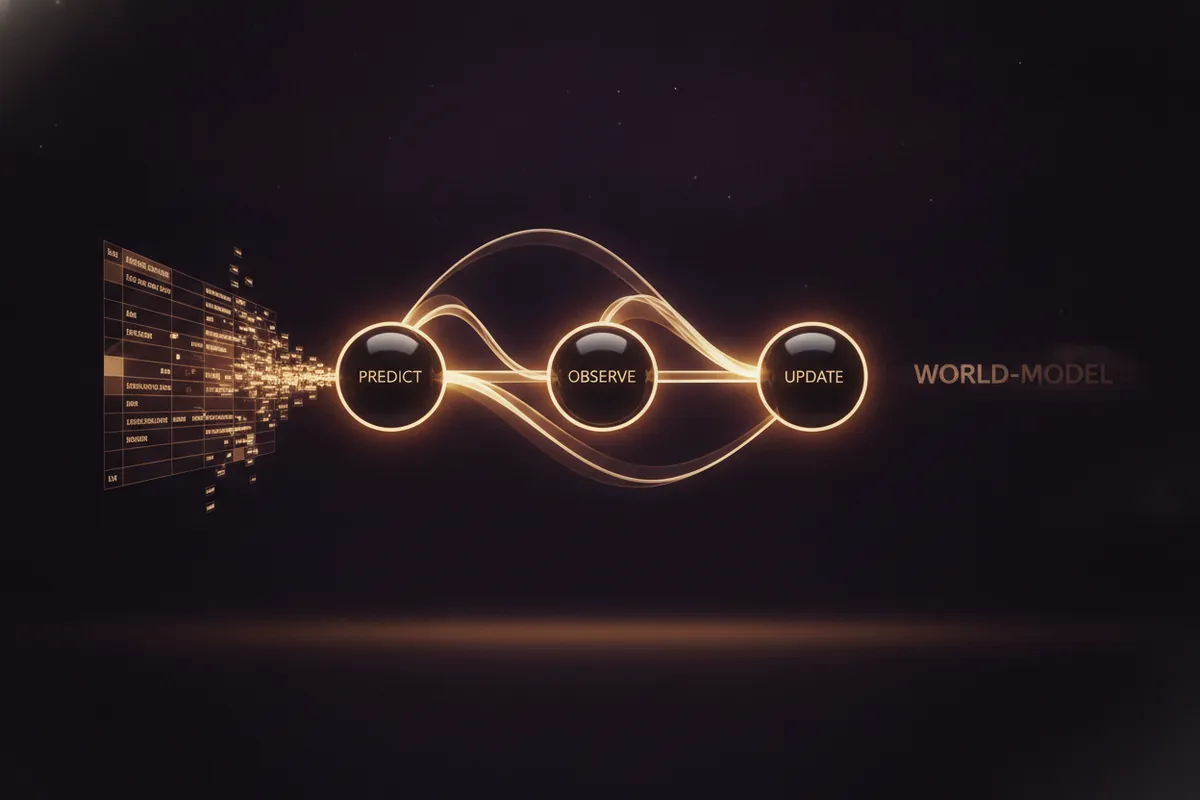
MIT's Devavrat Shah built a tabular-data model that tests predictions against real outcomes. The mechanism is the measured loop — Theorem 3 — not the world-model label.
→ →
The reroute is the safety mechanism, not the alliance promise
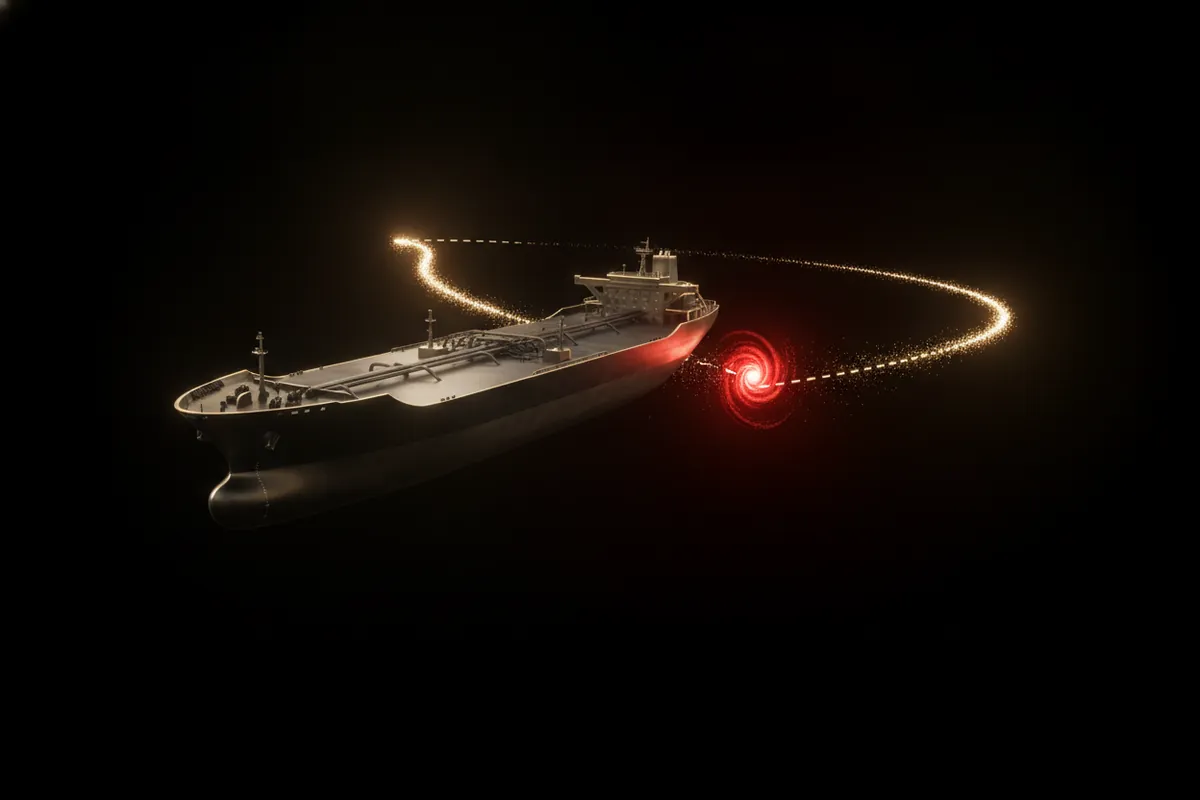
China's oil tankers turned away from Hormuz the moment safety mattered; Iran's carve-out promise never landed. Theorem 3: safety is guaranteed by the reroute mechanism, not the alliance assertion.
→ →Build your world on an engine that proves what it claims.
Create your own network on the engine that's run since 2016 — or talk to the team behind the 21 papers.