

The facade is the mechanism, not the iframe assertion
An Honest Architect's reading of YouTube Embeds are Bananas Heavy and it's Fixable, published 2024-07-01 by Chris Coyier on the Master.dev blog.
The surface claim of the article is a performance complaint with a fix: YouTube's default iframe embed costs 1.3 MB and 32 requests per embed, with no shared resources between multiple embeds, and the <lite-youtube> web component from Paul Irish fixes it at roughly 100 KB with the same functionality. The Honest Architect reads it for the mechanism under the complaint, and finds six. The load-bearing one is the facade: the lite component renders a poster image, a title, and a play button, and loads the real iframe only on user interaction. The iframe is the heavy layer; the facade is the mechanism layer. Theorem 3 in Everythink's HAI Engine asserts the same form: a property is guaranteed exactly when its mechanism is implemented and measuring. Here the property is "same functionality at a fraction of the weight"; the mechanism is "a lightweight facade that loads the real thing on user interaction."
This post extracts six mechanism forms from the Master.dev article, applies Theorem 3 to each, and draws cross-domain parallels to the Everythink platform. Each parallel from our platform is marked ⚠️ — Everythink operates in civil and defensive forecasting, the Master.dev article operates in web performance and frontend developer education, so the parallel is structural, not a claim that our systems serve the same market. The six mechanism forms themselves are ✅ — they are extractable from the article's own evidence.
Mechanism 1 — Linear weight growth is the no-shared-resources mechanism
Zach Leatherman, quoted in the article, noted: "The weight also grows linearly with every embed — resources are not shared: two embeds weigh 2.4 MB; three embeds weigh 3.6 MB." The Honest Architect reads this as a mechanism claim: linear weight growth across embeds is guaranteed by the absence of shared resources, not by the size of one embed. The mechanism that produces "three embeds weigh three times one embed" is "each embed re-fetches the same base resources independently." If the resources were shared (cached, deduplicated), the marginal cost of a second embed would be near zero; because they are not shared, the marginal cost equals the full cost. ✅ Production — the article names the mechanism (no shared resources) and the property (linear growth).
The article is honest that this is a design choice, not a law of physics. A browser could cache shared resources across iframes; YouTube's embed does not structure itself to allow that. The cost lives in the resource-sharing policy, not in the embed's size alone. World Monitor's clients read the cache, not the upstreams — one background poller per source pulls the feed on a fixed schedule, and all clients read the same cached delta. The Master.dev article's "each embed re-fetches the same resources independently" and World Monitor's "all clients read the same cache" share the same form inverted: World Monitor shares the resource (the cache), the YouTube embed does not. The parallel is the contrast — sharing is the mechanism that bounds the cost; not sharing is the mechanism that lets it grow linearly. ⚠️ Partial — the parallel is structural; World Monitor serves civil and defensive geo-signal delivery, the Master.dev embed analysis serves web performance education. Different domains, same form: the resource-sharing policy is the cost-bounding mechanism.
Mechanism 2 — The facade pattern is the same-functionality-less-weight mechanism
The article presents the <lite-youtube> web component: "This custom element renders just like the real thing but approximately 224× faster." The component shows a poster image, a title, and a play button — the same UI as the default embed — and loads the real iframe only when the user clicks. The Honest Architect reads this as a mechanism claim: same functionality at a fraction of the weight is guaranteed by a facade that loads the real thing on user interaction, not by a smaller iframe. The mechanism that produces "224× faster with no functionality loss" is the facade pattern: render a lightweight stand-in, defer the heavy load until the user asks for it. ✅ Production — the article names the mechanism (facade web component, click-to-load) and the property (same UI, 224× faster).
The article is honest that the facade sacrifices nothing the user sees: poster image, title, play button. The facade replicates the appearance and functionality; it does not replicate the weight. It is a functional replica, not a visual approximation. The HAI Engine's Sisters return SisterOutput and never write to Postgres themselves — the Loom persists. The Sisters are lightweight workers; the Loom is the heavy persistence layer that runs only when the output is ready. The Master.dev article's "the facade renders the UI, the iframe loads on interaction" and Everythink's "the Sister produces the output, the Loom persists when ready" share the same form: the lightweight producer runs first, the heavy layer runs on demand. ⚠️ Partial — the parallel is structural; the HAI Engine serves civil and defensive forecasting, the lite-youtube facade serves web performance education. Different domains, same form: the lightweight layer produces the visible result, the heavy layer runs on demand.
Mechanism 3 — Progressive enhancement is the looks-right-before-JS mechanism
The article's recommended usage: "Use this as your HTML, load the script asynchronously, and let the JS progressively enhance it." The background-image is put into the HTML inline so the poster appears before the JavaScript loads. The Honest Architect reads this as a rendering claim: the page looks right before JavaScript loads is guaranteed by server-rendered facade plus async JS enhancement, not by the JS rendering the facade. The mechanism that produces "looks right before JS" is the inline background-image in the HTML, not the JS component. The JS enhances; the HTML renders. ✅ Production — the article names the mechanism (inline background-image, async script, progressive enhancement) and the property (looks right before JS loads).
The article is honest that this is a sequencing concern. If the JS rendered the poster, the page would flash blank until the JS loaded; because the HTML carries the poster, the page looks right immediately. Progressive enhancement buys correct rendering without JS — on slow connections, with JS disabled, and during the JS load window. Everythink's topology is network → community → room: a request is routed to a room before anything responds, and the routing happens at the infrastructure layer, not the application layer. The Master.dev article's "the HTML renders the poster before the JS loads" and Everythink's "the topology routes the request before the application responds" share the same form: the infrastructure layer does its work first, the application layer enhances. ⚠️ Partial — the parallel is structural; Everythink's topology serves civil and defensive forecasting, the Master.dev progressive enhancement serves web performance education. Different domains, same form: the earlier layer does the load-bearing work, the later layer enhances.
Mechanism 4 — The average-load-time red herring is the denominator-mechanism
The article recounts a famous YouTube engineering story: engineers made a much lighter video page, put it into testing, and found that average page load times went up. The deeper look revealed that the lighter page reached more people on low-power, low-speed devices who were able to use YouTube for the first time — and their usage slowed the averages. The Honest Architect reads this as a metric-claim: average load time going up is guaranteed by more users entering the denominator, not by the page getting slower for everyone. The mechanism that produces "average goes up" is "the lighter page reached new users whose devices were slower," not "the page got slower." The metric was a red herring: the speed of using the site was up relatively for everyone. ✅ Production — the article names the mechanism (new users in the denominator) and the red herring (average load time).
The article is honest that this is a warning about metric selection, not a defense of heavy pages. The average was not meaningful because the user population changed; the per-user speed was up. An average that changes because the denominator changed is not a speed signal. The Oracle normalizes probabilities in exactly one place and stamps entropy in nats on every merge — the entropy is the calibration signal that is not inflated by the majority class. The Master.dev article's "the average was corrupted by the new-user denominator" and the Oracle's "the entropy is not corrupted by the majority class" share the same form: the metric that is not corrupted by the dominant contribution is the real signal. ⚠️ Partial — the parallel is structural; the Oracle serves civil and defensive forecasting, the Master.dev average-load-time analysis serves web performance education. Different domains, same form: the un-corrupted metric is the trust signal.
Mechanism 5 — The engagement-reduction claim without methodology is the no-mechanism case
The article reports: "I heard from a little birdie who ran it up the pole that they have tested lighter embeds and found them to reduce engagement." The author does not believe it and asks for the methodology and data to be opened. The Honest Architect reads this as the no-mechanism case: a claim without an open mechanism is not a guarantee. Theorem 3 is explicit: a property is guaranteed exactly when its mechanism is implemented and measuring. If the mechanism (methodology, data, tracking) is not open, the property ("lighter embeds reduce engagement") is not guaranteed — it is an assertion. ✅ Production — the article names the claim, the absence of methodology, and the author's refusal to accept the assertion without the mechanism.
The article is honest that this refusal is a methodological stance. The author writes: "sometimes there are unexpected results in testing. That's why we test instead of guess. But because this is so counterintuitive and offtrack for so many other similar performance testing situations, this bears deeper scrutiny." An unexpected result that runs against the pattern bears deeper scrutiny, and the scrutiny requires an open methodology. Everythink's architecture depends on the trait, not the concrete adapter — the verification depends on the contract, not the implementation. The Master.dev article's "an assertion without an open mechanism is not a guarantee" and Everythink's "verification depends on the trait, not the implementation" share the same form: the guarantee lives in the open mechanism, not in the closed implementation. ⚠️ Partial — the parallel is structural; Everythink's trait-based verification serves civil and defensive forecasting, the Master.dev methodology demand serves web performance education. Different domains, same form: the open mechanism is the guarantee; the closed assertion is not.
Mechanism 6 — Environmental cost is the scale-times-weight mechanism
The article states: "YouTube is so enormous we're talking incredible amounts of wasted electricity and thus carbon output. Pulling a megabyte of data off every single YouTube Embed would be an incredible win all around. I might even say not improving this is environmentally negligent." The Honest Architect reads this as a forcing-function claim: the environmental cost is guaranteed by scale times weight, not by weight alone. The mechanism that produces "incredible amounts of wasted electricity" is "billions of embeds times 1.3 MB each," not "1.3 MB is heavy." A single heavy embed is a minor cost; a billion heavy embeds is a forcing function. ✅ Production — the article names the mechanism (scale × weight) and the forcing function (environmental cost).
The article is honest that this is a scope argument. The weight matters because the scale is planetary; the scale matters because the weight is unshared. The fix's value is not the per-embed saving, it is the per-embed saving times the number of embeds. The Eye Key is the user's own credential — the key is the rate-limit boundary, and the platform does not subsidize the user's compute. The Master.dev article's "the cost is scale times weight, and the user pays it" and Everythink's "the key is the rate-limit boundary, and the user pays their own compute" share the same form: the cost is borne at the unit, and the unit is the user or the embed. ⚠️ Partial — the parallel is structural; Eye Key governs API sovereignty for civil and defensive forecasting, the Master.dev environmental cost analysis serves web performance education. Different domains, same form: the cost is borne at the unit, and the unit-level fix is the mechanism.
What this implies for scope and limits
The Master.dev article is about web performance and frontend developer education. Everythink's platform is about civil and defensive forecasting. The cross-domain parallels in this post are structural — they share mechanism forms, not markets. The Honest Architect marks the parallels ⚠️.
Everythink's own go-to-market for commercial web-performance tooling is 🔵 Roadmap — the platform is pre-revenue, and any commercial application of the parallels drawn here is subject to that Roadmap state and to Howey review before it could be offered. The architectural parallels hold independently; the commercial claims do not.
What the article does not claim deserves a mark too. It does not claim that the facade is universally superior — a commenter notes that on mobile Safari the user must click twice (once to load the player, once to play), which is a real deviation. The author acknowledges this honestly: "that is indeed a deviation in behavior for the worse." It does not claim that YouTube's engagement-reduction finding is false — it claims the finding is not a guarantee without an open methodology. These scope limits are the article's honesty, and this post preserves them.
Key takeaways
- Linear weight growth across embeds is guaranteed by the absence of shared resources, not by the size of one embed. The resource-sharing policy is the cost-bounding mechanism. ✅ Production.
- Same functionality at a fraction of the weight is guaranteed by a facade that loads the real thing on user interaction. The facade is the weight-reduction mechanism. ✅ Production.
- The page looks right before JavaScript loads is guaranteed by server-rendered facade plus async JS enhancement. The progressive enhancement is the rendering mechanism. ✅ Production.
- Average load time going up is guaranteed by more users entering the denominator, not by the page getting slower. The un-corrupted metric is the real signal. ✅ Production.
- A claim without an open mechanism is not a guarantee. The open methodology is the guarantee; the closed assertion is not. ✅ Production.
- The environmental cost is guaranteed by scale times weight, not by weight alone. The fleet-level fix is the forcing-function mechanism. ✅ Production.
- Cross-domain parallels to Everythink's World Monitor (shared cache bounds cost), HAI Engine (lightweight producer, heavy layer on demand), "the space is the router" (infrastructure layer first), Oracle entropy (un-corrupted metric is the trust signal), hexagonal ports (open mechanism is the guarantee), and Eye Key (cost borne at the unit) are only structural — different markets, same mechanism forms. ⚠️ Partial.
- Everythink's go-to-market for commercial web-performance tooling is 🔵 Roadmap — pre-revenue, subject to Howey review; the architectural parallels hold, the commercial claims do not.
Sources
- Chris Coyier, YouTube Embeds are Bananas Heavy and it's Fixable, Master.dev blog, published 2024-07-01. https://master.dev/blog/youtube-embeds-are-bananas-heavy-and-its-fixable/ (retrieved 2026-08-23).
- Everythink platform architecture: HAI Engine in production since 2016; Theorem 3 (a property is guaranteed exactly when its mechanism is implemented and measuring); topology "the space is the router" (network → community → room); World Monitor (geo-signals routed by geohash tile prefix, clients read the cache not upstreams); Oracle ensemble normalization with entropy in nats stamped on every merge; typed Sisters (analyst, contrarian, disruptor, historian, institutionalist) returning SisterOutput; hexagonal trait-based ports with swappable adapters; Eye Key sovereignty (HMAC and fingerprint recorded, plaintext never touches disk, the user's key is the rate-limit boundary).
The mechanism must match the query type, not the retrieval assertion
ByteByteGo's GraphRAG explainer reads as five mechanism forms: similarity-search-for-local, knowledge-graph-for-connections, community-reports-for-global, map-reduce-for-aggregation, routing-for-query-type. Theorem 3 applied to each.
→ →
The four-layer verification is the mechanism, not the reliability assertion
Ciberpatrulla's pre-contractual company verification guide reads as five mechanism forms: four-layer-verification, public-source-as-measurement, layered-architecture-as-routing, absence-as-signal, temporal-consistency. Theorem 3 applied to each.
→ →
The state location is the mechanism, not the agent label
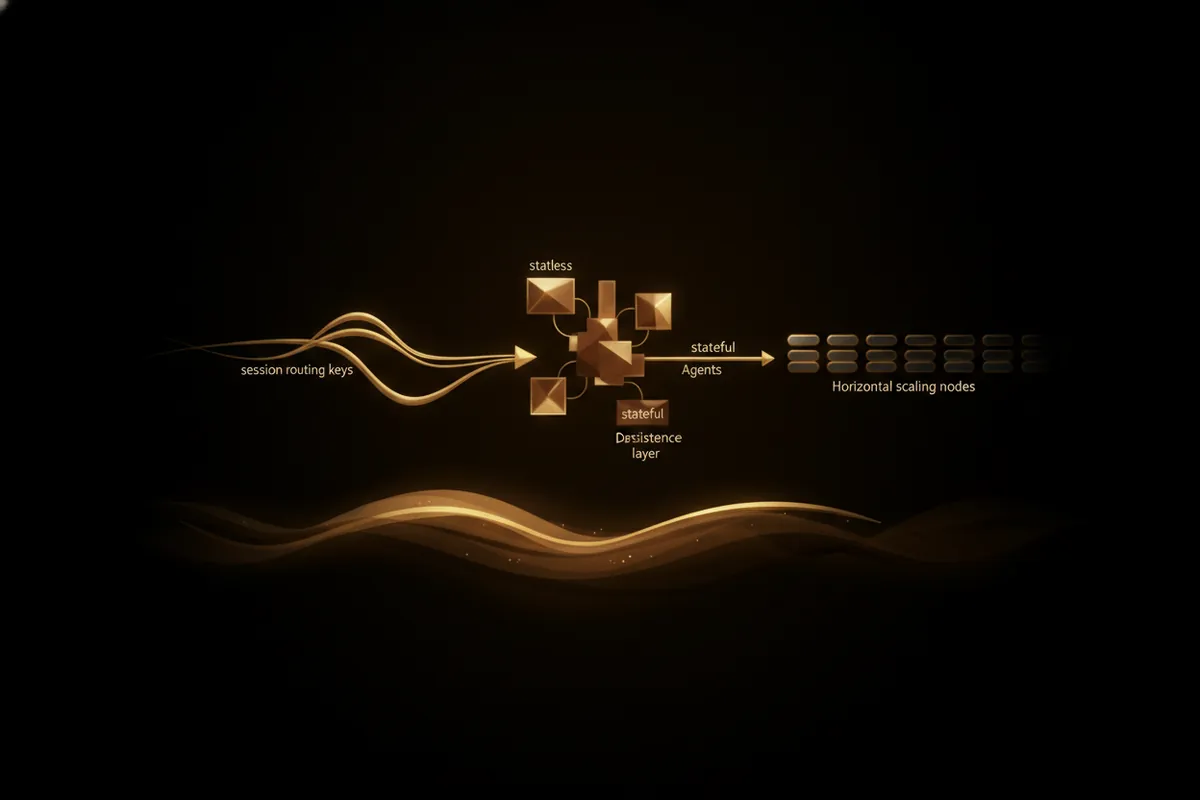
An Honest Architect's reading of MachineLearningMastery's stateful-vs-stateless agent design article: six mechanism forms, Theorem 3, and cross-domain parallels to Everythink's stateless Sisters and stateful Loom.
→ →Build your world on an engine that proves what it claims.
Create your own network on the engine that's run since 2016 — or talk to the team behind the 21 papers.