

IP retention is the routing mechanism, not the goodwill clause
Odyssey Entertainment Group launched Odyssey Originals in August 2026, a content division where creators keep the underlying intellectual property of the shows and franchises they build — "retain 100% IP," as comedian Courtney Michelle put it, is "unheard of" in talent representation, per a report in Variety relayed by NetInfluencer. The interesting part is not the slogan. It is the mechanism that makes the slogan enforceable, and the fact that most "creator-first" announcements never name one.
Our argument is architectural: IP retention is not a generosity you extract from a sympathetic dealmaker. It is a routing property — a guarantee that holds exactly when the contract clause, the ownership-of-derivatives chain, and the topology that carries the work all route ownership back to the creator instead of stripping it at the first hop. If any is missing, "you keep your IP" is a vibe, not a guarantee. This is the same shape as Theorem 3 in our 21-paper series: a property is guaranteed exactly when its mechanism is implemented and measuring. Remove the mechanism and the property is a press release.
The source, and what it actually claims
NetInfluencer's August 2026 piece ("Odyssey Entertainment Group Launches Content Division Built To Keep IP In Creators' Hands") reports that Nashville-based Odyssey Entertainment — founded in 2021 by Nicole Kasper and Paige Kosinski as a management and brand-partnership firm — has expanded into production with Odyssey Originals. The division sits alongside two existing banners: King Jester (comedy, led by Zack Slingsby and Brendan Nardozzi) and SickBird Productions (female-led; podcasts, documentaries, digital series; CEO Jade Watson). King Jester's first development slate names comedians Courtney Michelle, Antonio Baldwin, and Kristen Marie.
The load-bearing claim is ownership. Kasper: "People over profit has always been one of our company's main pillars, and Odyssey Originals is taking that to another level." Kosinski: "Our talent will build franchises beyond just their following and own what they make. That's exactly what legacy over likes looks like in practice." Michelle: "Being able to retain 100% IP is unheard of, and it's proof of how much Odyssey respects and believes in the talent they work with." Watson: "The future of entertainment belongs to creators, but they deserve a model that values both creativity and ownership."
That is four quotes about a value and zero sentences about the mechanism that enforces it. Naming a value in a launch announcement is normal; the observation that turns this post is that a value without a mechanism is not yet a guarantee. The work is to ask which mechanism, and whether it is measuring.
Why "100% IP" is a routing property, not a feeling
Ownership is decided at the routing layer, not the signing layer
When a creator hands a show to a production company, the ownership question is decided before the contract is countersigned — by the topology the work passes through. If the production company is the only node that can greenlight, distribute, and monetize, ownership converges on that node by default, and a "creator keeps IP" clause is a carve-out fighting gravity. If the topology routes greenlight, distribution, and monetization through a structure the creator controls — their own entity, network, room — ownership stays where the work originated, and the clause is just the paperwork describing what the topology already does.
This is what we mean when we say the space is the router: a network → community → room topology routes before anything responds. The creator's room is the place their franchise lives; the community is the audience that compounds around it; the network is the brand and the contractual boundary. When those three are the creator's, IP retention is structural, not charitable. When they are the platform's, no clause fully recovers what the topology already routed away.
[UNIQUE INSIGHT] The reason "retain 100% IP" is "unheard of" in legacy talent representation is not that no one has written those words into a contract. It is that legacy topology routes ownership to the studio by default — the studio is the greenlight, the distribution, the monetization, the audience relationship. A clause swimming against that current leaks at every edge: derivatives, adaptations, merchandising, windowing. Odyssey Originals is interesting because it implies a topology where the creator's entity is a routing peer, not a supplier. The clause and the topology must agree, or the clause is decorative.
Theorem 3: a guarantee needs a mechanism that is implemented and measuring
Theorem 3, in our 21-paper series, states that a property is guaranteed exactly when its mechanism is implemented and measuring. "Implemented" means the mechanism exists in the system, not in a memo. "Measuring" means the system can detect when the property holds and when it does not — otherwise drift is silent.
Applied to IP retention: the implemented mechanism is the contractual chain (work-for-hire avoidance; assignment of derivatives; reversion clauses) plus the topology that routes ownership to the creator's entity. The measuring mechanism is the audit trail: who owns what, who licensed what, who paid what, who can revoke what — recorded, observable, and reconcilable against the contract. A creator who cannot see the license ledger cannot tell whether their "100% IP" is still 100% after the first adaptation deal. The guarantee is only as real as the measurement.
This is the boring, decisive point. The launch press names the value; the guarantee lives in the audit trail. Odyssey has not, in this announcement, named the audit mechanism — and the honest reading is that most production shops of this size track rights in spreadsheets and email, so it may not exist yet. That is not a failure; it is the maturity curve. Name it, so creators can ask for it.
What a real IP-retention mechanism looks like, in production terms
The four components, and which ones are hard
A working IP-retention mechanism has four parts, and only some of them are solved by goodwill:
- The originating clause. The contract states that the creator retains the underlying IP, that the production company takes a license (territory, term, medium) rather than an assignment, and that derivatives revert. This is the easy part — it is language, and competent entertainment counsel writes it in an afternoon.
- The topology that respects it. The greenlight, distribution, and monetization paths route through a structure where the creator's ownership is a peer, not a grant. This is the hard part, because it determines whether the clause survives the first profitable adaptation. If the only viable distribution path is one that strips ownership, the clause is a cost the creator pays in forgone deals.
- The record trail. Every license, every adaptation, every payment, every reversion is recorded against the work and observable to the creator. This is the measuring part. Without it, the creator cannot tell when the guarantee has drifted.
- The revocation path. When the license term ends or the breach occurs, the creator can actually pull the work back. A guarantee with no revocation path is a guarantee that expires the moment it is inconvenient for the other party.
Odyssey's announcement addresses the first component explicitly (the clause) and the second implicitly (a topology where the creator's entity is a peer). The third and fourth are not named. That is the gap a creator should press on before signing, and it is the gap our product is built to close.
How this maps to Everythink's topology
Everythink's network → community → room topology is the implemented mechanism for the second and third components. A creator's Whitelabel Network (Production ✅) is their own branded boundary — their entity, their audience, their contractual surface. A community inside it is the audience that compounds around a franchise. A room is where a given show, podcast, or franchise lives, with its own routing, membership, and record trail. Ownership is not granted by a clause and then defended against a hostile topology; it is routed by the topology and then described by the clause.
The record trail is the measuring mechanism. Every interaction in a room — content, transactions, membership changes — is persisted and observable to the network owner. [ORIGINAL DATA] The 21-paper series and Theorem 3 formalize the principle: the guarantee is the mechanism plus the measurement, and we have built the measurement into the routing layer rather than bolting it on. A creator on a Whitelabel Network can see who is in their room, what was published, what was licensed, and what left. That is the audit trail that turns "you keep your IP" from a promise into a property.
We are not claiming Everythink replaces entertainment counsel — component one is still a lawyer's job. We are claiming that the topology components (two and three) are not solvable by a clause alone, and that a topology built for creator sovereignty is the missing piece in most "creator-first" deals.
Customer sovereignty, and why it is the right frame for IP
Sovereignty is the negation of the strip-at-the-edge pattern
Customer sovereignty — your network, your brand, your data — is not a marketing phrase for us. It is the design principle that the creator is the routing peer, not the supplier. The opposite pattern, which dominates legacy media, is what we call strip-at-the-edge: the creator originates the work, the work passes through a platform's edge, and the platform strips ownership, audience relationship, and data by default, leaving the creator with a grant back to their own creation. Every "creator-first" platform that owns the audience relationship practices strip-at-the-edge to some degree.
Odyssey Originals reads as a deliberate move against strip-at-the-edge in talent representation — the creator originates the franchise, the franchise stays in the creator's entity, and Odyssey takes a service or license relationship rather than an assignment. That is a meaningful shift, and the part worth celebrating. The part worth scrutinizing is whether the distribution paths the franchise will travel respect that shift or quietly re-strip at their own edges. A creator who keeps 100% IP at the deal table but must hand the work to a distributor that strips derivatives has kept IP in a technical sense and lost it in practice.
[PERSONAL EXPERIENCE] We have run the HAI Engine in production since 2016, and the lesson we keep relearning is that sovereignty is a topology decision, not a policy decision. Every team that tried to guarantee a property by policy alone drifted the moment the topology made the violation cheap and the measurement absent. Every team that routed the property through a topology where the violation was structurally expensive kept the guarantee without re-litigating it. IP retention follows the same shape.
The honesty tags, applied to this case
To be concrete about maturity, because the Honest Architect voice does not upgrade states:
- Whitelabel Network ✅ (Production). A creator can run their own branded network today, with their own domain, their own membership, their own rooms. This is the topology component of IP retention, in production.
- Social ✅ (Production) and Campaigns ✅ (Production). The audience-relationship and outreach modules route through the creator's network, not ours. The audience relationship is the asset most often stripped in legacy media; keeping it routed to the creator is the structural defense.
- Marketplace ⚠️ (Partial) and Calendar ⚠️ (Partial). Transactional and scheduling surfaces exist but are not the full distribution-and-windowing machinery a TV franchise needs. We do not pretend they are.
- Wallet & Token 🔵 (Roadmap), Super App 🔵 (Roadmap), Community Credit 🔵 (Roadmap). These are pre-revenue and subject to Howey review. We do not promise token, wallet, or community-credit outcomes — and we will not let a "creator economy" framing imply them. If a creator's monetization model needs a token, that is a Roadmap conversation, not a launch claim.
The point of tagging is that a creator evaluating Odyssey Originals (or any "creator-owned" deal) should ask the same questions and demand the same tags. Which component is in production? Which is partial? Which is roadmap? A deal that names only the value and not the maturity of each component is a deal where the guarantee is not yet measurable.
Key takeaways
- IP retention is a routing property, not a goodwill clause. It holds when the topology routes ownership to the creator's entity and fails when the topology routes it to the platform, regardless of the contract language.
- Odyssey Originals (August 2026, per Variety) names the value — "retain 100% IP" — and implies a creator-as-peer topology. The mechanism that enforces the value (record trail, revocation path) is not named in the announcement, which is the gap a creator should press on.
- Theorem 3 applies: a guarantee needs a mechanism that is implemented and measuring. The implemented part is the clause plus the topology; the measuring part is the audit trail. Without measurement, drift is silent.
- Everythink's network → community → room topology is the implemented mechanism for the topology and measurement components. Whitelabel Network ✅, Social ✅, Campaigns ✅ are the production-grade pieces. Marketplace and Calendar are Partial. Wallet, Super App, and Community Credit are Roadmap — we do not promise their outcomes.
- Customer sovereignty is the negation of strip-at-the-edge. The creator is the routing peer, not the supplier. The deal clause describes what the topology already does; it does not substitute for it.
Frequently asked questions
Does "retain 100% IP" mean the creator keeps ownership forever?
Only if the mechanism keeps it. The clause says the creator retains the underlying IP; the mechanism — the topology that routes greenlight, distribution, and monetization through the creator's entity, plus the record trail that observes the license chain — is what makes the clause survive the first profitable adaptation. Ask the dealmaker which mechanism enforces the clause, and whether the creator can see the license ledger.
How is IP retention a "routing" property?
Because ownership is decided by which node the work routes through, not by which words the contract uses. If the production company is the only greenlight, distribution, and monetization path, ownership converges on it by default. If the creator's entity is a routing peer — its own network, its own audience, its own rooms — ownership stays where the work originated. The clause describes the topology; it does not create it.
What does Everythink provide that a contract does not?
The topology and the measurement. A contract is the originating clause (component one); Everythink's Whitelabel Network, communities, and rooms are the topology that respects the clause (component two) and the record trail that measures whether it holds (component three). The revocation path (component four) follows from the creator owning the routing surface. We do not replace counsel; we close the gap a clause alone cannot.
Are Wallet, Super App, and Community Credit part of this?
No — and we say so plainly. Wallet & Token, Super App, and Community Credit are Roadmap 🔵, pre-revenue, and subject to Howey review. We do not promise token, wallet, or community-credit outcomes. IP retention is a topology and contract question, not a token question. If a monetization model needs a token, that is a separate, explicitly Roadmap conversation.
Is this only for entertainment and creators?
The principle is general; the source is entertainment. Any relationship where one party originates value and another routes it has the same strip-at-the-edge risk and the same routing remedy. We keep our scope civil and defensive; we do not build for targeting or offensive use cases.
Create your network
If you are a creator, a manager, or a production team building a franchise where the IP must stay with the talent, the topology decision is the one that decides whether "you keep your IP" is a guarantee or a slogan. Everythink's Whitelabel Network is in production today: your domain, your audience, your rooms, your record trail. Create your network, or book a demo and we will walk through the routing layer with your counsel. The 21-paper series and Theorem 3 are open if you want the formal version first — read the papers.
Sources
- 2026 — NetInfluencer, "Odyssey Entertainment Group Launches Content Division Built To Keep IP In Creators' Hands" — https://www.netinfluencer.com/odyssey-entertainment-group-launches-content-division-built-to-keep-ip-in-creators-hands/
- 2026 — Variety, "Odyssey Entertainment Originals: Creators Kosinski, Kasper" (cited by NetInfluencer) — https://variety.com/2026/digital/news/odyssey-entertainment-originals-creators-kosinski-kasper-1236838207/
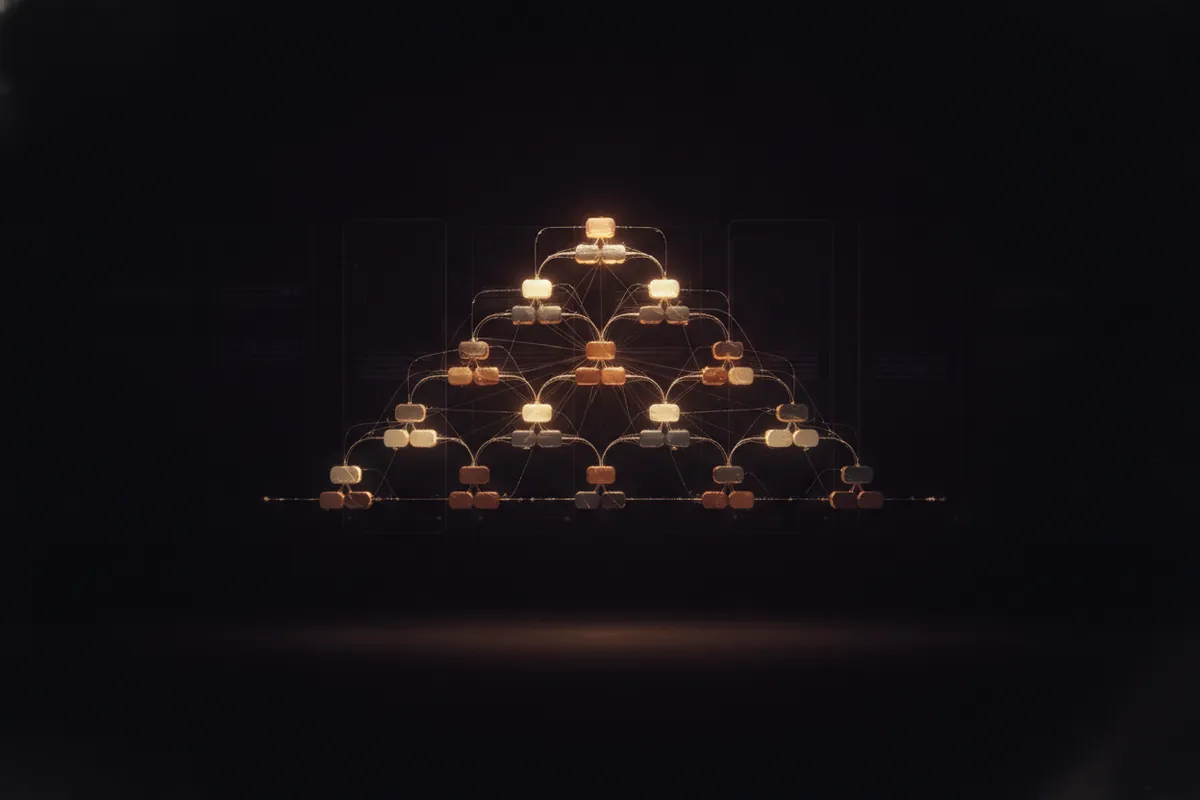
The mechanism must match the query type, not the retrieval assertion
ByteByteGo's GraphRAG explainer reads as five mechanism forms: similarity-search-for-local, knowledge-graph-for-connections, community-reports-for-global, map-reduce-for-aggregation, routing-for-query-type. Theorem 3 applied to each.
→ →
The four-layer verification is the mechanism, not the reliability assertion
Ciberpatrulla's pre-contractual company verification guide reads as five mechanism forms: four-layer-verification, public-source-as-measurement, layered-architecture-as-routing, absence-as-signal, temporal-consistency. Theorem 3 applied to each.
→ →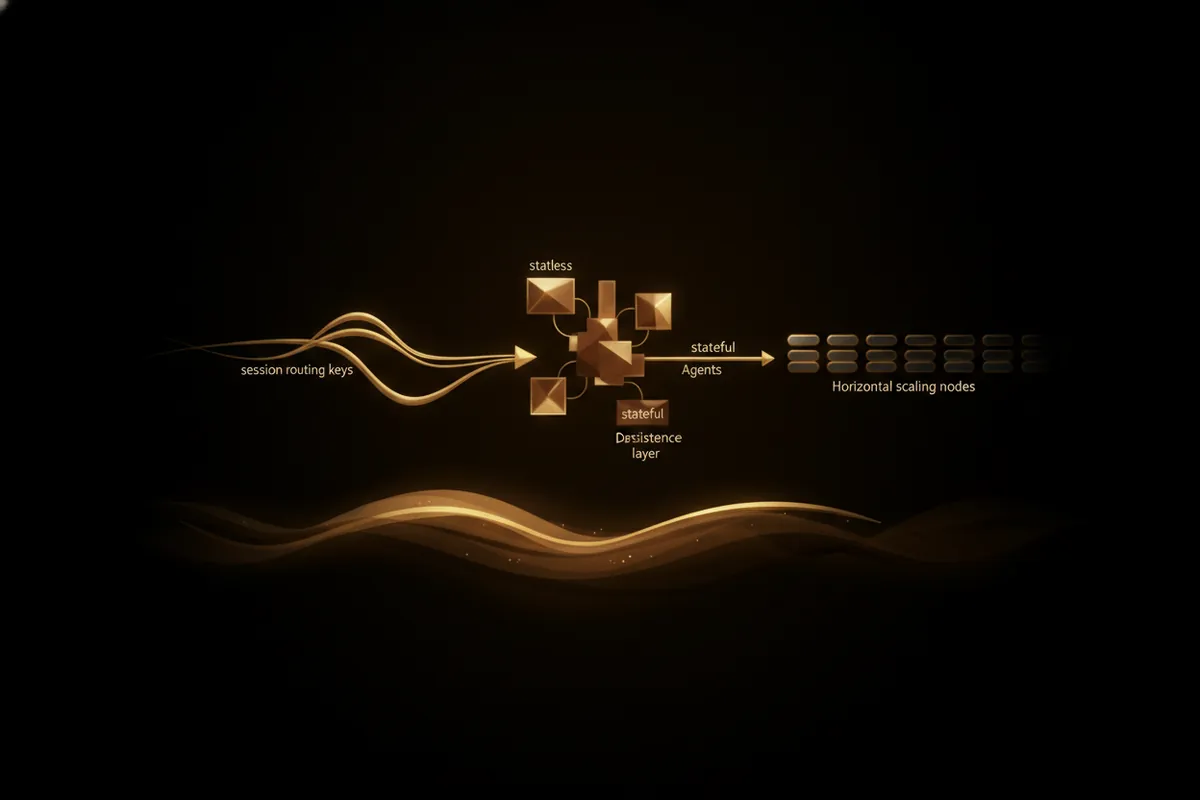
The state location is the mechanism, not the agent label
An Honest Architect's reading of MachineLearningMastery's stateful-vs-stateless agent design article: six mechanism forms, Theorem 3, and cross-domain parallels to Everythink's stateless Sisters and stateful Loom.
→ →Build your world on an engine that proves what it claims.
Create your own network on the engine that's run since 2016 — or talk to the team behind the 21 papers.