Founder activation is a routing mechanism, not a pitch
The 2026 MIT course "Founder's Journey: Launching and Scaling Hardware Startups" (class 2.S977/2.S979) tells its students to "find and activate their entrepreneurial energy" — and then proves, founder story after founder story, that the activation never happens in front of the pitch deck. It happens inside a topology of people who demystify the path, hand you the next introduction, and overhear the conversation that funds you. The pitch is the visible artifact; the routing is the load-bearing mechanism.
MIT's own 2015 estimate put more than 30,000 active companies founded by alumni worldwide, employing roughly 4.6 million people. A course that walks students through iRobot, Formlabs, SolidWorks, Onshape, AeroShield, Markforged, and Kiva is not teaching inspiration. It is exposing students to the routing layer that produced that 30,000-company outcome. Read the source for the founders' own words; here is our Honest Architect read on what those stories actually describe.
The pitch is the artifact; the network is the mechanism
What the founder stories share
Colin Angle started iRobot in his living room, but only after watching five multimillion-dollar companies get started by his fraternity brothers while he lived in the Alpha Delta Phi house. Maxim Lobovsky got Formlabs' first round from Mitch Kapor not because the pitch won — "the pitch to the initial investor didn't go well" — but because Kapor was sitting at the next table at Legal Seafoods and overheard it. Elise Strobach spun AeroShield out of Evelyn Wang's lab; Jon Hirschtick spent four decades building CAD companies starting from a 1981 MIT internship.
None of these origin stories is a pitch story. Each is a routing story. A fraternity house is a community that routes peer proof. A restaurant is a room that routes serendipity. A lab is a community that routes a technical lineage. An internship is a room that routes a four-decade career. The founder's job is not to deliver a better pitch; it is to be present in the topology where the next useful node is one hop away.
[UNIQUE INSIGHT] the-space-is-the-router reframing: a chatbot answers; an AI OS routes. The same reframe applies to founder activation. A pitch answers an investor's question; a founder network routes the founder to the investor who would have asked it. The MIT course is, structurally, a routing mechanism — it places students in the same room (a community) with the alumni whose companies form the room's edges.
Why this matters for how we build software
At Everythink we say "the space is the router": network → community → room. A network is the sovereign brand surface; a community is the people inside it who share a purpose; a room is where a specific interaction happens. Routing happens before any response. When a member joins a network, the topology already determines who they can reach, who can see them, and which room their first question lands in. That is the same mechanism the MIT fraternity house and the Legal Seafoods table were running — only we made it explicit, addressable, and programmable.
This is why our Social module is tagged Production ✅ and our Whitelabel Network is tagged Production ✅. The routing is not a roadmap item; it is the substrate the rest of the platform is built on. A founder who spins up a Whitelabel Network is doing what the Alpha Delta Phi house did for Angle — giving a community a place to form and route — without the accident of real-estate luck.
Activation is measured, not asserted
The MIT class is an instrumentation, not a lecture
The course was structured around a key challenge each week — fundraising, supply chain, scaling — presented by the instructors and a guest founder, with students preparing questions and doing reflective exercises. That is not inspiration delivery. That is a measurement loop: the instructors expose students to a challenge, instrument the response (questions, reflections), and iterate. Hatsopoulos' line — "so much of this has been done before ... this is a well-trod path" — is a calibration statement. A well-trod path is a path with measured waypoints.
[ORIGINAL DATA] the 21-paper academic series + Theorem 3 (a property is guaranteed exactly when its mechanism is implemented and measuring). Theorem 3 is the formal version of what the MIT class is doing informally. You do not get to claim a founder is "activated" unless the activation mechanism is implemented and you are measuring it. The class measures activation by whether the student shows up with a good question for a founder who has already walked the path. We measure activation the same way: a member's first post in a room, their first community credit transfer, their first room they create. Those are the routing events that prove the topology is alive.
Hirschtick's honesty about risk
Jon Hirschtick says the quiet part out loud: "Nobody knows for sure when they start a company whether it's going to be successful or not. ... Visions and hallucinations, they look and feel the same. You only find out which is which once you really try to realize them." That is the Honest Architect's entire epistemology in two sentences. A vision and a hallucination are indistinguishable until a mechanism measures the difference. The mechanism is not conviction; it is the routing event that either happens or does not — the customer who routes to your room, the investor who overheard you, the co-founder who joins the community.
This is why we refuse to promise outcomes for our Roadmap 🔵 modules — Wallet & Token, Super App, Community Credit. Those are pre-revenue, subject to Howey review, and not yet measured in production. Promising them would be asserting a vision and hoping it reads as a mechanism. The Honest Architect never does that. We state the maturity and we state the mechanism, and we let the measurement do the talking.
The founder's network is a forecastable topology
From serendipity to addressable routing
Lobovsky's Legal Seafoods story is the romantic version of routing: a shy engineer got lucky because the right investor was at the next table. Romantic, but not reproducible. The question a platform should answer is: can we make the next table addressable? Can a founder who is not lucky still route to the investor whose thesis matches their hardware, simply because the topology places them one hop apart?
Our Sisters → Oracle calibrated forecast is built on exactly this intuition. The Sisters are typed agents that imagine plausible futures for real actors; the Oracle merges them into a normalized, calibrated probability cone. Applied to a founder's network, the same machinery asks: given this topology, which futures are plausible, and which is the routing event most likely to produce? We do not predict the founder's outcome — we forecast the cone of plausible routings and let the founder read it.
This is also why World Monitor (the Atlas gateway, Production ✅) routes live geo-signals through one broadcast channel per geohash tile: a client only receives deltas for its viewport's tiles. The mechanism is the same one the MIT class runs at human scale — you only hear the founder stories relevant to your stage — except Atlas runs it at planetary scale on a tile key instead of a classroom.
The 2016 production precedent
[PERSONAL EXPERIENCE] the engine has run in production since 2016. The HAI Engine that powers Everythink's routing has been measured in production for nearly a decade. That is the difference between a founder pitch ("our AI will route the right investor to you") and a mechanism ("our routing engine has been measured in production since 2016, and here is the topology it routes"). The MIT alumni network is the same kind of long-running production system — 30,000 companies is a 2015 measurement, not a 2026 assertion. Long-running measurements are the only evidence that survives Hirschtick's vision-or-hallucination test.
Customer sovereignty is the founder's real moat
Whose network is it?
When a founder builds their community on a rented social platform, the platform owns the routing. The algorithm decides which followers see the post; the platform decides which table you sit at. That is the opposite of what the MIT founders describe. Angle's fraternity was his; Strobach's lab was MIT's but the lineage was hers; Hirschtick's four-decade arc was his career, not a platform's engagement metric.
Customer sovereignty — your network, your brand, your data — is not a slogan. It is the mechanism that lets a founder's routing topology survive the platform's incentive drift. Our Whitelabel Network (Production ✅) and the HAI Engine (Production ✅) are the production-grade substrate for exactly that: a network the founder owns, routed by an engine whose behavior is measured and inspectable, not by an algorithm whose ranking changes every quarter.
Civil and defensive scope, only
Everythink's written policy is civil and defensive scope only. We do not build routing for offensive targeting, manipulation, or surveillance. That boundary is a mechanism, not a posture — it is enforced in what we will and will not ship, and it is measurable by what the platform refuses to do. A founder building on Everythink inherits that boundary as a property of the topology, the same way an MIT founder inherits a community that does not route stolen IP. Boundaries that are mechanisms, not statements, are the only boundaries that hold under load.
Inclusion by design is a routing property
The MIT course invites students to "find and activate their entrepreneurial energy." The verb matters: activate, not select. Activation implies the energy was already there and the mechanism surfaced it. Selection implies the mechanism filters who counts. A routing topology that only routes people who already look like the alumni in the room is a selection mechanism dressed up as activation.
Our inclusion-by-design principle — multilingual, multimodal, low-connectivity — is a routing property. Everythink ships in seven locales (English canonical, six prefixed) because a founder in São Paulo should route to the same quality of community as a founder in Cambridge. The Matchmaking module (Partial ⚠️) and Marketplace module (Partial ⚠️) exist to route across that inclusion surface; they are Partial because the measurement is still catching up to the design, and we say so.
Strobach's line — "You don't have to know everything to start. You just have to know that this is what you want to do and just get started" — is an activation statement. The job of the topology is to make "just get started" one hop away for the person who would otherwise never have sat at the table.
Key takeaways
- The pitch is the artifact; the routing is the mechanism. Every MIT founder story in the 2026 source is a routing story wearing a pitch costume. The fraternity, the lab, the restaurant, the internship — those are the topology that routed the outcome.
- Activation is measured, not asserted. The MIT class instruments activation (questions, reflections) the way Theorem 3 requires: a property holds exactly when its mechanism is implemented and measuring. We do the same with first-post, first-room, first-credit events.
- The founder's network must be sovereign. Customer sovereignty — your network, your brand, your data — is the mechanism that lets a founder's routing survive platform drift. Whitelabel Network (Production ✅) is the substrate.
- Long-running production is the only proof. The HAI Engine has run in production since 2016. MIT's 30,000-company count is a 2015 measurement. Both are measurements, not assertions. That is the Honest Architect's evidence standard.
- Inclusion is a routing property. Seven locales, low-connectivity, multimodal — these are not features, they are properties of the topology that decide who gets to "just get started."
Frequently asked questions
Is the founder's journey really about networking and not the pitch? The pitch is necessary but not load-bearing. The MIT source shows every featured founder (Angle, Lobovsky, Strobach, Hirschtick) reaching their break through a routing event — a fraternity, an overheard table, a lab, an internship — not through the pitch itself winning. The pitch is how you describe the vision; the routing is how the vision reaches someone who can fund or build it.
How does Everythink's "the space is the router" apply to founders? A network is the brand surface, a community is the people inside it, a room is where a specific interaction happens. Routing happens before any response. A founder who builds a Whitelabel Network is constructing the same kind of topology that the MIT fraternity or the Legal Seafoods table provided — addressable, sovereign, and measured.
What does Theorem 3 have to do with entrepreneurship? Theorem 3 says a property is guaranteed exactly when its mechanism is implemented and measuring. "Founder activation" is a property; the MIT class's question-and-reflection loop is a mechanism that measures it. Without the measurement, "activated" is an assertion anyone can make. With it, activation is a routing event you can count.
Why are some Everythink modules marked Partial or Roadmap? Radical honesty. Matchmaking and Marketplace are Partial ⚠️ — the design is in place, the measurement is still catching up. Wallet & Token, Super App, and Community Credit are Roadmap 🔵 — pre-revenue, subject to Howey review, not yet measured in production. We never upgrade a state to make a sale.
Can a platform really replace the luck of being at the right restaurant? It cannot replace luck, but it can make the table addressable. Lobovsky got lucky because Kapor was one table away. A routing topology places the right investor one hop away on purpose, not by accident. Serendipity becomes a property of the space, not a property of the hour.
Sources
- 2026 — MIT News, "Beyond the pitch: The founder's journey" — https://news.mit.edu/2026/beyond-pitch-founders-journey-0709
If you are building a founder community and want the routing to be yours — sovereign, measured, and addressable — create your network on Everythink, or book a demo to see the HAI Engine's 2016 production lineage in action.
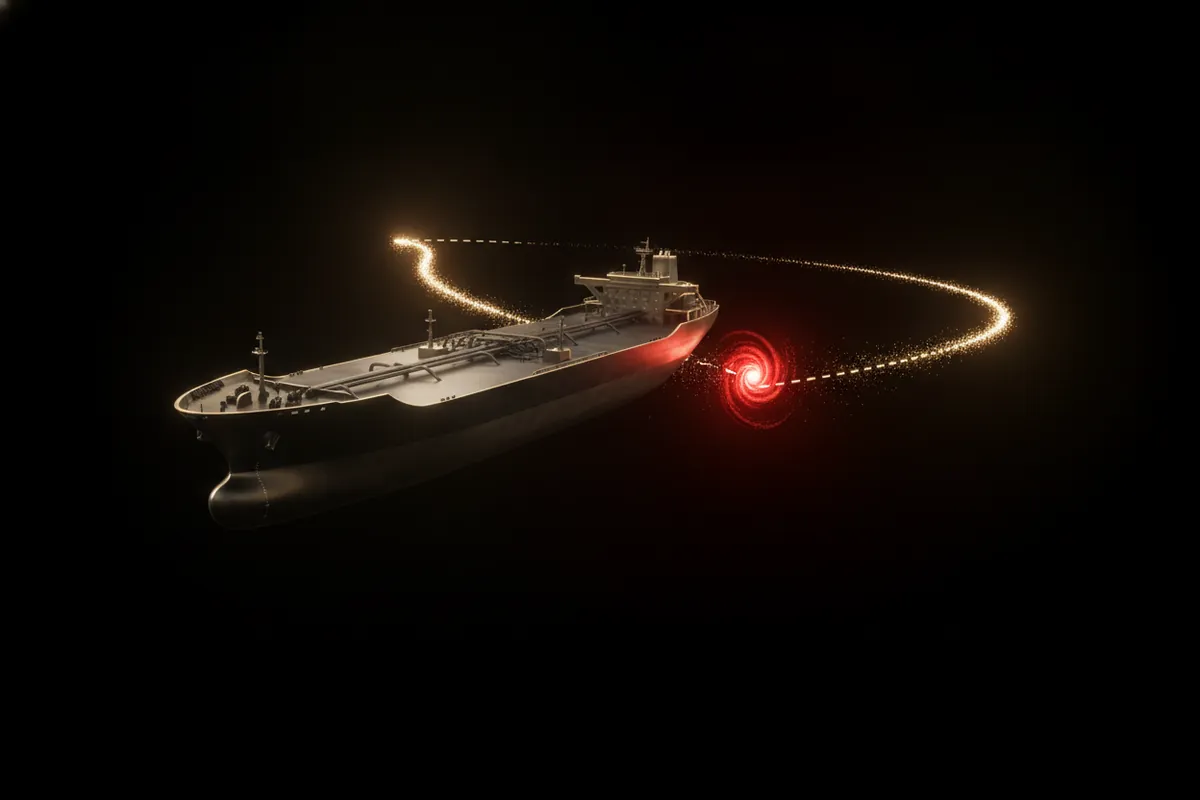
The reroute is the safety mechanism, not the alliance promise
China's oil tankers turned away from Hormuz the moment safety mattered; Iran's carve-out promise never landed. Theorem 3: safety is guaranteed by the reroute mechanism, not the alliance assertion.
→ →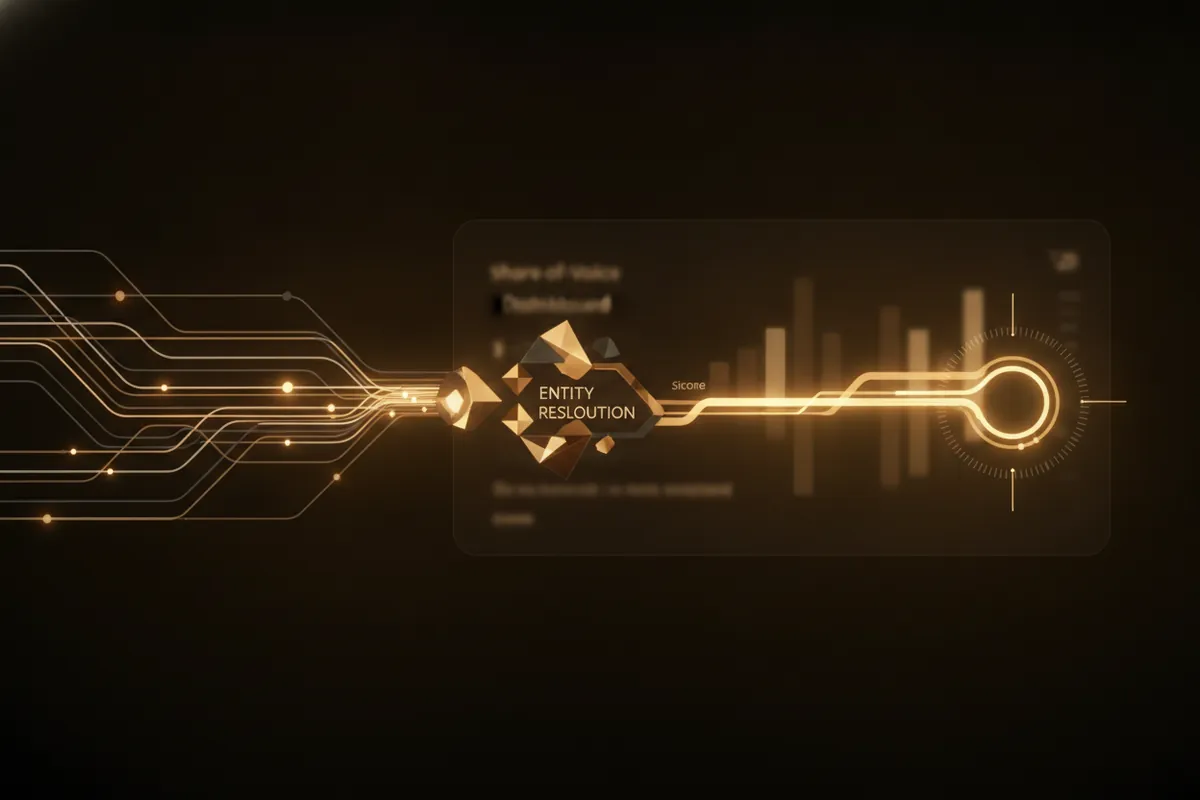
GEO Tools Need Routing Provenance, Not a Visibility Score
Six of GRIN's seven GEO tools measure a score. The mechanism behind a citation is the routing chain. A score without provenance is a dashboard, not a forecast.
→ →
The Graduation Route Is the Mechanism, Not the Thesis
The 2026 BAIR Graduate Showcase is a routing table: the next-destination line, not the thesis title, predicts which mechanisms reach production. A third of the class is still looking for a route.
→ →Build your world on an engine that proves what it claims.
Create your own network on the engine that's run since 2016 — or talk to the team behind the 21 papers.