

Thoma Bravo announced on March 3, 2026 that it will acquire WWEX Group and combine it with Auctane to form one of the largest logistics and shipping technology platforms. The press release uses "AI-enabled end-to-end logistics solution" three times. The Honest Architect reading is that the AI label is downstream of the actual mechanism. The mechanism is the data unity: a single data pipeline from checkout (Auctane's ShipStation, Stamps.com, Metapack, Packlink) to doorstep (WWEX Group's parcel, LTL, truckload, and global freight brokerage moving 70 million shipments per year for 130,000 customers). The property "AI-driven decision support" is guaranteed by the mechanism of unified data across checkout and freight in one platform. That mechanism is announced, not yet implemented. The definitive agreement is signed. The close is expected in the second quarter of 2026, subject to regulatory approvals. Today, the AI claim is Roadmap.
The easy reading of this announcement is "Thoma Bravo builds an AI logistics giant." That reading is correct in two of its three words. Thoma Bravo is building. It will be a logistics giant. The third word, AI, needs Theorem 3 applied to it. A property is guaranteed exactly when its mechanism is implemented and measuring. The property here is "AI-driven decision support across the logistics lifecycle." The mechanism is unified data from checkout to doorstep in one platform. The measurement is not named in the press release. No shipper-cost delta, no delivery-time delta, no model-accuracy metric is cited. The claim is real, the mechanism is named, the measurement is not. This is the honest scorecard.
The story, in one paragraph
Thoma Bravo, the world's largest software-focused investment firm with $181 billion in assets under management as of September 30, 2025, has signed a definitive agreement to acquire WWEX Group from a consortium of investors including CVC Capital Partners Fund VIII, Providence Equity Partners, Ridgemont Equity Partners, and PSG. WWEX Group is a third-party logistics provider whose brands include Worldwide Express, GlobalTranz, Unishippers, JEAR Logistics, and BLX Logistics. It reported approximately $5 billion in annual systemwide revenue in 2025, moves 70 million shipments per year, serves 130,000 customers, and fields a nationwide sales force of more than 2,300 professionals across direct, franchise, and agent channels. Following the close, Thoma Bravo will combine WWEX Group with Auctane, its existing portfolio company whose products include ShipStation, Stamps.com, Metapack, and Packlink. CVC Funds and other existing WWEX Group investors will roll over a portion of their equity and retain a significant minority position. The transaction is expected to close in the second quarter of 2026. The advisors include Kirkland and Ellis, J.P. Morgan Securities, Morgan Stanley, Goldman Sachs, UBS Investment Bank, and Latham and Watkins.
The method: Theorem 3 applied to a press release
Theorem 3 says a property is guaranteed exactly when its mechanism is implemented and measuring. A press release announces properties. The Honest Architect asks which properties have mechanisms, which mechanisms are implemented, and which are measuring. A property without a mechanism is a claim. A property with a mechanism that is not implemented is an intention. A property with a mechanism that is implemented and measuring is a guarantee. This press release has all three. The "AI-driven decision support" is a claim today, an intention at close, and a guarantee only after the combined data pipeline produces a measured shipper outcome. The $5 billion revenue and 70 million shipments are guarantees. The equity rollover is a guarantee. The "next generation of AI-enabled logistics" is an intention.
Mechanism 1: checkout-to-doorstep as one data pipeline (load-bearing) ⚠️
This is the load-bearing mechanism. The property "AI-driven decision support across the logistics lifecycle" is guaranteed by the mechanism of a single data pipeline from checkout to doorstep. Auctane sits at the checkout: label printing, carrier selection, shipping software for e-commerce. WWEX Group sits at the doorstep: parcel, LTL, truckload, and global freight brokerage. Today, these are two data silos. After the close, they are one data pipeline. The AI advantage is downstream of the data unity. Without the combination, the AI model sees half the shipment. With the combination, it sees the whole shipment from cart to delivery. Theorem 3 reads this as Partial. The mechanism is real and named but not yet implemented. The close is Q2 2026. Today, this is an intention with a clear implementation path. Partial.
Mechanism 2: the carrier network as routing layer ✅
The property "the shipment reaches the right carrier" is guaranteed by the mechanism of a carrier network that routes before anything moves. Auctane has global carrier connectivity through ShipStation, Stamps.com, Metapack, and Packlink. WWEX Group has what the press release calls a "highly selective carrier portfolio" across small package, truckload, LTL, and managed transportation. Combined, the carrier network is the routing layer. The shipment is routed to the carrier before the truck arrives. This is the space is the router: the topology of carrier relationships routes the shipment before anything responds. Both companies operate this mechanism today, independently. The combination extends the topology. Production. The carrier network exists and is routing today. The combination is a topology expansion, not a new mechanism.
Mechanism 3: 70 million shipments as the training corpus ⚠️
The property "the AI model has enough data to be useful" is guaranteed by the mechanism of a training corpus of historical shipments. WWEX Group moves 70 million shipments per year. This is the data volume that trains the AI-driven decision support. The mechanism is the shipment history, not the algorithm. A model without 70 million shipments of parcel, LTL, and truckload data is a model with an opinion. A model with 70 million shipments is a model with evidence. Theorem 3 reads this as Partial. The data exists today inside WWEX Group. The combined AI model does not. The raw material is ready. The product is announced. Partial.
Mechanism 4: $5 billion revenue and 130,000 customers as the commercial engine ✅
The property "the software reaches the market" is guaranteed by the mechanism of a commercial engine: 2,300 sales professionals across direct, franchise, and agent channels, serving 130,000 customers, generating $5 billion in annual systemwide revenue. Auctane's software without WWEX Group's commercial engine is a product without distribution. WWEX Group's commercial engine without Auctane's software is distribution without a product. The combination is software plus distribution. Theorem 3 reads this as Production. Both exist and are operating today, independently. The 130,000 customers and 2,300 sales professionals are measured. The $5 billion revenue is measured. Production.
Mechanism 5: the equity rollover as alignment mechanism ✅
The property "the seller's incentive aligns with the buyer's outcome" is guaranteed by the mechanism of an equity rollover. CVC Funds and other existing WWEX Group investors will roll over a portion of their equity and retain a significant minority position in the combined company. This is not a financial detail. This is a mechanism. A seller who cashes out entirely has no incentive to see the combined entity succeed. A seller who rolls equity has the same incentive as the buyer. Theorem 3 reads this as Production. The equity rollover is a standard private-equity alignment mechanism. It is implemented at close. It is measuring in the sense that the rolled equity's value tracks the combined entity's performance. Production. Most coverage will mention the rollover as a deal term. The Honest Architect notes it as the incentive mechanism that ties the seller to the buyer's outcome.
Mechanism 6: "AI-enabled" as the claim that requires the mechanism 🔵
The property "AI-enabled end-to-end logistics" is guaranteed by the mechanism of unified data across checkout and freight in one platform, with a measured shipper outcome. The press release names the claim three times. It names the mechanism once: "integrating Auctane's cloud-based software, global carrier connectivity and intelligent automation capabilities with WWEX Group's extensive logistics expertise and powerful commercial engine." It does not name a measurement. No shipper-cost delta, no delivery-time improvement, no model-accuracy metric. Theorem 3 reads this as Roadmap. The claim is real. The mechanism is named but not yet implemented (close is Q2 2026). The measurement is not named. A property with a mechanism that is not implemented and not measuring is Roadmap. This is the honest state of a definitive agreement announced 21 days ago. The claim becomes Partial at close. It becomes Production when a shipper outcome is measured. Today, Roadmap.
Two things most coverage will miss
First, the load-bearing value is the data pipeline, not the AI label. The press release leads with "AI-enabled" because that is the word that moves markets. The mechanism that produces the AI advantage is the data unity from checkout to doorstep. Without the combination, there is no unified data. Without unified data, there is no AI advantage. The AI is downstream of the data. The data is downstream of the combination. The combination is the mechanism. Most coverage will report the AI claim as fact. The Honest Architect reports the AI claim as an intention that depends on a mechanism announced but not yet implemented.
Second, the equity rollover is the alignment mechanism, not a financial footnote. CVC Capital Partners is rolling a portion of its equity into the combined entity and retaining a significant minority position. CVC's outcome is now tied to Thoma Bravo's outcome. A seller who exits entirely has no skin in the game. A seller who rolls equity has skin in the game. This is the mechanism that aligns the seller's incentive with the buyer's. Most coverage will mention the rollover in the seventh paragraph. The Honest Architect notes it as the mechanism that makes the combination a partnership rather than an exit.
The parallel with Everythink, and where it is Partial
The Everythink position is that the space is the router: a network modeled as network, community, room routes a request to the right place before anything responds. The carrier network in this combination is the routing layer. The shipment is routed to the carrier before the truck arrives. The carrier portfolio is the topology. The routing happens before the response. This is the space is the router applied to physical logistics. Partial. Everythink routes by topology of identity; the carrier network routes by topology of contracts and rates. Both route before responding.
The Sisters, Everythink's typed AI agents, are personalities: analyst, contrarian, disruptor, historian, institutionalist. Auctane and WWEX Group are two typed agents with different capabilities. Auctane is the checkout-side agent: software, label, carrier connectivity. WWEX Group is the doorstep-side agent: freight brokerage, commercial engine, physical scale. The combination is like merging two Sister types into one ensemble. The Oracle, Everythink's forecast merge, takes multiple candidate futures and returns a calibrated ensemble with entropy on every merge. The "AI-driven decision support" in this combination is the Oracle pattern: multiple carrier options merged into one recommended option. Partial. The Oracle merges under uncertainty with entropy; the shipping recommendation merges under rate and transit-time constraints without a named entropy measure.
World Monitor, Everythink's geo-signal gateway, treats sources as data, not code: add a source by adding a SourceDescriptor, never touch the engine. The combined logistics platform treats carrier connections as data: add a carrier by adding a connection, not by rewriting the software. The carrier portfolio is a registry. Partial. World Monitor sources self-disable when a key is missing; carrier connections degrade when a rate sheet is stale. The Eye Key, Everythink's sovereign identity, keeps plaintext off disk: only the HMAC and fingerprint go to Postgres. The shipper's carrier credentials are the Eye Key of this combination: the shipper's identity is the rate-limit boundary, and the carrier network is accessed through the shipper's key. Partial. One indexes a digital identity, the other indexes a commercial relationship. The HAI Engine has been in production since 2016. Both Auctane and WWEX Group have been operating for years. The load-bearing infrastructure is older than the AI claim in both cases.
The Everythink scope here is commercial and industrial: logistics technology, private-equity mergers and acquisitions, shipping software. Everythink makes no token, wallet, or community-credit outcome promises in this domain. Those remain Roadmap, pre-revenue, subject to Howey review. No investment advice. No fabricated metrics. The $181 billion AUM, the $5 billion revenue, the 70 million shipments, and the 130,000 customers are from the Thoma Bravo press release dated March 3, 2026, attributed to the named parties.
The mechanism, restated
Theorem 3: a property is guaranteed exactly when its mechanism is implemented and measuring. The property in this combination is "AI-driven decision support across the logistics lifecycle." The mechanism is a unified data pipeline from checkout to doorstep in one platform. The measurement is not named. The mechanism is announced (definitive agreement, March 3, 2026) and not yet implemented (close expected Q2 2026, subject to regulatory approvals). The carrier network is Production. The commercial engine is Production. The equity rollover is Production. The 70 million shipments are Production. The data unity is Partial. The AI claim is Roadmap. This is the honest scorecard. The combination is a reasonable bet that data unity produces AI advantage. The bet is named. The mechanism is named. The measurement is not. That gap is the work.
Frequently asked questions
Is the "AI-enabled logistics" claim real today? The claim is real as an intention. The mechanism that would produce it, a unified data pipeline from checkout to doorstep, is announced but not yet implemented. The close is expected in the second quarter of 2026. The AI claim becomes Partial at close and Production when a shipper outcome is measured. Today, it is Roadmap.
Why is the data unity the load-bearing mechanism and not the AI? Because the AI is downstream of the data. Without the combination, Auctane sees the checkout and WWEX Group sees the doorstep. Neither sees the whole shipment. The AI model trained on half a shipment is a model with an opinion. The AI model trained on the whole shipment is a model with evidence. The data unity is the mechanism that produces the evidence. The AI is the product of the mechanism.
What does the equity rollover by CVC actually do? It aligns CVC's incentive with Thoma Bravo's outcome. A seller who cashes out entirely has no stake in the combined entity's future. A seller who rolls equity retains a significant minority position, meaning the rolled equity's value tracks the combination's performance. This is the mechanism that makes the deal a partnership rather than an exit.
How does the carrier network relate to the space is the router? The carrier portfolio is a topology of contracts and rates. The shipment is routed to the right carrier before the truck arrives. The routing happens before the response. This is the space is the router applied to physical logistics: the topology routes before anything moves. Everythink routes by identity topology; the carrier network routes by contract topology. Both route before responding.
What would move the AI claim from Roadmap to Production? A measured shipper outcome. A shipper-cost delta between the combined platform and the pre-combination baseline. A delivery-time delta. A model-accuracy metric. Any one of these, named and measured, would move the claim from Roadmap to Partial. A shipper outcome measured against a control group would move it to Production. The press release names none of these. That is the gap.
If this framework is useful, the longer account of how Everythink applies the same Theorem 3 discipline to its own platform, the HAI Engine in production since 2016, the World Monitor geo cache, the Oracle ensemble with entropy on every merge, is on the Everythink site. The method is the same. The domain is different.
Sources
GlobalTranz Resource Hub, "Thoma Bravo to Acquire WWEX Group and Combine with Auctane to Form Global Logistics Leader," published March 3, 2026. Accessed 2026-08-23. https://www.globaltranz.com/resource-hub/thoma-bravo-to-acquire-wwex-group/
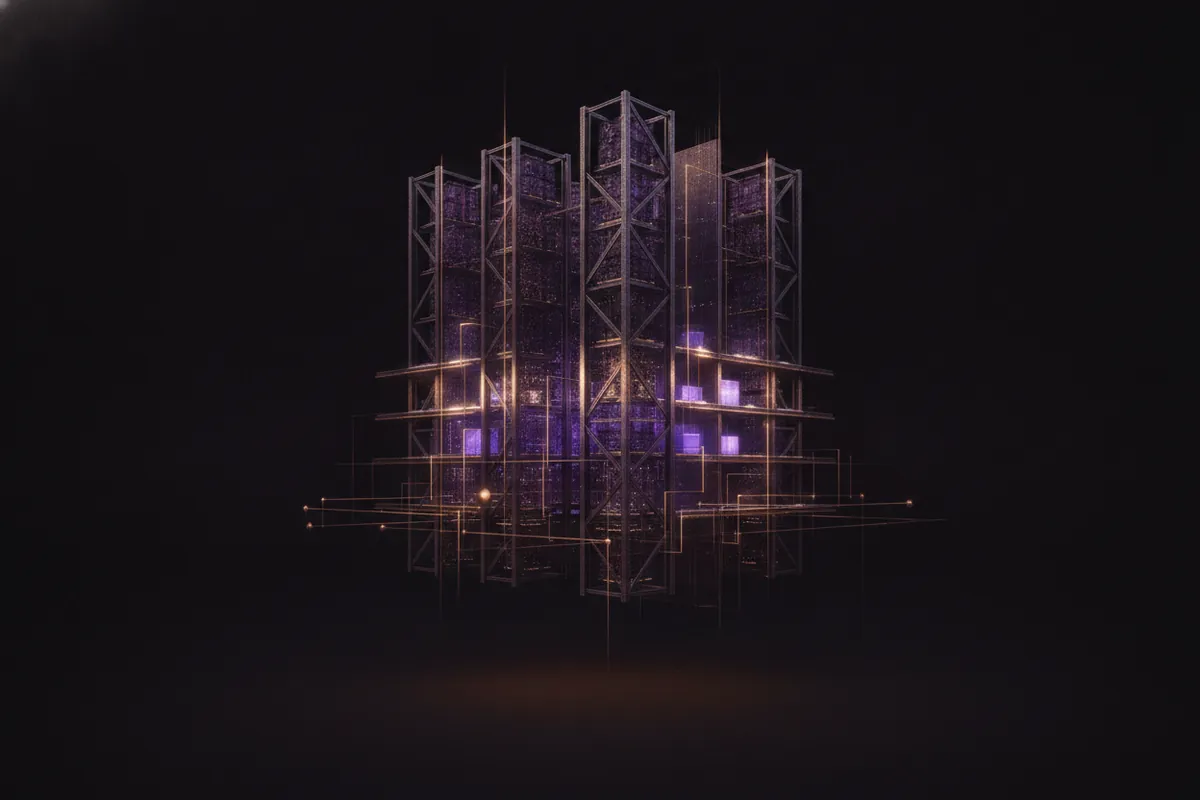
Rack density is the cost mechanism, not the warehouse-lease assertion
An Honest Architect reading of rack design as cost lever: density is the mechanism, automation-readiness is a design-stage mechanism, measurement-before-redesign is the justification mechanism.
→ →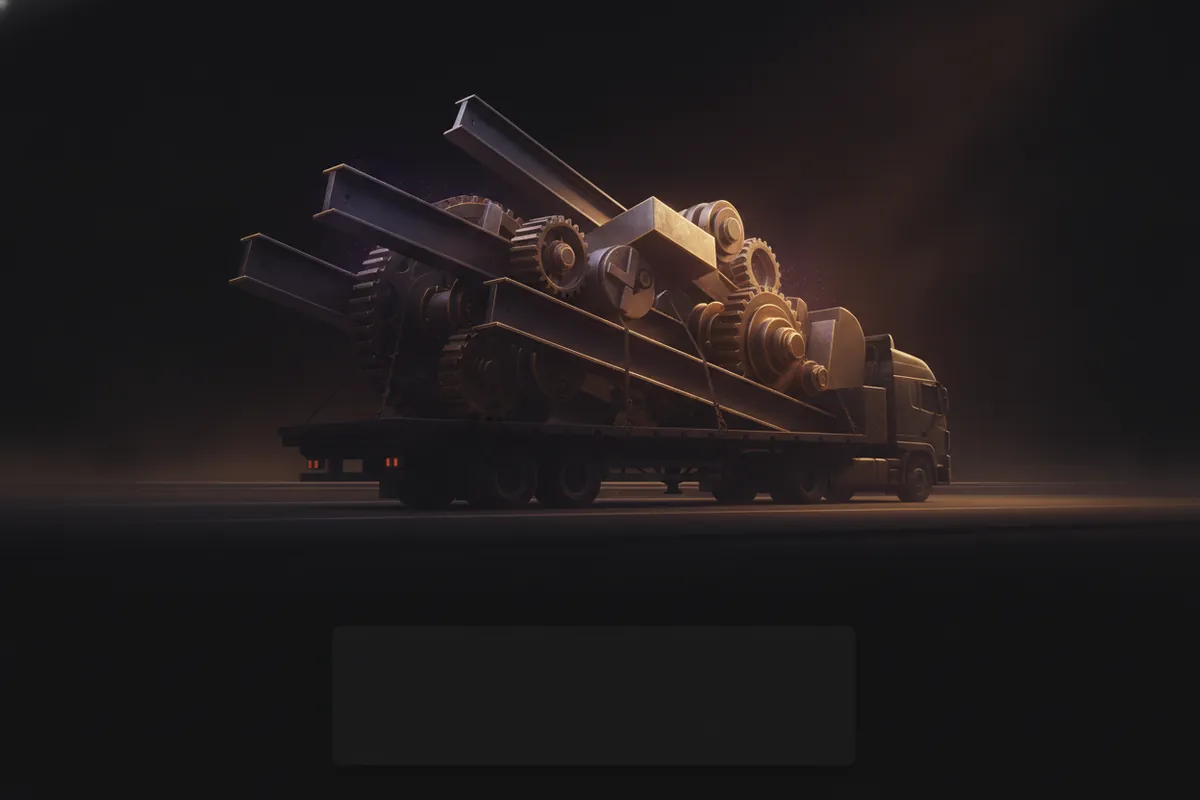
The equipment matching is the mechanism, not the trailer assertion
GlobalTranz's flatbed freight guide reads as six mechanism forms: equipment matching, securement, separate equipment per threat, permit verification, documentation alignment, weight distribution. Theorem 3 applied to each.
→ →
The POI is the mechanism, not the address
A tomato field has no street address. The truck still arrives. Morning Star's 5,600 saved driving hours and $523,000 cost cut come from a pre-designated POI table and truck-dimension constraints — not from the navigation app. The address is one naming scheme; the POI is the destination.
→ →Build your world on an engine that proves what it claims.
Create your own network on the engine that's run since 2016 — or talk to the team behind the 21 papers.