
The cross-source gap is the mechanism, not the single registry
A patrimonial investigation locates hidden assets not in any single registry but in the gap between sources. The three-phase cross-source triangulation, with person-physical crossing as the load-bearing layer, is the Theorem 3 mechanism that guarantees the property.
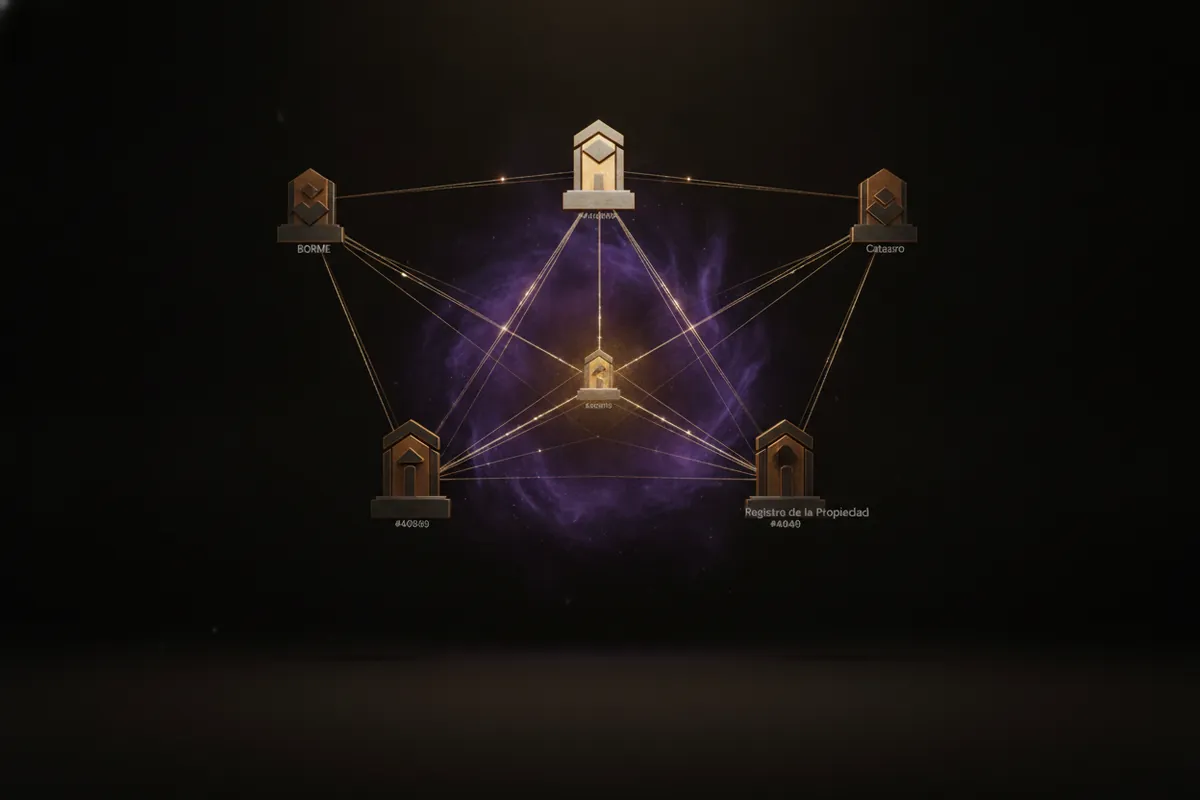
The cross-source gap is the mechanism, not the single registry
A construction company owner in Spain won a firm judgment for 187,000 euros against a supplier. The debtor company swears in writing that it has nothing: no real estate, no account balances, no vehicles. The creditor has seven days to decide whether to spend more money on execution or walk away from a debt he will never see. The question is not whether the company is reliable. The question is where the assets went. Those are different questions with different mechanisms, and the second one is harder because the debtor has spent months preparing the evaporation.
The method that the professional sector applies, documented by Julián Gutiérrez of Ciberpatrulla (Ciberpatrulla, «Investigación Patrimonial de una Empresa con OSINT», May 19, 2026; retrieved 2026-08-23), is a three-phase cross-source triangulation. The thesis is not that any single registry holds the answer. The thesis is that the answer lives in the gap between sources. Each source answers a different question, and the contradiction between them is the measurement. A single nota simple from the Registro Mercantil is necessary but not sufficient. It tells you what the company declares. The truth is two layers down, in linked companies, in physical persons, in recent transfers that have not yet appeared in the public registry. This is the Honest Architect reading: a property is guaranteed exactly when its mechanism is implemented and measuring, and the mechanism here is the cross-source gap, not any single source.
Mechanism 1 — Three-phase triangulation as the routing topology
The professional method is three phases: OSINT corporativo (open-source collection from BORME, Registro Mercantil, Catastro, AEAT, sentencias, BOE, social media), análisis mercantil (annual accounts, vinculaciones societarias, transmisiones sospechosas), and cruce con personas físicas (cross-reference to administrators, spouses, siblings, sister companies). The article is explicit: skipping OSINT and starting with mercantil analysis is what makes 80 percent of badly done patrimonial investigations end in «no encontramos nada». It is not that there is nothing. It is that the search was conducted at the wrong layer. ✅
The property is «the hidden assets are located». The mechanism is «route the query through three layers, each answering a different question, and the asset resolves at the layer where it actually lives». The measurement is which layer produces the contradiction. Most assets that a company has emptied out resolve at Fase 3, the person-physical crossing, because the company itself is a shell and the asset moved to a spouse's new company. A query that stops at Fase 1 returns nothing, correctly. The mechanism is the routing, not the registry.
Mechanism 2 — Catastro identifies, Registro de la Propiedad attributes
The Catastro is free and open. It gives you the referencia catastral, the address, the surface area, the year of construction, the use, and the cartography. It tells you what the building is and where it is. What it does not tell you, to anyone who asks, is who owns it. The titular data is protected by article 53 of the Texto Refundido de la Ley del Catastro Inmobiliario. You must be the owner, the heir, or able to demonstrate a legitimate interest that the registrar validates. ✅
The Registro de la Propiedad is the complementary source. Where the Catastro identifies the inmueble, the Registro identifies the owner, the cargas (mortgages, embargoes, servidumbres), and the recent transmisiones. The nota simple costs approximately 9 euros telematic, and requires interés legítimo under articles 221 and 222 of the Ley Hipotecaria. A creditor with a firm judgment against the titular has that interest accredited evidently. The property is «know who owns the inmueble and what cargas it carries». The mechanism is the cross of two sources, each answering a different question: Catastro says what, Registro says whose. Neither source alone is sufficient. The gap between them is where the ownership question is answered.
Mechanism 3 — BORME oficial is the legal proof, LibreBORME is the analysis
The Boletín Oficial del Registro Mercantil at boe.es is the official publication where corporate acts are reflected: constitutions, capital changes, cesses and appointments, address changes, dissolutions, concursos. It is free, official, and authentic. Its search is designed to locate specific publications by title, text, number, or date. It is the source for downloading the original PDF of a specific act when you need formal legal proof. It is not the tool for reconstructing the complete history of a company, because the acts are not aggregated by society. ✅
LibreBORME and OpenBORME reorganize the BORME content by company and by administrator. What is scattered across thousands of daily publications in boe.es is aggregated here: a company's file contains all its acts in chronological order, and a person's file contains all the companies in which they figure or have figured. The property is «reconstruct the histórico of a company's corporate movements». The mechanism is two tools for two questions: boe.es for the legal proof, LibreBORME for the pattern analysis. The measurement is the pattern: a change of address, a capital reduction, a simultaneous cese and nombramiento in the six months before the judgment became firm. Those are not coincidences. They are defensive maneuvers, and the aggregated histórico is what makes the pattern visible.
Mechanism 4 — The memoria of cuentas anuales is where the vinculadas leak
Spanish mercantile societies must deposit annual accounts in the Registro Mercantil. These accounts are public by legal mandate: article 369 of the Reglamento del Registro Mercantil provides that the copy is delivered «a solicitud de cualquier persona», without need to allege legitimate interest. This is one of the most open registry sources in Spain. The balance tells you what the society has on paper: inmovilizado material, inversiones en empresas del grupo, tesorería, cuentas a cobrar. A sudden drop in inmovilizado between exercises is a sale of assets. The question is to whom. ✅
The memoria is the narrative section. Here the society must declare operaciones con partes vinculadas: transactions with companies in the same group or with people who have a family link to the administrators. If the society declares having lent 80,000 euros to EMPRESA X in the previous exercise, that is a lead. EMPRESA X did not appear in BORME, did not appear in OpenCorporates, but it is in the memoria of the annual accounts. The property is «detect transfers to related parties». The mechanism is «read the section that almost nobody reads». The balance shows what is there. The memoria shows what moved, and to whom. The gap between the two is where the evaporation is documented.
Mechanism 5 — Person-physical crossing is where the asset actually is
This is the phase that separates a professional investigator from someone who has read a manual. The patrimonio of a society that hides is never in the society itself. It is in physical persons linked to it. The classic corporate alzamiento de bienes works like this: the debtor S.L. sells or donates its assets to a physical person close to the administrator (spouse, adult children, sibling, trusted friend). The S.L. is left formally empty. The physical person keeps the patrimonio. When the creditor arrives to execute, the society effectively has nothing. ✅
The method to uncover this is: identify the real administrator (not necessarily the one who figures in the Registro), investigate that person as a physical person using OSINT techniques, identify their close circle, cross names with BORME and LibreBOR to detect new sociedades at their name or their circle's name, and cross names with Catastro and public registries to detect recent inmueble transmisiones. The property is «locate the assets the company emptied out». The mechanism is «the company is a shell, the asset moved to a person, so query the person, not the company». The measurement is the cronología: if the administrator's spouse constitutes a new society one month after ceasing as administradora solidaria of the debtor, and a second ten months later, the pattern is textbook.
Mechanism 6 — The contradictory chronology is the proof
The practical case in the article closes with four lines of cross-referenced documentary evidence. First, defensive corporate movements coordinated in the six months before the judgment became firm (BORME oficial and LibreBORME): change of address, capital reduction from 18,000 to 3,000 euros, cese of the administradora solidaria. Second, transmission of an inmueble to a related party for a price below market, declared in the memoria of the annual accounts (142,000 euros) and confirmed with the nota simple of the Registro de la Propiedad (the buyer is the administrator's wife, acquisition by compraventa inscribed in May 2025). Third, the constitution of new sociedades at the name of the spouse with subsequent participation of the real administrator. Fourth, public accreditation (press, social media) that the cese administrator still operates in the successor society. ✅
The property is «prove alzamiento de bienes under article 257 of the Código Penal». The mechanism is three cross-referenced data points: the venta a parte vinculada (memoria), the buyer identified by marriage to the administrator (nota simple), and the price below market (public comparables, 220,000 to 260,000 euros for comparable naves in Cuenca in 2024). The measurement is the contradiction between the declared price and the market price. That contradiction is the proof, and it is measured, not asserted.
What this looks like from a different stack
Everythink does not ship an OSINT tool. The parallels below are structural, not product claims, and they are tagged Partial because the analogy is the point, not a claim that Everythink does the same work.
The three-phase routing, where the query resolves at the layer where the asset actually lives, is the same shape as «the space is the router». Network, community, and room route before anything responds, and most requests resolve locally while a few travel the long path. The mechanism is the topology, and the measurement is where the request resolves. ⚠️
The cross of Catastro and Registro de la Propiedad, each answering a different question, is the same shape as the hexagonal trait-based ports. Each port answers a different question, and AppState repositories are Arc
The final informe that normalizes the cross-source evidence into one calibrated picture is the same shape as the Oracle's single normalization site. Probabilities are normalized in exactly one place in everythink-oracle, and consumers may rely on the sum being approximately one. The property is guaranteed by a mechanism that does not compete with the merge. ⚠️
The BORME histórico aggregated by company, deterministic from the company name and NIF, is the same shape as World Monitor's deterministic uuidv5 ids. Re-ingest updates, never duplicates, because the id is deterministic from source and native id. The property is «no duplicates on re-ingest», and the mechanism is the deterministic origin. ⚠️
The interés legítimo that gates access to protected titular data, validated by the registrar before the data is released, is the same shape as Eye Key sovereignty. Eye Key plaintext never touches disk. Only the HMAC and fingerprint go to Postgres. The property is «sovereignty over the key», and the mechanism is the construction, not a penalty applied after the fact. ⚠️
The three phases as typed instruments, each with a typed objective and a typed toolset, are the same shape as the Sisters' typed personalities. The analyst, contrarian, disruptor, historian, and institutionalist are typed, and the prompt version is stamped on every run for reproducibility. The property is «reproducible typed reasoning», and the mechanism is the personality plus the version stamp. ⚠️
Scope limits and Roadmap
This post is civil and defensive scope: patrimonial investigation, alzamiento de bienes detection, insolvencia punible, deuda recovery. The article cites articles 257 and 259 of the Código Penal. The Everthink parallels above are Partial because Everythink does not ship an OSINT tool; the structural analogy is the claim, not a product claim. The Eye Key is a developer-API sovereignty mechanism, Production, and is not an investment vehicle. HAI Engine has been in production since 2016. The 21 papers are Production. World Monitor is Production. The Oracle is Production. Sisters are Production. No token, wallet, or community-credit outcome is promised here; those remain Roadmap 🔵, subject to Howey review, and are never quietly promoted. Theorem 3 is the naming convention for the property-when-mechanism-implemented-and-measuring claim; it is not a legal term.
Two things most coverage missed
First, the method is explicitly not the same as detecting a empresa fantasma. A phantom company never had real activity. The evaporation case is the opposite: a company with real activity and real assets that, at the moment of the problem, declares having nothing. Same scenario for the creditor, different mechanic for the investigator. The phantom is detected by absence. The evaporation is detected by contradiction.
Second, the cost of the documentary sources is negligible relative to the debt. The tasas registrales (nota simple del Mercantil, copia de cuentas anuales, nota simple del Registro de la Propiedad) are minor. The bulk of the value is the investigator's time. The method is pure OSINT: public sources, minimum cost, enormous value for the client. The mechanism is the cross-referencing, not the budget.
FAQ
Is a nota simple enough to investigate a company's assets? No. The nota simple of the Registro Mercantil confirms the current legal situation, the administrator in vigor, and the official data for crossing. It does not show vinculaciones with other societies, inmueble transmisiones, debts with the administration, or sentencias against the society. It is the beginning, not the destination.
What is the difference between a patrimonial investigation and a due diligence? Due diligence is preventive and complete: it is done before buying, investing, or contracting, and covers legal, fiscal, labor, and reputational aspects in addition to patrimonio. A patrimonial investigation is specific and usually reactive: it is done when there is already a conflict (debt, judgment, fraud suspicion) and focuses on locating bienes and derechos. The techniques overlap; the objective does not.
What signals indicate a company is preparing an alzamiento de bienes? The pattern is typical: capital reduction in the months before an expected judgment, address change to another province, cese of administradores solidarios leaving only the administrador único, inmueble transfers to related parties below market price, constitution of new sociedades at the name of the spouse or adult children, and unusually high operaciones con partes vinculadas in the annual accounts. When three or more of these accumulate in a short period, the hypothesis is solid.
Can the assets be investigated without hiring a detective? For internal analysis, yes: the public sources (BORME, annual accounts, Catastro, AEAT, sentencias) are available to anyone. But the Ley 5/2014 de Seguridad Privada reserves to the licensed detective the obtaining of information and evidence on private facts for judicial proceedings. An unlicensed investigator can collect public sources for internal analysis; presenting the result as testimonial evidence with reinforced value in a proceeding requires habilitación. The difference is not in the information obtained; it is in how it is contributed to the proceeding.
Why does Fase 3 matter more than Fase 1? Fase 1 builds 70 percent of the expediente, but the asset that the company emptied out is almost never in the company. It is in a physical person linked to the administrator. Fase 3 is where the asset actually lives. A query that stops at Fase 1 returns nothing, correctly. The mechanism is the routing to the layer where the property lives.
Sources
- Ciberpatrulla, «Investigación Patrimonial de una Empresa con OSINT», May 19, 2026 — https://ciberpatrulla.com/investigacion-patrimonial-empresa/ — retrieved 2026-08-23
- Article references: BOE/BORME (boe.es), Sede Electrónica del Colegio de Registradores, OpenCorporates, LibreBORME/OpenBORME, Catastro, AEAT listado de deudores, CGPJ jurisprudencia, arts. 257 and 259 Código Penal, art. 369 Reglamento del Registro Mercantil, arts. 221 and 222 Ley Hipotecaria, Ley 5/2014 de Seguridad Privada
Read the Honest Architect on Theorem 3, the Oracle, and the space-is-the-router pattern. Everythink is in production; the parallels here are structural and tagged as such.
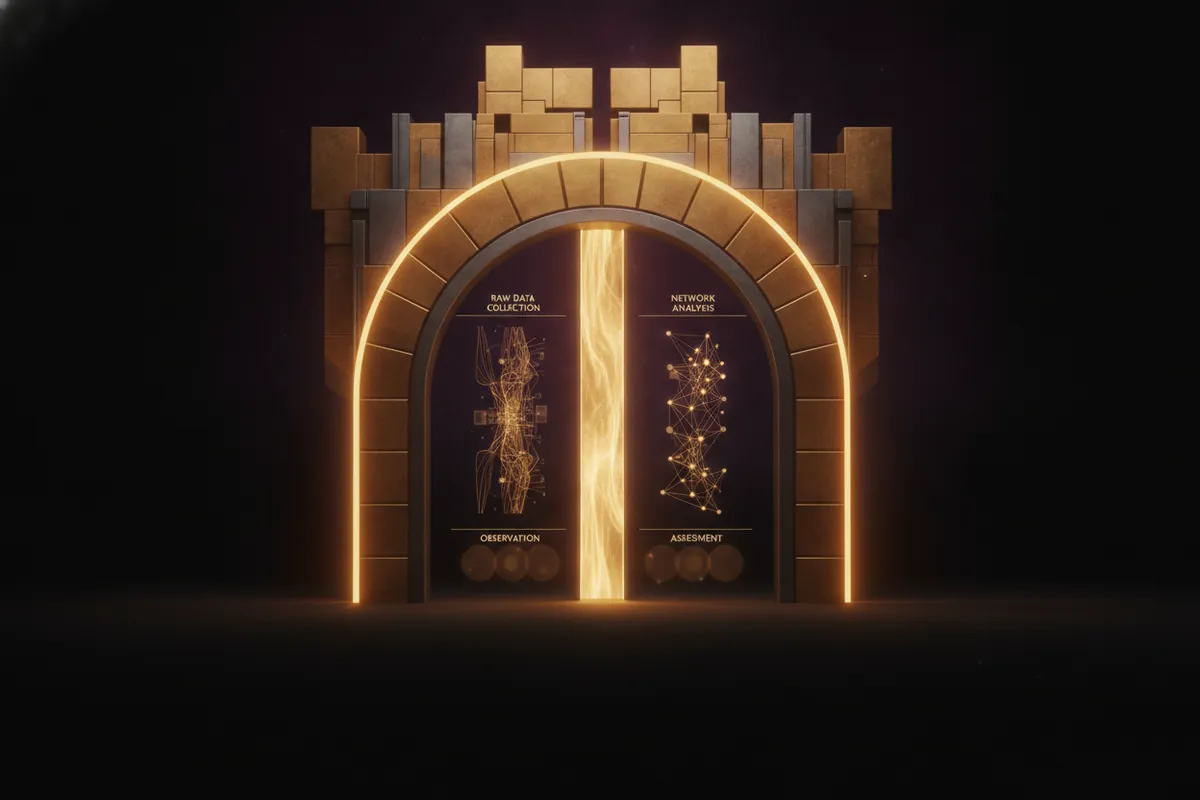
The entity record is the mechanism, not the analytics platform
Cognyte Analytics fuses and links what you give it. The mechanism that guarantees clean analysis is the entity record: a structured record with a what-to-enter column and a what-still-needs-checking column, built before the network is examined. The platform is the adapter. The entity record is the trait.
→ →
OSINT consistency is the mechanism, not the manual-workflow assertion
An Honest Architect reading of OSINT automation: consistency is the mechanism, actionability is context-organization, quality-at-scale is structured-process, people-in-control is judgment.
→ →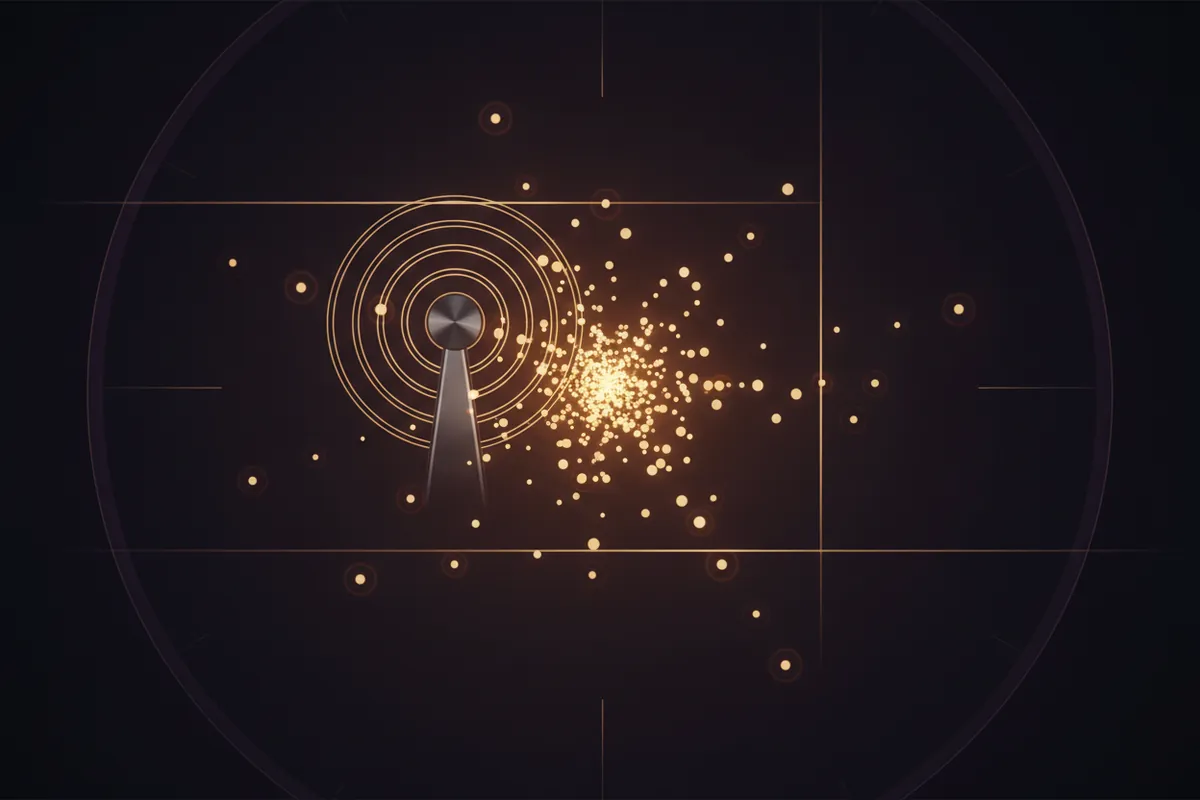
Geolocating a MAC Address Needs the Mechanism, Not the Identifier
A MAC address does not contain GPS, but a wardriving database plus a signal-weighted centroid merge can geolocate a fixed access point. Theorem 3: the property comes from the mechanism, not the identifier.
→ →Build your world on an engine that proves what it claims.
Create your own network on the engine that's run since 2016 — or talk to the team behind the 21 papers.