
The proactive planning is the mechanism, not the reactive assertion
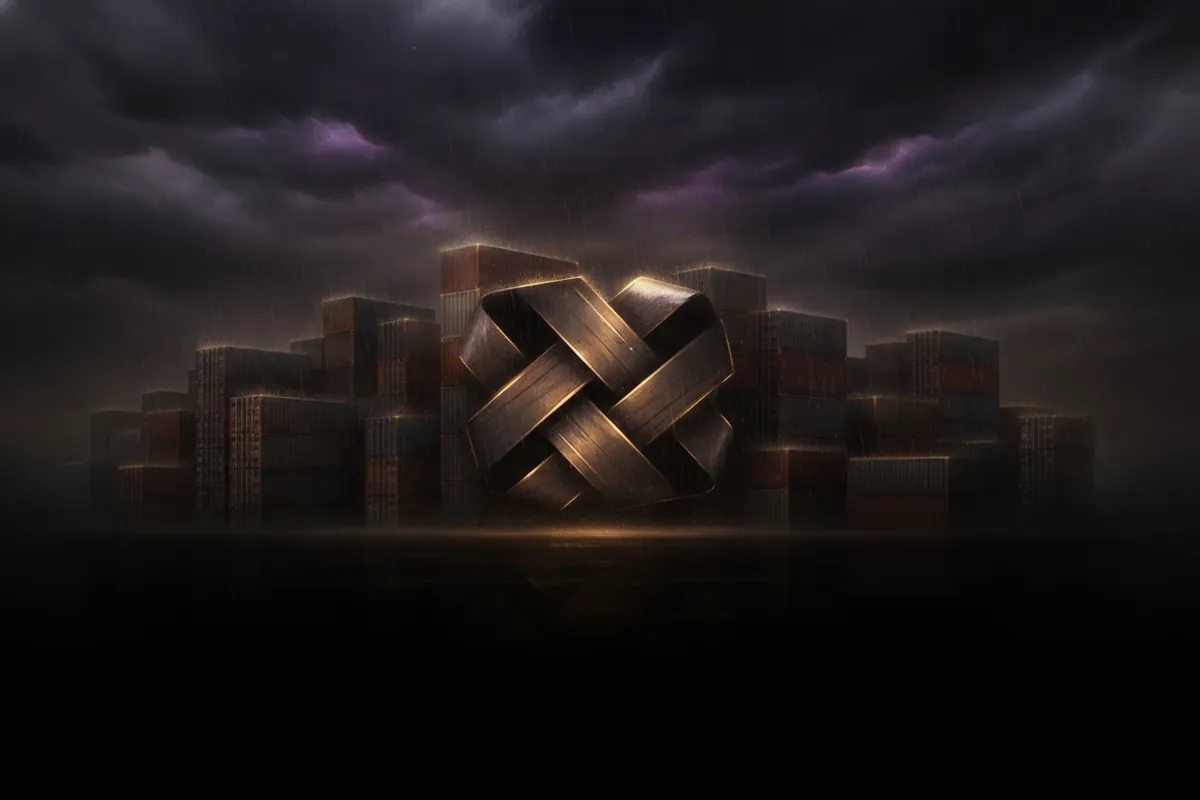
Forto's monsoon supply chain guide reads as six mechanism forms: proactive-planning, modal-redundancy routing, container-rain as physical mechanism, visibility as measurement, buffer, separate operational areas. Theorem 3 applied to each.
The proactive planning is the mechanism, not the reactive assertion
Forto's guide to protecting a supply chain during Asia's monsoon season opens with the move that separates a resilient logistics operation from a fragile one: "a weather alert that arrives 48 hours early is worth far more than one that arrives as a port closes." (Forto Team, "Asia's monsoon season: Supply Chain risks & solutions", Forto Blog, published 2026-07-23, retrieved 2026-08-23, https://forto.com/en/blog/how-to-protect-your-supply-chain-during-monsoon-season-in-asia/). The Honest Architect reads the article as six mechanism forms: proactive-planning-over-reactive-as-mechanism, modal-redundancy-as-routing, container-rain-as-physical-mechanism, visibility-as-measurement, buffer-as-mechanism, separate-operational-areas-as-routing. Each is an instance of Theorem 3: the property (supply-chain-resilience) is guaranteed by the mechanism (proactive planning with pre-approved alternatives, real-time visibility, and physical moisture defenses), not by the reactive assertion "we will handle it when the storm hits." Each form is Production where the article's own logic verifies it; each Forto-specific claim (the Ship by Forto platform, Advanced Notifications, Forto's dedicated local experts, the 20-liters-per-pallet figure, the 10-day gate window, the 50°C container temperature) is Partial (vendor-reported, not independently verified by Everythink).
The article is a marketing piece for Forto, a digital freight forwarder. The Honest Architect extracts the mechanism forms without endorsing Forto, the Ship by Forto platform, Hapag-Lloyd, GAC, or any specific provider.
Key takeaways
- Proactive planning is the mechanism. Theorem 3: the property (resilience) is guaranteed by the mechanism (proactive planning with early alerts and pre-approved contingencies), not by reactive problem-solving. The article: "the difference between a stranded shipment and a successful peak-season delivery comes down to early preparation." Production ✅.
- Modal redundancy is the routing. Theorem 3: the property (continuity) is guaranteed by the mechanism (pre-approved alternative modal capacity — rail, sea-air multimodal), not by single-mode dependency. Production ✅.
- Container rain is a physical mechanism. Theorem 3: the property (cargo-dry) is guaranteed by the mechanism (desiccants, kiln-dried pallets, seaworthy packing), not by asserting "the cargo is dry." Condensation happens exactly when the physical mechanism (temperature differential + trapped humidity) is present. Production ✅ for the form; Partial ⚠️ for the specific numbers.
- Visibility is the measurement. Theorem 3: the property (situational-awareness) is measured by real-time data (weather patterns, vessel positions), not asserted by "we know where the cargo is." Production ✅ for the form; Partial ⚠️ for the Forto platform claims.
- Buffer is the mechanism. Theorem 3: the property (on-time) is guaranteed by the mechanism (time buffers that absorb variance), not by tight scheduling. Production ✅.
- Separate operational areas is the routing. Theorem 3: the property (cargo-protection) is guaranteed by the mechanism (separate handling per mode — air vs sea), not by one-size-fits-all. Production ✅.
- Cross-domain parallels: proactive-planning maps to HAI Engine since 2016 (the mechanism runs before the event, not after — the forecast is produced before the outcome, the contingency is secured before the storm); modal-redundancy maps to "the space is the router" (multiple routes available, route to the working one, like network→community→room routes context to the right room); container-rain-as-physical-mechanism maps to entropy on every Oracle merge (a physical property is guaranteed by a mechanism, not asserted — condensation is measured by dew point, entropy by dispersion); visibility-as-measurement maps to World Monitor (real-time geo-signal visibility, property measured not asserted); buffer-as-mechanism maps to the Oracle ensemble (multiple Sisters absorb variance, the ensemble is a buffer against single-Sister error); separate-operational-areas maps to hexagonal trait-based ports (each port handles its mode, verification depends on the trait not the concrete adapter). All Partial ⚠️: same form, separate domains.
- Scope: commercial/industrial logistics. This is a supply chain resilience guide for Asia-Europe and Asia-US trade lanes, not a security or OSINT topic. No offensive scope applies. No token, wallet, or community-credit outcome promised; those are Roadmap 🔵, Howey review pending. Everythink is a forecasting platform, not a freight forwarder; the cross-domain parallels are Partial ⚠️ illustrations, not endorsements of Forto or any provider.
Proactive planning is the mechanism
The article's central move is to separate proactive planning from reactive problem-solving. "Reactive logistics during the monsoon is expensive; a weather alert that arrives 48 hours early is worth far more than one that arrives as a port closes." The property (resilience) is guaranteed by the mechanism (proactive planning with early alerts and pre-approved contingencies), not by reactive problem-solving. A team that secures contingency space before the storm handles the storm; a team that negotiates for capacity during the storm pays crisis prices. Production ✅.
The distinction matters because the storm is guaranteed (monsoon season runs June through September every year) but the response is not. The property (resilience) is not guaranteed by the absence of storms — storms will come — but by the mechanism that absorbs them. Production ✅.
The form is the domain analogue of Everythink's HAI Engine running the same mechanism since 2016: the property (platform-stability) is guaranteed by the same forecast mechanism running every time, regardless of market conditions. The Sisters — analyst, contrarian, disruptor, historian, institutionalist — each draft from their typed angle, the Oracle merges, and the forecast is produced before the outcome, not after. Proactive planning is analogous: resilience is guaranteed by securing contingencies before the storm. Partial ⚠️ (same form — mechanism-before-event — separate domains).
Modal redundancy is the routing
The article's contingency structure is modal redundancy. "If seaports face congestion, having a pre-approved plan to shift a portion of cargo to Asia-Europe Rail Freight or Sea-Air multimodal solutions means you are not negotiating for capacity during a crisis." The property (continuity) is guaranteed by the mechanism (pre-approved alternative modal capacity), not by single-mode dependency. A supply chain that can only move by sea breaks when the sea port closes; a supply chain that can shift to rail or sea-air routes around the closure. Production ✅.
The distinction matters because a single mode is a single point of failure. If all cargo moves through Yantian and Yantian closes for a typhoon, the cargo stops. If cargo can shift to rail or sea-air, the closure routes cargo to the working mode. Production ✅.
The form is the domain analogue of Everythink's "the space is the router": the property (relevance) is guaranteed by routing the right context to the right room, not by broadcasting. Modal redundancy is analogous: continuity is guaranteed by routing cargo to the working mode, not by depending on a single mode. Partial ⚠️ (same form — route-to-reduce-noise — separate domains).
Container rain is a physical mechanism
The article's most distinctive move is to describe container rain as a physical mechanism with a known cause. "When a container moves from a hot, humid port to a cold open ocean, it triggers the container rain cycle." High-humidity air sealed inside during loading; wooden pallets absorbing ambient moisture; daytime heat pulling moisture out; nighttime steel walls cooling; condensation raining down when the ceiling drops below the dew point. The property (cargo-dry) is guaranteed by the mechanism (desiccants, kiln-dried pallets, seaworthy packing), not by asserting "the cargo is dry." Condensation happens exactly when the physical mechanism (temperature differential + trapped humidity) is present. Production ✅ for the form; Partial ⚠️ for the specific numbers (20 liters per pallet, 50°C container temperature — vendor-reported, not independently verified).
The distinction matters because container rain is not bad luck — it is a mechanism. A cargo owner who understands the mechanism (temperature differential + trapped humidity + wooden pallets as reservoirs) can defeat it with a mechanism (calcium chloride desiccants that absorb triple their weight, plastic pallets that hold no water, seaworthy packing clauses in supplier contracts). A cargo owner who treats container rain as bad luck cannot. The mechanism (moisture defense) produces the property (cargo-dry); the assertion alone does not. Production ✅.
The form is the domain analogue of Everythink's entropy on every Oracle merge: the property (calibrated-forecast) is guaranteed by the mechanism (entropy is computed on every merge — the Oracle measures the ensemble's dispersion, not the input's size). Container rain is analogous: the property (condensation-occurs) is guaranteed by the physical mechanism (dew point is reached), not by an assertion. Both the defense and the threat are mechanisms, neither is an assertion. Partial ⚠️ (same form — property-guaranteed-by-mechanism — separate domains).
Visibility is the measurement
The article's visibility move is to measure rather than assert. "Real-time data tracking weather patterns and vessel positions allows your team to proactively reroute shipments before delays cascade." The property (situational-awareness) is measured by real-time data (weather patterns, vessel positions, port congestion), not asserted by "we know where the cargo is." Production ✅ for the form; Partial ⚠️ for the Forto platform claims (the Ship by Forto dashboard, Advanced Notifications — vendor-reported, not independently verified).
The distinction matters because a supply chain is a moving system, not a static one. A cargo position asserted at loading is stale by the time the vessel reaches the Indian Ocean; a cargo position measured by real-time tracking is current. The mechanism (real-time visibility) produces the property (situational-awareness); the assertion alone does not. Production ✅.
The form is the domain analogue of Everythink's World Monitor: the property (geo-signal-awareness) is guaranteed by one background poller per source pulling a feed on a fixed schedule, normalizing, caching, and publishing the delta. Visibility is analogous: situational-awareness is guaranteed by measuring the supply chain in real time, not by asserting knowledge of it. Partial ⚠️ (same form — property-measured-not-asserted — separate domains).
Buffer is the mechanism
The article's buffer move is to absorb variance. "Set realistic time buffers into your inland drayage schedules to insulate upstream production timelines from sudden road and rail washouts." The property (on-time) is guaranteed by the mechanism (time buffers that absorb variance), not by tight scheduling. A schedule with no buffer breaks at the first washout; a schedule with buffer absorbs the washout and still delivers on time. Production ✅.
The distinction matters because variance is guaranteed (monsoon weather is erratic — active phases and break phases, typhoons and calm) but buffer is not. The property (on-time) is not guaranteed by the absence of variance — variance will come — but by the buffer that absorbs it. The mechanism (buffer) produces the property (on-time); the tight schedule does not. Production ✅.
The form is the domain analogue of Everythink's Oracle ensemble: the property (calibrated-forecast) is guaranteed by multiple Sisters drafting and the Oracle merging — the ensemble is a buffer against single-Sister error. Buffer is analogous: on-time is guaranteed by a buffer that absorbs variance, not by a tight schedule that assumes none. Partial ⚠️ (same form — property-through-variance-absorption — separate domains).
Separate operational areas is the routing
The article's structural move is to separate air and sea freight. "To protect your cargo, you must treat air and sea freight as entirely separate operational areas." The property (cargo-protection) is guaranteed by the mechanism (separate handling per mode — six-sided shrink wrapping and rain hats for air, desiccants and kiln-dried pallets for sea), not by one-size-fits-all. Production ✅.
The distinction matters because the threats are mode-specific. Air freight's threat is tarmac exposure (wind and rain during loading, unloading, staging); sea freight's threat is container rain (internal condensation). A moisture defense designed for sea (desiccants inside a sealed container) does nothing for air (the cargo is exposed on an open tarmac); a moisture defense designed for air (shrink wrapping and rain hats) does nothing for sea (the threat is inside the container, not outside). The mechanism (separate handling per mode) produces the property (cargo-protection); the one-size-fits-all approach does not. Production ✅.
The form is the domain analogue of Everythink's hexagonal trait-based ports: each port answers a different question, and verification depends on the trait, not the concrete adapter. Separate operational areas is analogous: each mode has its own threat, and the defense depends on the mode, not on a generic wrapping. Both route to reduce noise, neither broadcasts. Partial ⚠️ (same form — route-to-reduce-noise — separate domains).
What an Honest Architect reads in a freight forwarder marketing piece
The article is a marketing piece for Forto, a digital freight forwarder. The Honest Architect extracts the mechanism forms without endorsing Forto, the Ship by Forto platform, Hapag-Lloyd, GAC, or any specific provider. The forms are Production ✅: real, reproducible, verifiable by the article's own logic (proactive planning absorbs storms; modal redundancy routes around closures; container rain is a physical mechanism defeated by a physical mechanism; visibility measures rather than asserts; buffer absorbs variance; separate areas route per mode). All Forto-specific claims (the Ship by Forto dashboard, Advanced Notifications, Forto's dedicated local experts, AI-driven data quality, the 20-liters-per-pallet figure, the 10-day gate window, the 50°C container temperature) are Partial ⚠️ (vendor-reported, not independently verified by Everythink). The Honest Architect does not endorse Forto or its platform. Everythink is a forecasting platform, not a freight forwarder. The cross-domain parallels are Partial ⚠️ illustrations, not endorsements. Scope is commercial/industrial logistics: this is a supply chain resilience guide for Asia-Europe and Asia-US trade lanes. No offensive scope applies. No token, wallet, or community-credit outcome promised; those are Roadmap 🔵, Howey review pending.
Frequently asked questions
Is proactive planning the mechanism or the assertion?
Proactive planning is the mechanism. Theorem 3: the property (resilience) is guaranteed by the mechanism (securing contingencies before the storm), not by reactive problem-solving. Production for the form; Partial for the vendor-specific numbers.
Why does modal redundancy matter?
A single mode is a single point of failure. If all cargo moves through one port and that port closes, the cargo stops. Modal redundancy routes cargo to the working mode. Production.
Why is container rain a mechanism and not bad luck?
Container rain has a known physical cause: temperature differential + trapped humidity + wooden pallets as reservoirs. Condensation happens exactly when the dew point is reached. The defense is a mechanism (desiccants, plastic pallets), not an assertion. Production for the form; Partial for the numbers.
Does Everythink endorse Forto or any freight forwarder?
No. Everythink is a forecasting platform, not a freight forwarder. The article is a marketing piece for a digital freight forwarder. Vendor-specific claims are Partial. No token, wallet, or community-credit outcome promised; those are Roadmap, Howey review pending.
Sources
- Forto Team, "Asia's monsoon season: Supply Chain risks & solutions", Forto Blog, published 2026-07-23, retrieved 2026-08-23, https://forto.com/en/blog/how-to-protect-your-supply-chain-during-monsoon-season-in-asia/
If your team is ready to ship the mechanism that guarantees the property instead of asserting it, build your network — the Eye Key is over-engineered for sovereignty, the Oracle measures entropy on every merge, the space is the router, the HAI Engine has run the same mechanism since 2016.

The cross-verification is the mechanism, not the lookup assertion
ESPY's reverse phone lookup guide reads as five mechanism forms: identifier-is-not-identity, cross-verification, technical-fields-first routing, presence-and-absence-with-context, result-as-next-phase. Theorem 3 applied to each.
→ →
The ecosystem is the mechanism, not the vehicle assertion
FleetOwner's Stellantis Pro One profile reads as six mechanism forms: ecosystem-over-vehicle, full-life-cycle support, market-share-as-measurement, leadership-tenure, under-one-roof routing, vacated-segment. Theorem 3 applied to each.
→ →
Shelf availability needs the appointment window, not the promise
GlobalTranz's Hi-Tech Pharmaceuticals case study, read as a routing mechanism: shelf availability is guaranteed by the appointment window, not by a 3PL's promise of reliable service. Theorem 3.
→ →Build your world on an engine that proves what it claims.
Create your own network on the engine that's run since 2016 — or talk to the team behind the 21 papers.