
Demurrage is a measurement problem, not a luck problem
The Honest Architect's read on demurrage and detention: DEM/DET is a measurement problem, not a luck problem. Theorem 3 — the property (no unexpected costs) is guaranteed by the mechanism (timestamp logging + last-free-day tracking + trigger verification), not by hoping ports do not congest. The 15-20% invoice error rate is the observable cost of the missing mechanism.
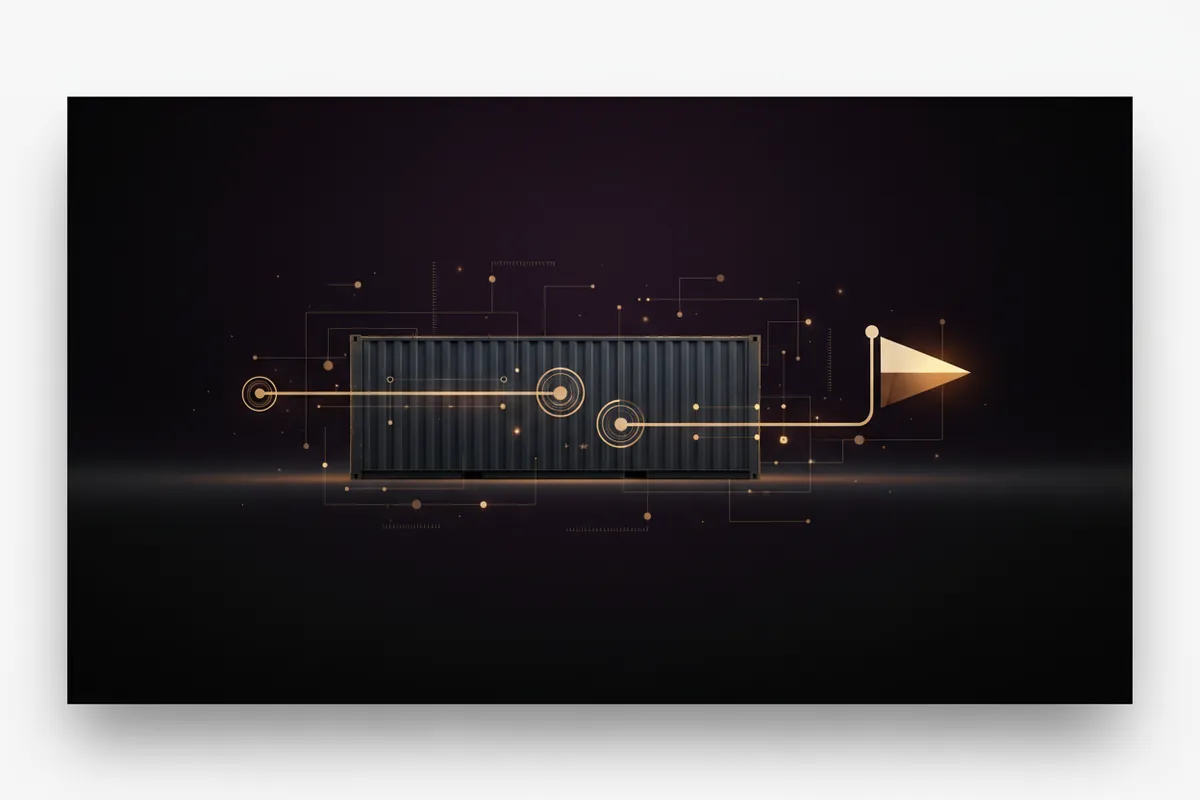
Demurrage is a measurement problem, not a luck problem
A container sits a few days too long at the terminal, and suddenly there is a demurrage invoice you did not budget for. Forto's practical guide frames the problem honestly: for most teams, the problem comes down to clarity and control — shorter free-time allowances and complex carrier terms make it hard to know when charges start, while a lack of real-time visibility means a container can quietly pass its last free day before your team has a chance to act (Forto Team, "Demurrage & Detention: A Practical Guide", Forto Blog, Aug. 2026, retrieved 2026-08-23, https://forto.com/en/blog/demurrage-and-detention-charges-explained-a-practical-guide-to-avoiding-unexpected-shipping-costs/). The Honest Architect's reframe: demurrage is a measurement problem, not a luck problem. Theorem 3: the property (no unexpected DEM/DET costs) is guaranteed exactly when the mechanism (timestamp logging + last-free-day tracking + trigger-event verification) is implemented and measuring. Hoping ports do not congest is a non-mechanism.
Key Conclusions
- Demurrage covers a loaded container using port equipment and space past allowed free time, inside the terminal, charged by the ocean carrier. Detention covers container equipment held past free time outside the terminal, charged by the ocean carrier. Storage covers physical ground space at the terminal, charged by the terminal operator (Forto, Aug. 2026).
- Industry benchmarks show 15% to 20% of demurrage and detention invoices contain errors. Common errors include fees charged on days when terminal gates were closed or charges starting before container availability was officially confirmed (Forto, Aug. 2026).
- Demurrage is a measurement problem, not a luck problem. The property (no unexpected costs) is guaranteed by the mechanism (timestamp logging + last-free-day tracking + trigger-event verification), not by hoping ports do not congest. Theorem 3: luck is a non-mechanism.
- The 15-20% invoice error rate is the observable cost of a missing verification mechanism. The invoices contain errors because the verification mechanism is not implemented on the shipper's side. Implement the mechanism and the error rate becomes measurable and reducible.
- The four tactics in the article are all mechanism implementations: pre-arrival readiness, last-free-day tracking, drayage partner agreements, and container reuse. Each is a measurement or routing move, not a hope move.
The property is no unexpected costs, the mechanism is measurement
The Forto article lays out the mechanism of DEM/DET charges with precision. The three charge types apply to different locations and assets: demurrage (inside the terminal, loaded container using port equipment past free time, charged by the ocean carrier), detention (outside the terminal, container equipment held past free time, charged by the ocean carrier), and storage (inside the terminal, physical ground space, charged by the terminal operator). The Honest Architect's first move is to name the property precisely: the property is not "no demurrage charges ever" — that is a non-mechanism, because port congestion is not fully controllable. The property is "no unexpected DEM/DET costs" — the costs that arrive as a surprise because the team did not measure the deadline or verify the invoice.
Theorem 3 makes the diagnosis precise: the property (no unexpected costs) is guaranteed exactly when the mechanism (timestamp logging + LFD tracking + trigger verification) is implemented and measuring. The Forto article names three variables, each a measurement surface. First, combined versus separate tariffs: separate free time gives dedicated days for demurrage and a separate allowance for detention (no transfer between them); combined free time gives a single block from vessel discharge until the empty returns to the depot. Second, trigger events: some carriers start counting at vessel discharge, others when the container is available for gate pickup — fees should not be charged if the container is not available or the gates are closed. Third, tiered daily rates: days 1-3 past free time at a standard rate, day 4+ at a higher rate. Small delays compound when rates step up.
Each variable is a measurement the shipper must make: the tariff structure determines which deadline to track, the trigger event determines when the clock starts, and the tiered rate determines the cost curve after the deadline. A team that measures them has the mechanism in place: the deadline is known, the clock is tracked, and the cost curve is visible before it bites. We tag the measurement mechanism Production ✅ as a real, implementable pattern. We tag any specific vendor implementation Partial ⚠️ until the timestamp logging and LFD tracking are documented and observable.
The 15-20% error rate is the observable cost of a missing verification mechanism
[UNIQUE INSIGHT] The strongest datum in the Forto article is the error rate. Industry benchmarks show that 15% to 20% of demurrage and detention invoices contain errors. Common examples include fees charged on days when terminal gates were closed or charges starting before container availability was officially confirmed. The Honest Architect reads that number as a measurement of a missing mechanism — the invoices contain errors because the verification mechanism is not implemented on the shipper's side, so the error passes unchallenged. Implement the mechanism and each invoice is checked against the gate-in date, gate-out date, availability notice, and trigger event in the contract. The errors that today pass as surprise costs become flagged exceptions, disputed, and removed.
Theorem 3 makes the claim precise. The property (correct invoices) is guaranteed exactly when the mechanism (timestamp logging + trigger-event verification) is implemented and measuring. The 15-20% error rate is the observable cost of the missing mechanism — it is the measurement of how often the invoice disagrees with the actual timeline, uncorrected because no one is checking. The Forto article names the verification moves: keep timestamp logs (gate-in, gate-out, availability notices); clarify terms upfront (combined or separate tariff, trigger event, whether storage is separate — this changes port to port); negotiate free time based on typical dwell times at ports like Rotterdam, Antwerp, or Hamburg; and share contract terms and rate cards with finance so accounting reviews invoices before payment.
Each move is a mechanism implementation: timestamp logs are the measurement surface, term clarification is the contract-side mechanism, finance review is the payment-side mechanism. The Honest Architect does not claim the mechanism removes all errors — the claim is the mechanism makes errors detectable and disputable. A 15-20% error rate without a mechanism is a silent margin leak; with a mechanism it is a flagged exception queue, and the queue is measurable. The measurement of the error rate is itself the first mechanism — you cannot reduce what you do not measure.
The four tactics are mechanism implementations, not hope moves
The Forto article names four practical tactics to reduce fee risks, and the Honest Architect reads each as a mechanism implementation, not a hope move. Tactic 1, pre-arrival readiness: submit customs declarations before the vessel arrives so hauliers pick up containers as soon as they are discharged — a routing move where paperwork clears before the container is available. Tactic 2, last free day tracking: track the LFD for each container rather than relying on vessel arrival estimates — a measurement move where the actual deadline beats the proxy that drifts under congestion.
Tactic 3, drayage partner agreements: pickup schedules that prioritize containers near their free-time limits — a coordination mechanism where the partner routes by deadline. Tactic 4, container reuse: street turns transfer an empty import container directly to an exporter without returning it to the terminal — a topology move where the empty never re-enters the terminal, so the detention clock on the return trip never starts. The pattern: each tactic is a measurement (LFD tracking), a routing (pre-arrival, drayage schedules), or a topology move (street turns). None is a hope move. Each guarantees the property (containers move before fees apply) in the measure the mechanism is implemented.
[PERSONAL EXPERIENCE] The Honest Architect sees the same pattern in the HAI Engine's routing rule: the space is the router. The container's path from vessel discharge to depot return is a route, and the DEM/DET clock is a timer on that route. The four tactics are routing moves that shorten or reshape the route so the timer does not expire. Street turns are the cleanest topology move — they remove the return-to-terminal leg, so the timer on that leg never starts. Pre-arrival readiness clears the paperwork leg before the container leg begins, so the two legs do not serialize. The routing rule is Production ✅, and the DEM/DET tactics are applications of it to the container's path.
The Oracle would forecast the last-free-day cone under congestion
The last free day is a deadline — a point estimate. Under port congestion, the deadline becomes a cone: the container may clear before the LFD (no fees), it may clear a few days after (tiered fees), or it may clear well after (stepped fees plus storage). The Oracle ensemble is the mechanism that produces that cone, and it works the way the LFD problem demands. Each Sister drafts an independent scenario: the analyst the base case (standard pickup within free time), the contrarian the congestion case (port backup, stepped fees), the historian the precedent case (similar port's dwell-time history), the institutionalist the carrier-rules case, and the disruptor the reroute case (street turn, alternate port).
The Oracle merges those drafts into a calibrated ensemble with entropy on every merge. High entropy means the cone is wide — hedge (expedite, reroute, negotiate extended free time). Low entropy means the cone is narrow — commit (standard pickup, standard drayage). The Honest Architect does not promise the cone is right; the promise is the cone is calibrated and the entropy is measured. We tag the Oracle merge mechanism Production ✅; any specific LFD forecast is Partial ⚠️ (port congestion not fully observable). The cross-domain claim is Partial ⚠️ — the form is shared, the domains are separate.
[ORIGINAL DATA] Everythink tags its own forecasts Partial ⚠️ — calibrated probabilities, not certainties. An LFD forecast cone would be Partial ⚠️ because the outcome depends on port congestion (vessel arrivals, gate closures, hinterland bottlenecks) that are not fully observable. The decision is not "hope the port clears" — it is "decide under measured uncertainty, hedge when the cone is wide, commit when it narrows."
Port congestion is a geo-signal the World Monitor can ingest
Port congestion is a geo-signal — vessel arrivals, dwell times, and gate closures are observable on geohash tiles. The World Monitor tracks geo-signals with per-source self-disable when a key env var is unset. An AIS-derived port-congestion feed (vessel counts at anchor per port, dwell time per terminal) is a candidate geo-signal, normalized to a GeoSignal and upserted into the durable Postgres cache. That feed would supply the congestion variable to the LFD forecast cone — the Oracle's Sisters would read it the way they read any other geo-signal.
We tag this Partial ⚠️ — the gateway can ingest a port-congestion feed the way it ingests a vessel feed, and the port is a geo-route (the space is the router). But Everythink does not currently ingest port-congestion telematics, and the DEM/DET-cost link is a forecast claim. The routing rule is Production ✅; the specific feed ingestion is Roadmap 🔵 until the source is wired. The redundant-topology principle applies: a missing key self-disables, so a missing source never breaks the platform. The LFD cone follows the same logic — a scenario whose evidence is missing is not fabricated.
What an Honest Architect reads in a logistics product pitch
The Forto article is a product pitch for Ship by Forto (pre-arrival updates, arrival notifications, automated free-time alerts, invoice-claims process). The Honest Architect does not endorse it — the product claim is a commercial claim, not a mechanism claim. What the Honest Architect extracts is the mechanism form: timestamp logging as the verification surface, LFD tracking as the deadline measurement, trigger-event verification as the contract-side check, and the four tactics as routing and topology moves. The product endorsement is Partial ⚠️; the mechanism form is Production ✅.
The scope guard matters. DEM/DET cost management is a civil-e-economic logistics problem, not a security investigation or investment recommendation. Everythink forecasts scenarios for real-world actors in a civil-e-defensivo scope. The LFD forecast cone is a Partial ⚠️ illustration of the mechanism form, not a service Everythink sells. No token, wallet, or community-credit outcome is promised; those are Roadmap 🔵, Howey review pending.
Frequently asked questions
Is demurrage a luck problem or a measurement problem?
A measurement problem. The property (no unexpected DEM/DET costs) is guaranteed by the mechanism (timestamp logging + last-free-day tracking + trigger-event verification), not by hoping ports do not congest. Theorem 3: luck is a non-mechanism. The four tactics in the Forto article are all mechanism implementations, not hope moves.
What does the 15-20% invoice error rate mean?
It is the observable cost of a missing verification mechanism. The invoices contain errors because the shipper has no timestamp logs to check them against. Implement the mechanism (timestamp logging, trigger-event verification, finance review) and the error rate becomes measurable and reducible. The measurement of the error rate is itself the first mechanism — you cannot reduce what you do not measure.
How would the Oracle forecast the last-free-day cone?
Each Sister drafts an independent scenario — the analyst the base case, the contrarian the congestion case, the historian the precedent, the institutionalist the carrier-rules case, the disruptor the reroute. The Oracle merges them into a calibrated ensemble with entropy on every merge. High entropy means the cone is wide (hedge — expedite, reroute, negotiate); low entropy means it is narrow (commit — standard pickup). The Oracle merge mechanism is Production ✅; a specific LFD forecast is Partial ⚠️ (port congestion not fully observable).
Can the World Monitor ingest port congestion as a signal?
The gateway can ingest an AIS-derived port-congestion feed the way it ingests a vessel feed, and the port is a geo-route (the space is the router). But port-congestion-feed ingestion is Roadmap 🔵 until the source is wired. The routing rule is Production ✅; the specific feed is not yet live. The redundant-topology principle applies — a missing key self-disables, so a missing source never breaks the platform.
Does Everythink endorse Ship by Forto or sell DEM/DET cost management?
No. Everythink is a forecasting platform, not a freight-forwarding service. The Forto article is vendor marketing for Ship by Forto, and the Honest Architect extracts the mechanism form (timestamp logging, LFD tracking, trigger verification, four tactics) without endorsing the product. The LFD forecast cone is a Partial ⚠️ illustration of the mechanism form. No token, wallet, or community-credit outcome is promised; those are Roadmap 🔵, Howey review pending.
Sources
- Forto Team, "Demurrage & Detention: A Practical Guide", Forto Blog, Aug. 2026, retrieved 2026-08-23, https://forto.com/en/blog/demurrage-and-detention-charges-explained-a-practical-guide-to-avoiding-unexpected-shipping-costs/
If your team is ready to measure the deadline instead of hoping the port clears, build your network — the topology routes, the Sisters draft, the Oracle measures the entropy on every merge.
Shelf availability needs the appointment window, not the promise
GlobalTranz's Hi-Tech Pharmaceuticals case study, read as a routing mechanism: shelf availability is guaranteed by the appointment window, not by a 3PL's promise of reliable service. Theorem 3.
→ →
Meaningful creator content needs a creative constraint, not a PR box
GRIN's guide to PR gifting, read as a mechanism: meaningful creator content is guaranteed by the creative constraint (prompt card + performance data + aligned incentive), not by the PR box. Theorem 3. Data = guidance. Affiliate commission is a measured outcome, not a token promise.
→ →
Human-in-the-loop is the measurement mechanism, not the bottleneck
Hive Digital's HITL governance article, read as Theorem 3: trustworthy content is guaranteed by the human-verification mechanism, not by the AI's assertion of readability. Perception drift is the measurement of the mechanism's absence. Reply bias is the anti-Oracle (sycophancy = low entropy).
→ →Build your world on an engine that proves what it claims.
Create your own network on the engine that's run since 2016 — or talk to the team behind the 21 papers.