A no-code AI operating system that turns an organization — business, government, or community — into a living geospatial network: communities and rooms on the map, AI assistants that answer, sell, and connect people, under your own brand, on web, iOS, and Android. In production since 2016.
aap-human-agent template — the human-agent interaction patterns package (escalation, delegation, proxy agents, authority boundaries). Agents execute the download; authority remains with the human.
CONFIDENTIAL — Carlos Matias Baglieri 2026 · in production since 2016
From product vision to real implementation: Rust backend, Next.js frontend, deployment, and roadmap.
The space is the router; 13 question types; isolation, federation, agentic, proactive.
ZERO-I/O domain, ports & adapters, 3 auth regimes, one Postgres, realtime.
4 apps, 13 packages, SDK facades, RBAC can(), single sign-in, design system.
7 services, TLS at the ALB, direct preprod deploys, integrity gate on main.
v2 direction, explicitly not implemented.
What is production, what is design, what is projected.
Every person has their own personal organization and subscribes to n organizations. Every organization — business · government · union · community — contains n networks; each network contains n communities; each community contains n rooms. Every node has its own multipolygon: containment runs inward (fragmented communities inside the network's polygon) or outward (communities outside the polygon). The topology is fractal in the mathematical sense: each level is a self-similar copy of the previous one — S = ⋃ fᵢ(S), the attractor of the Hutchinson operator (Banach fixed-point theorem). Networks interoperate with each other (federation): one network connects to another by sharing only what is public. When a person joins an organization, they gain access to its n communities and n rooms. The work they do in the organization is tracked in the org and mirrored into their personal org: it generates per-person reputation, is distilled into solved problems, and those are copied to their personal network, which tracks them. From the accumulated answers, HAI builds a per-user context layer.
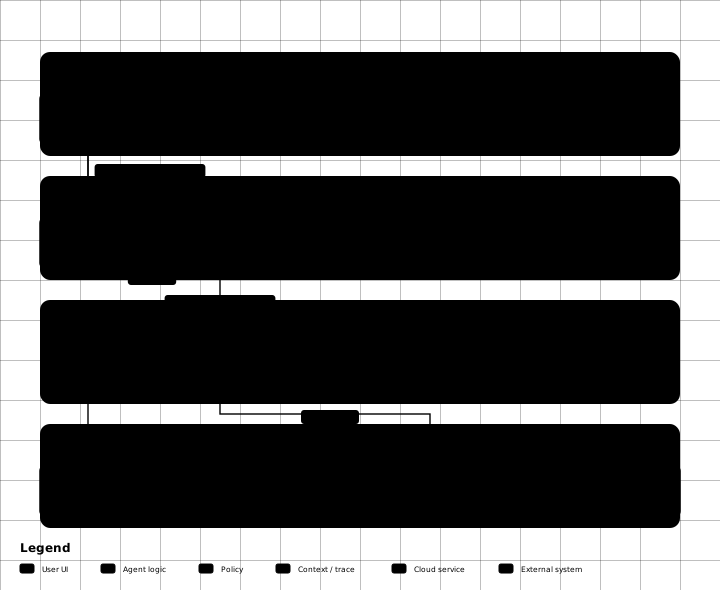
Each upper layer composes the guarantees of the layers below over typed interfaces. Products (v1 modules): HAI, Matchmaking, Chat, Calendar, Market, Social. On top of the 4 layers, 10 sector instantiations.
Each principle is a verifiable guarantee, not a statement of intent. Together they establish the composition rule (end-to-end), the sector-multiplication rule (inheritance without modification), and the honesty rule (implemented and measured = guarantee).
In production since 2016. A deliberately narrow, composable premise: an interaction is a workflow of typed questions, and the platform is a geolocated topology so that every answer lands in a well-defined context. In v2 the engine runs on two inference layers: the learned network (deterministic, no LLM) and A2A inference, which fills in the nodes that do not exist and collapses the network.
A seller offers services (type_event) with price, category, and availability; customers book (event) with attendee, date, and location. In white-label mode, any seller in the same network is visible and orderable — "others sell in my network". Payment creates a merchant in the network and looks up products by product_key.
The seller lists products (market_product) with merchant, provider, and price, and attaches offers/coupons to them. The customer builds the cart (market_item) and checks out (merchant_tx) with the network key stamped into json_data. Disputes and ratings on both sides. Merchants are bound to the network by merchant.network — "others sell in my network".
HAI fills each user's personal network by understanding what they are looking for: networks are populated automatically from the business/government/community/union website or doc, question flows are generated, and so are the cross-links between matchings from different rooms (same or different community). Matchmaking automates processes: one user intent → a purchase order in the community's dispatch channel, geolocated in the target room. Real-time chat over socket + FCM. The flows are cross-cutting (they cross rooms) and run on the two inference layers: the learned network + A2A, which fills in and collapses.
The network runs promotions in its space and users interact in a social module: news/stories with likes and comments, categories set by the admin. The social feed lives in the topology — the network publishes, the community fragments, the room receives.
All modules live in rooms of a network and are cross-cutting: a dataflow (HAI) from a guest room with pre-sales connects to one from a customer with technical support. Unlike v1 (static graphs), here there are neural networks: if the subsequent node does not exist, A2A determines the next steps, saves them, and the network collapses. The scope is finite — what one user asks in a network is saved for everyone — and LLM consumption via A2A decreases over time, never grows.
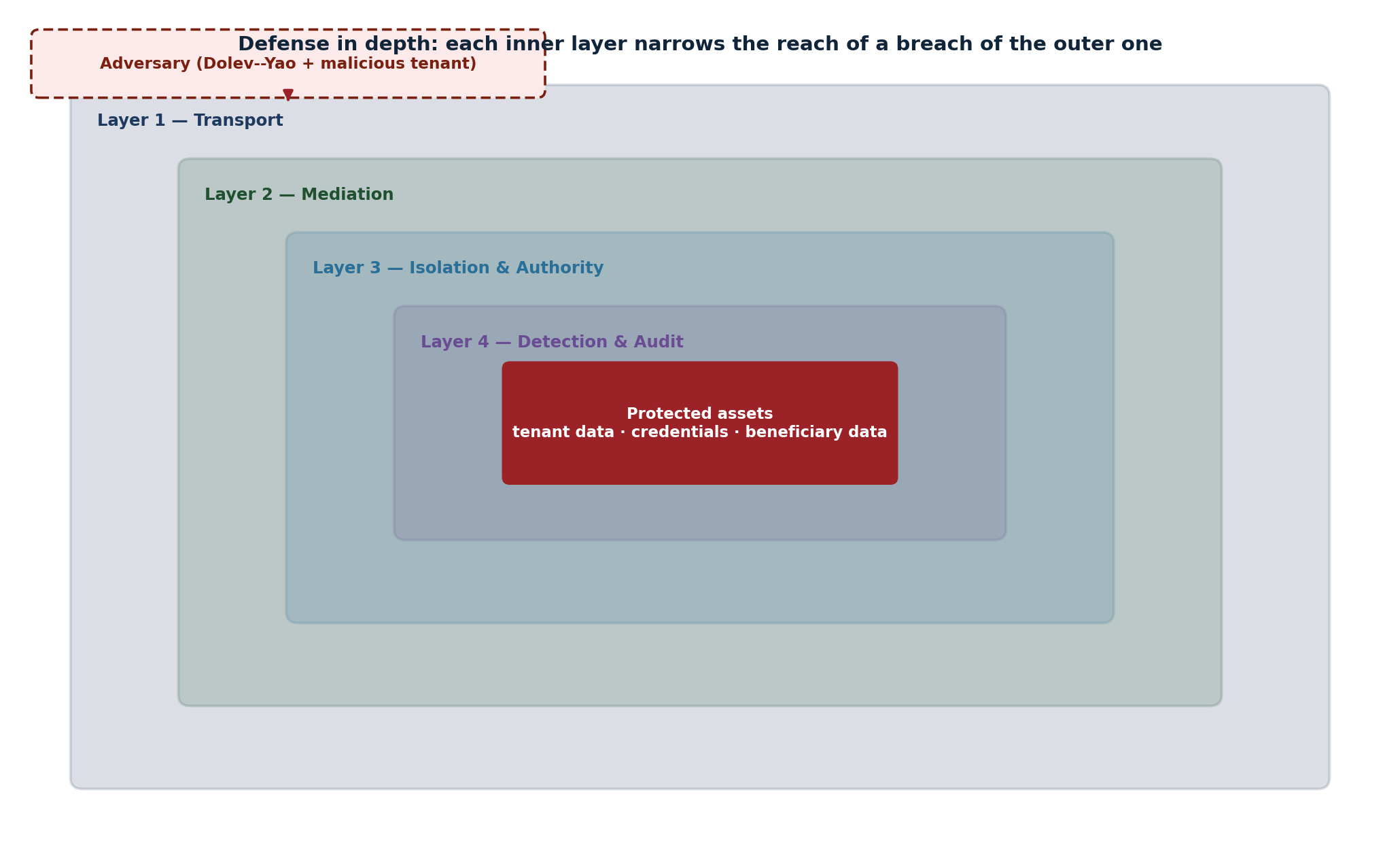
Businesses, governments, NGOs, and communities have shared a single AI substrate since 2016, keeping what is private provably private. Full mediation by the Reference Monitor; the only allowed channel = public scopes.
Networks federate over their public projections. Matchmaking operates only on public scopes within a proximity radius; deferred acceptance → stable matching.
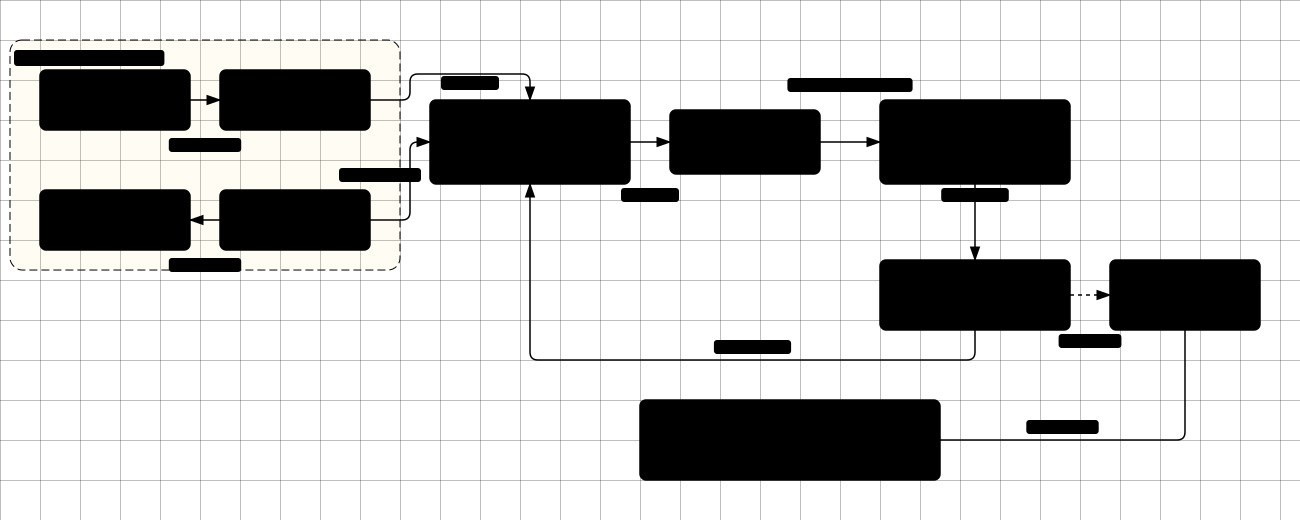
The system asks, the user answers, and the answer becomes context. Elicitation is typed (the engine computes without surprises), faithful, and efficient. It runs on layer 1 (learned network, deterministic); when a node does not exist, layer 2 (A2A) determines the steps, persists them, and the network collapses — learning in a few questions, and every new question is saved for everyone.
Some nodes require open-ended work: an LLM agent that interleaves reasoning with tool calls (ReAct-style) until it has an answer of the correct type. This is inference layer 2 (A2A): when the subsequent node does not exist in the learned network, the agent determines the next steps, persists them, and the network collapses — LLM consumption decreases over time, never grows. The envelope bounds the three failure modes.
Not guaranteed: the semantic correctness of the value. An agent can finish, stay in scope, and emit a well-typed but wrong answer — this is addressed with evaluation and a human gate, not with the envelope.
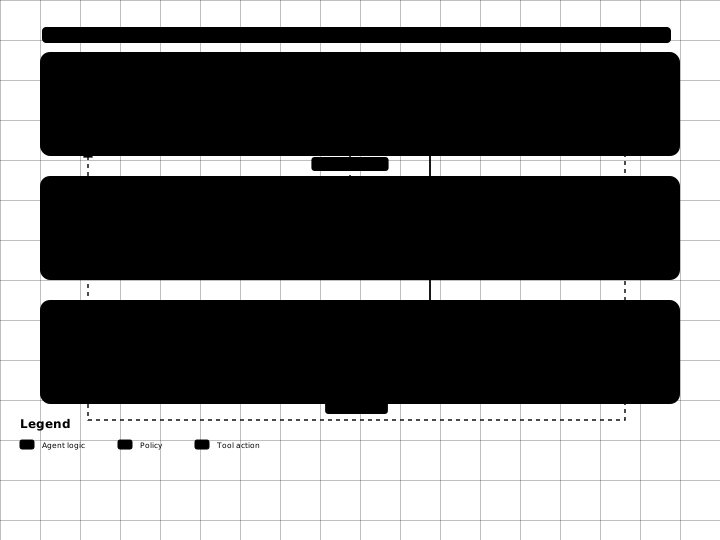
The inverse of a reactive chatbot: it initiates instead of waiting. The hard part is containment — speaking only when the expected net value of acting exceeds the value of staying silent.
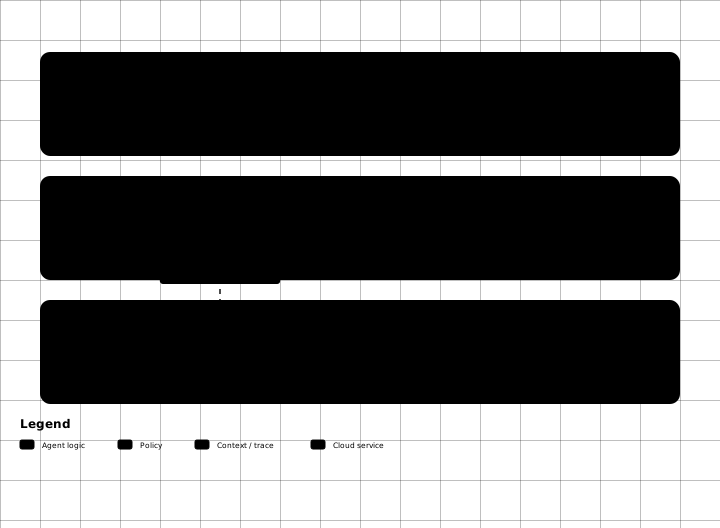
An agent that can act — spend money, contact third parties, move data — must be bounded by what the user consented to, use information only for the given purpose, and leave a trail that makes it possible to explain and undo.
Bounded delegation, contract-net allocation (announce → bid → award), and the honest limit of coordination: liveness only with partial synchrony.
Complete mediation, economy of mechanism, fail-safe defaults. Security debt conditions several of the platform's guarantees.
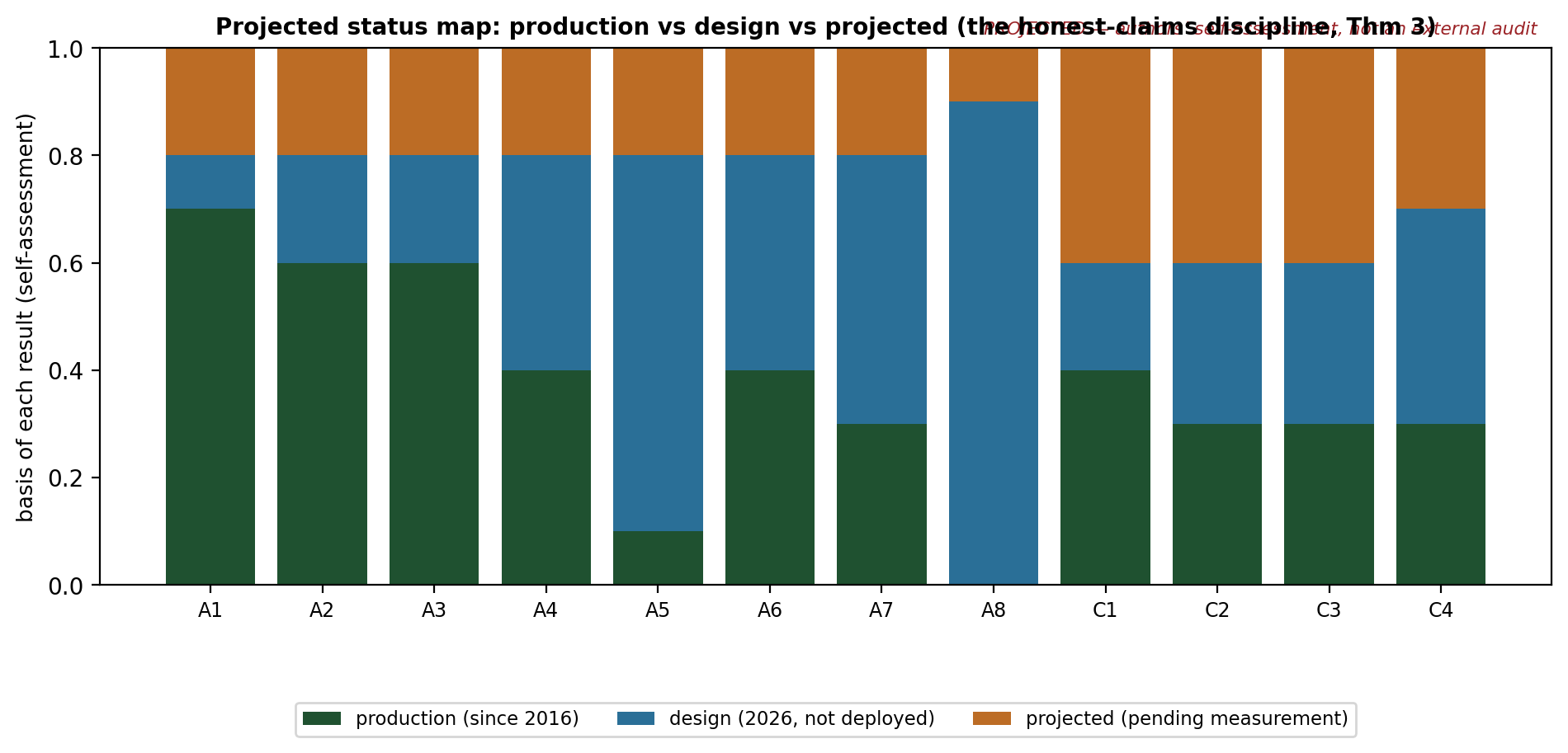
A claim C is supported in deployment iff (i) well-typed, (ii) every premise has validated evidence from the production pipeline, (iii) the premises satisfy the conclusion. Without that, C is a design claim.
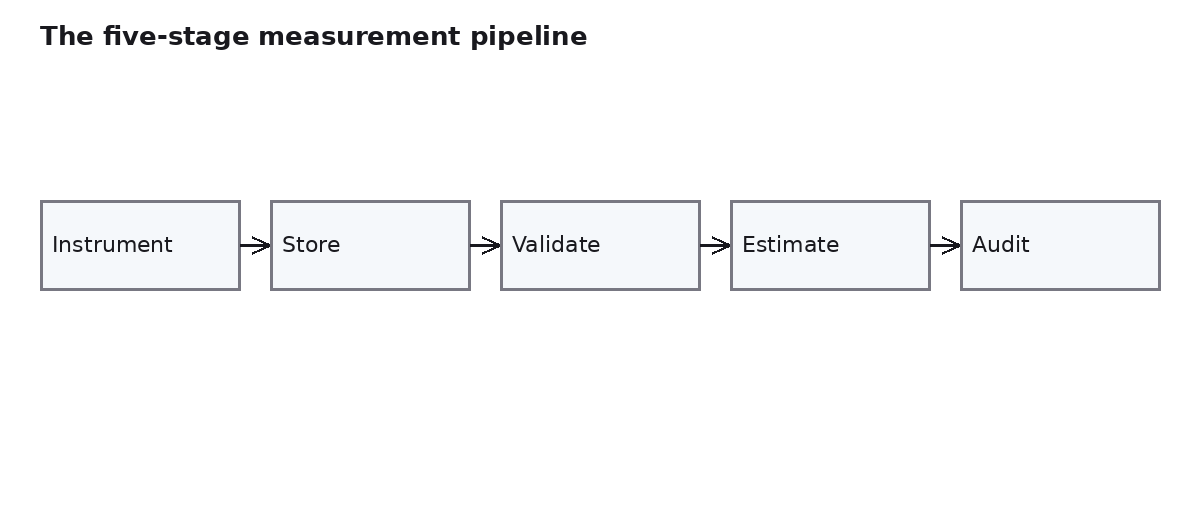
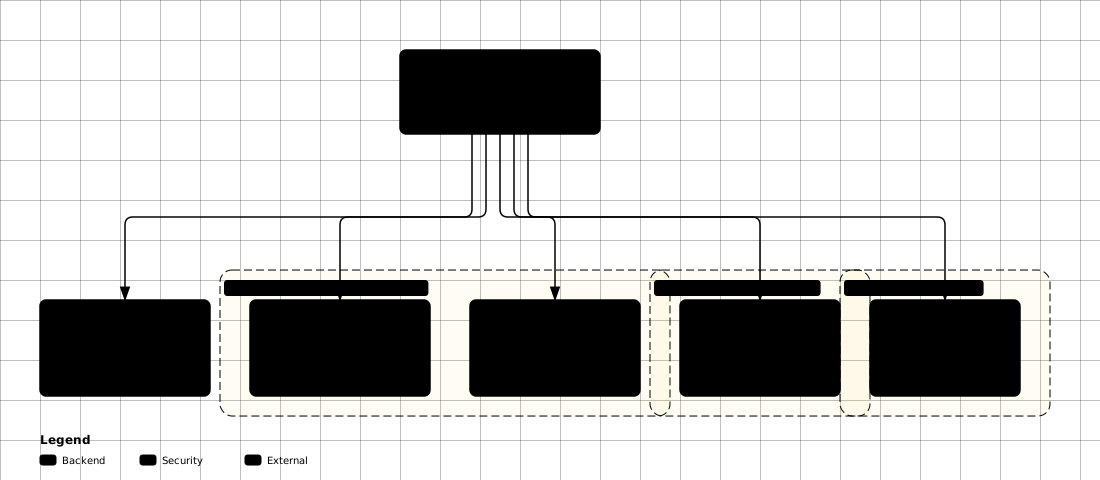
Each sector deployment instantiates layers 1–4 without modifying them and inherits their guarantees.
Exactly-once delivery, Little's law, non-interference between sites.
Equal treatment, auditability, impossibility of fairness.
Leximin triage, optimal transport, privacy for the vulnerable.
Sustained cooperation, reputation, Ostrom's principles.
Care topology with clinical privacy.
Learning paths over the topology.
Screening pipeline and the power curve.
Movement of goods, price fairness.
Explicit civil-defensive scope.
Reputation and governance over the commons.

The core mechanisms have been deployed since 2016.
Capabilities largely in 2026 design; autonomous is design across its entire scope.
Every quantitative figure is projected, pending measurement on the live platform.
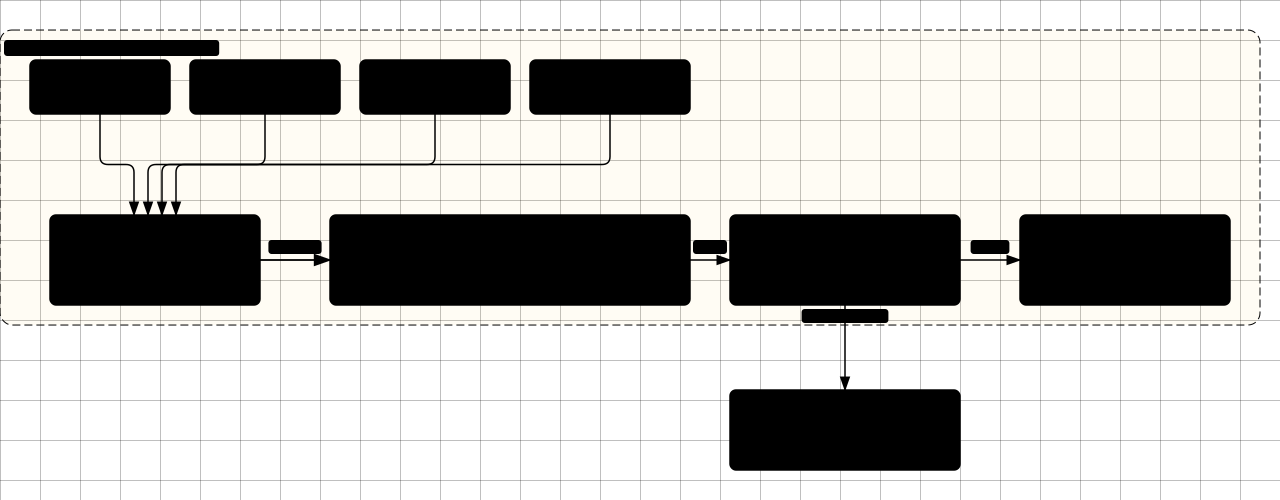
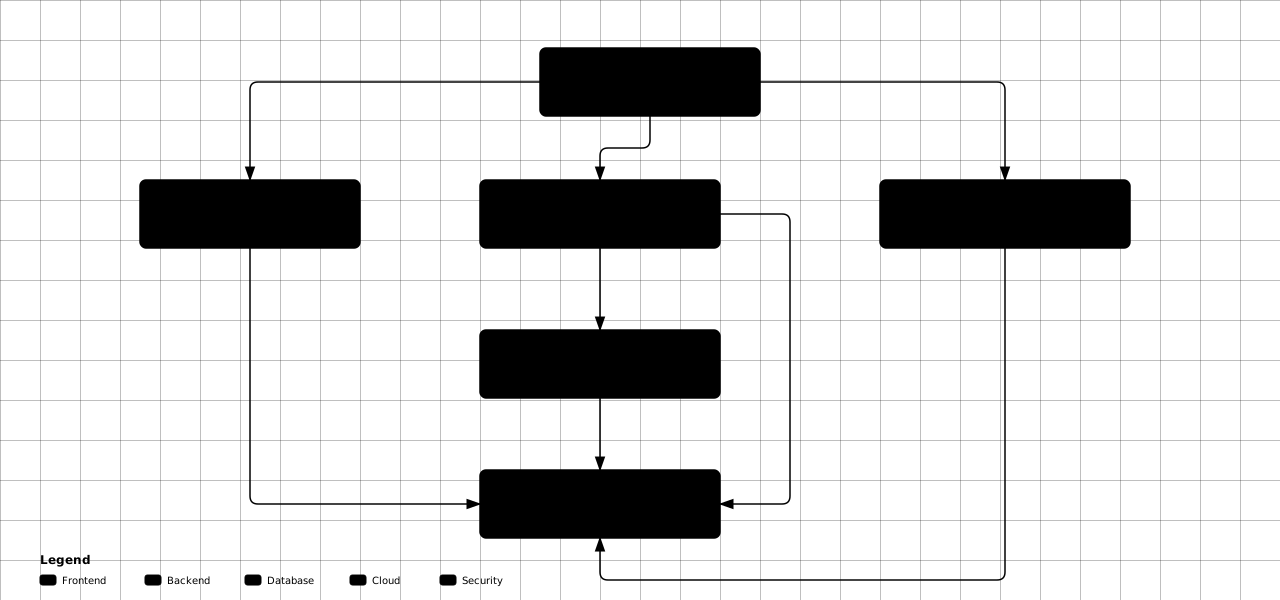
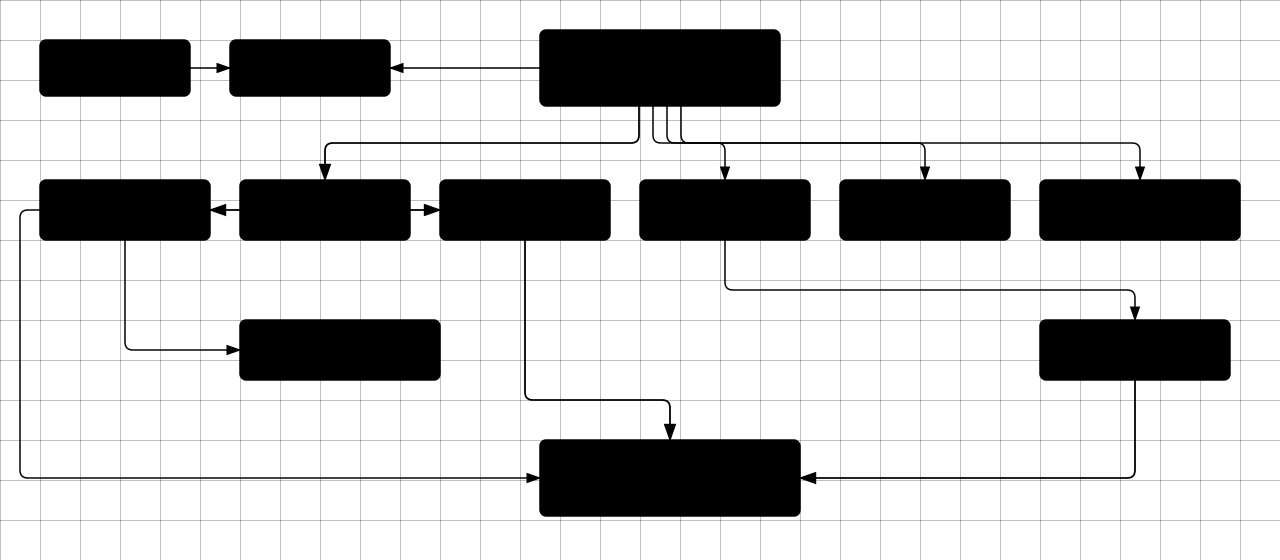
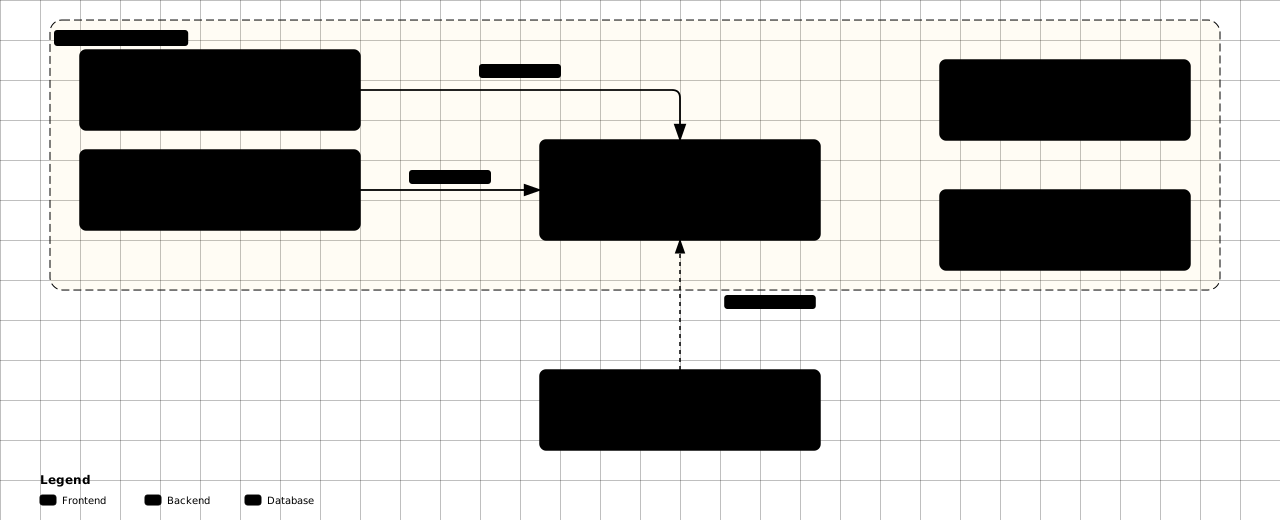
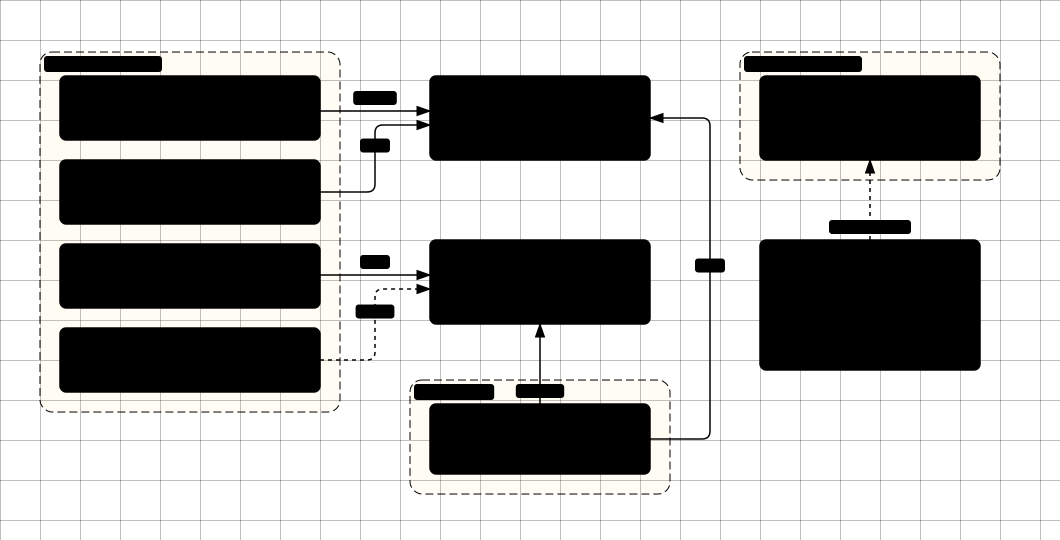
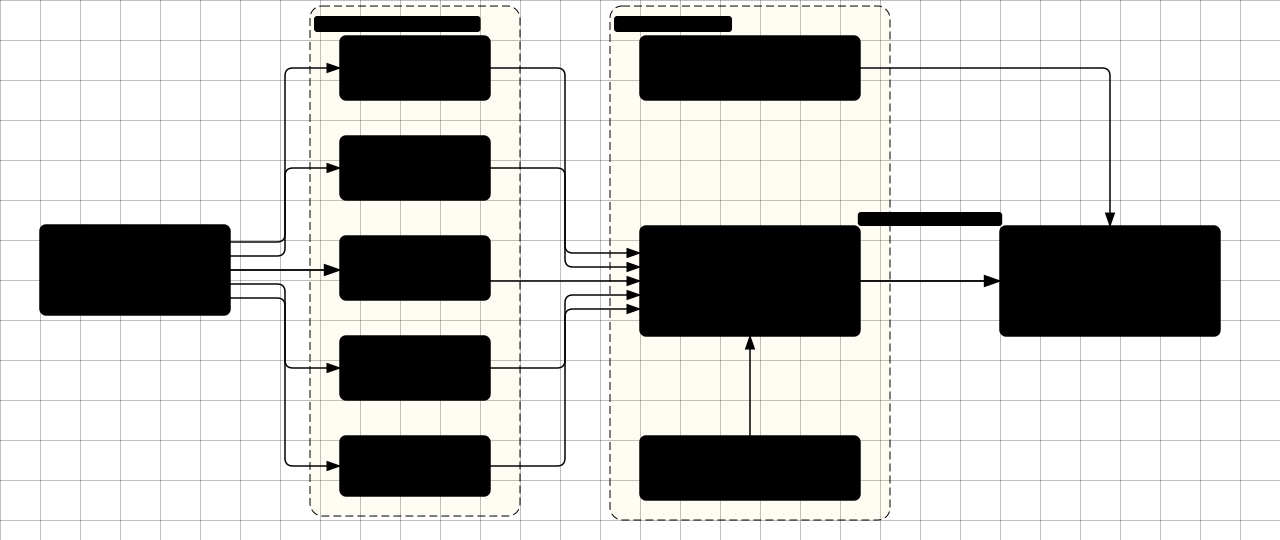
Composition root (api) → use-cases ×10 → adapters (ledger, a2a, courier) → domain (core, ZERO I/O). A single Postgres (Timescale pg17 + pgvector) for everything: ledger, events, embeddings, jobs/whisper geo-cache. SQL verified at compile time (.sqlx/ offline cache, 107 queries).
The domain (everythink-core) knows no I/O. Adapters implement ports for DB, email, A2A. Use-cases orchestrate. The composition root (everythink-api) wires everything.
Each crate has a role: composition root (api), client (sdk, cli), use-case ×10, infra-adapter (a2a, courier), ports + persistence (ledger), domain (core).
everythink-api is the hub; everything depends on core (ZERO I/O). The SDK lives inside the workspace (backend/crates/everythink-sdk) because it is coupled to core.
Note: libs/ holds SDKs in other languages (vendored refs, external code).
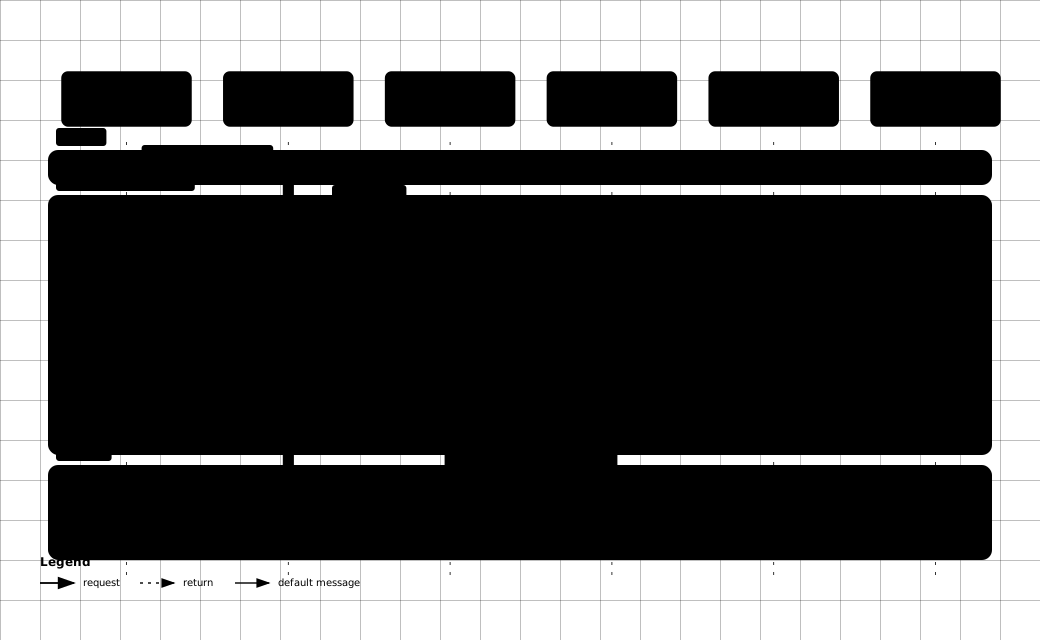
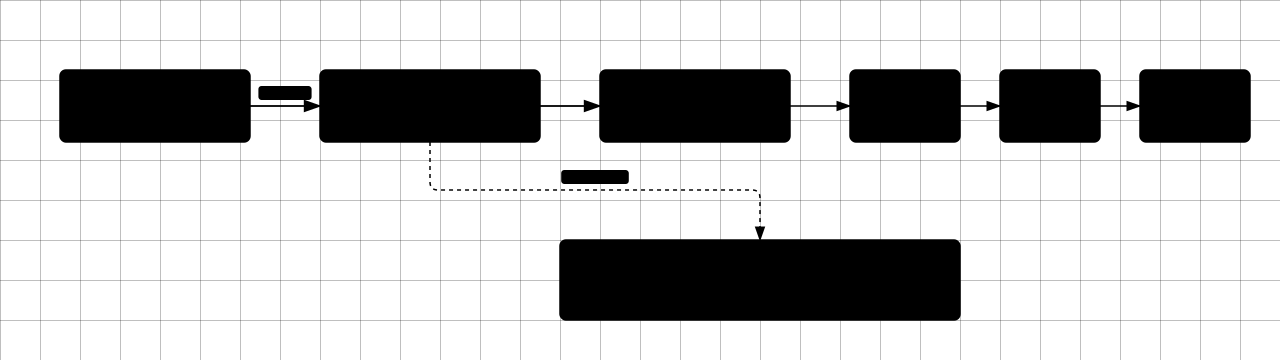
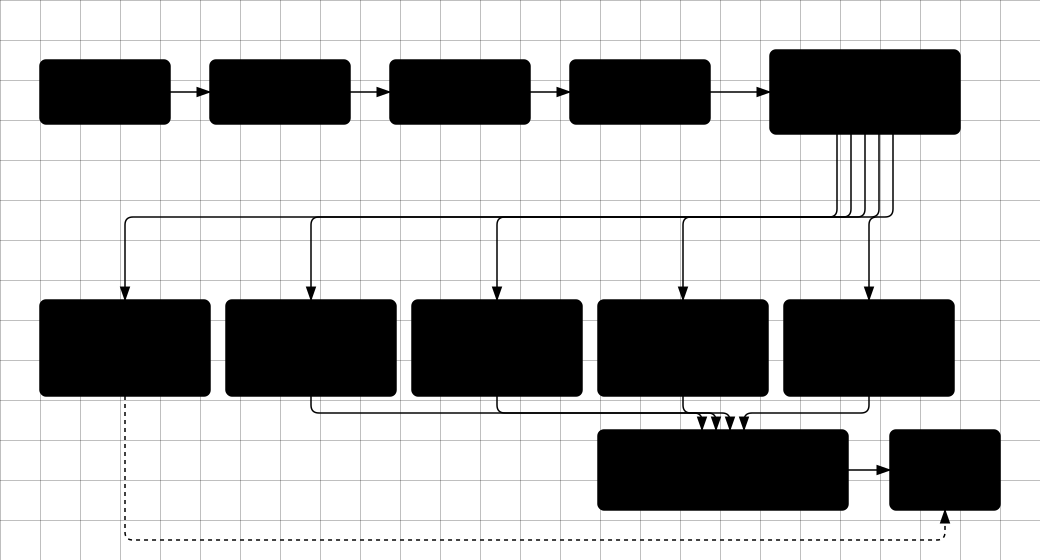
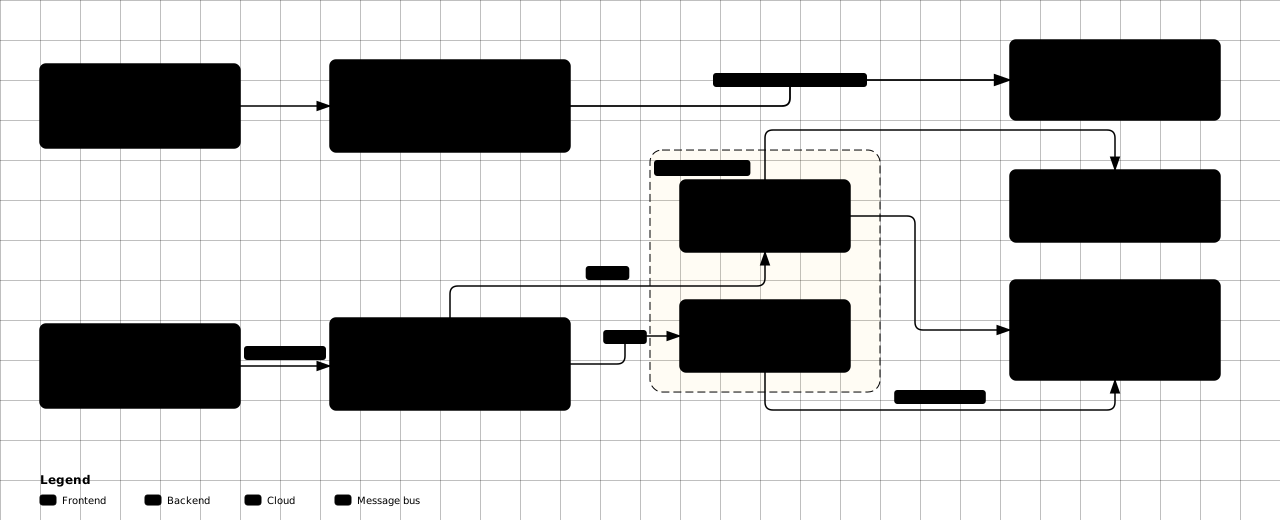
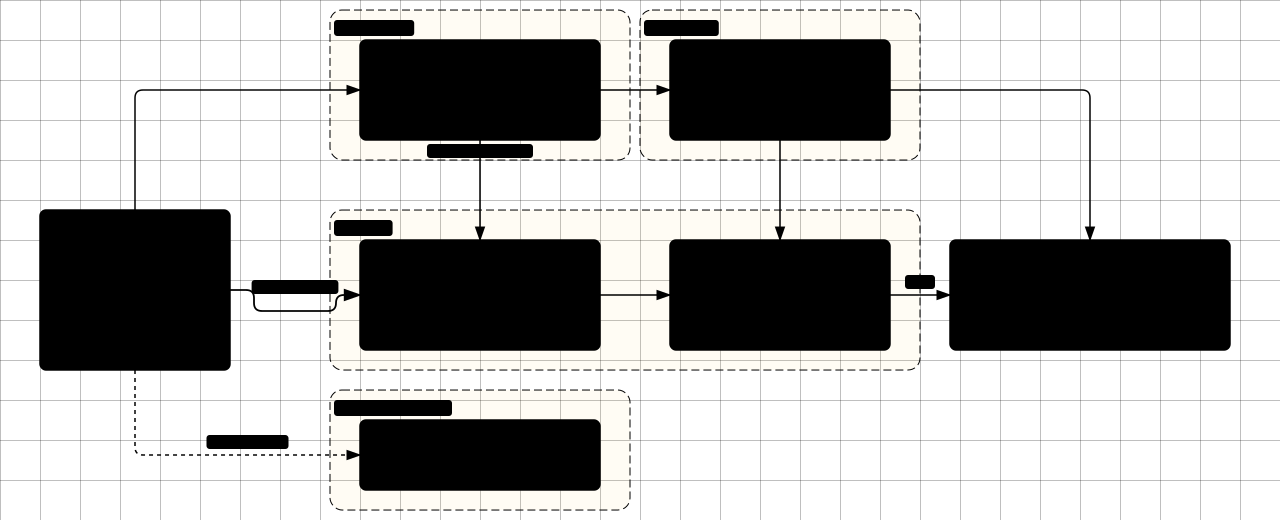
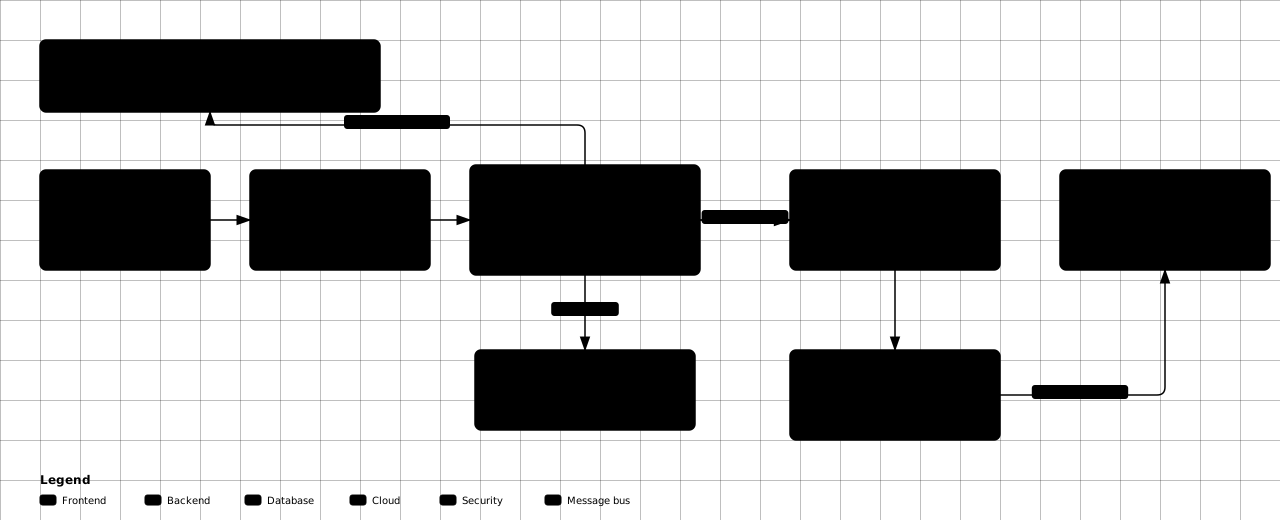
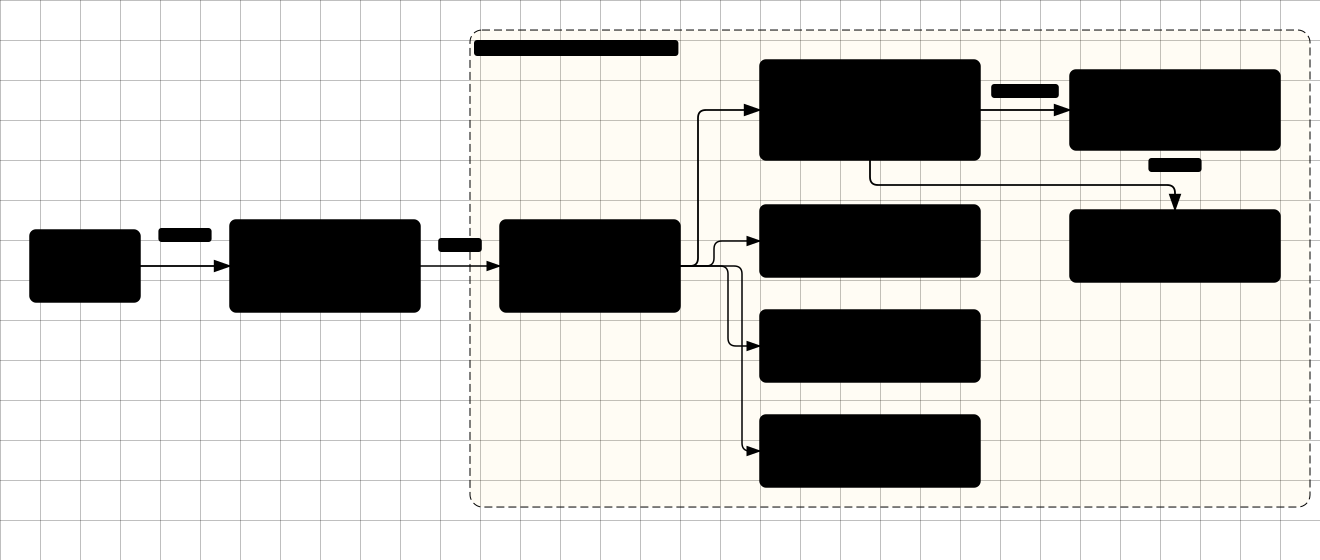
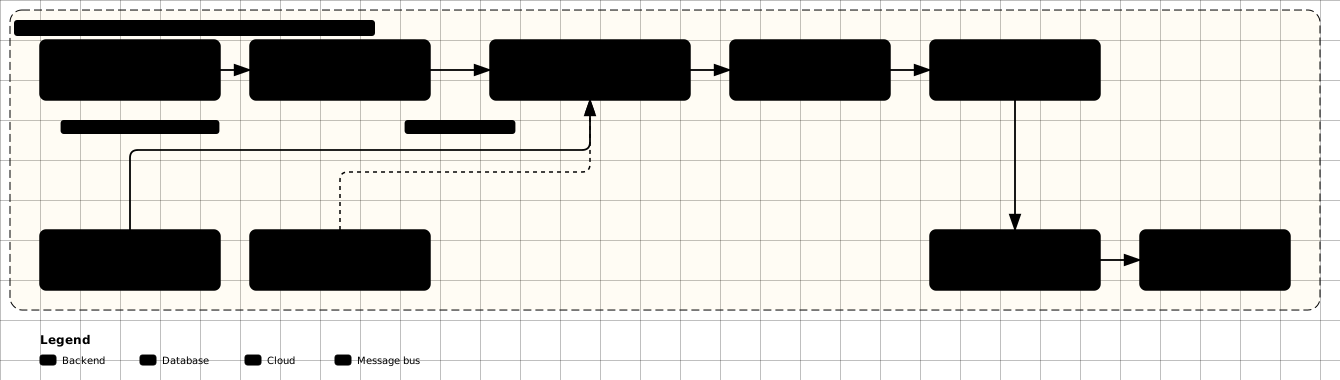
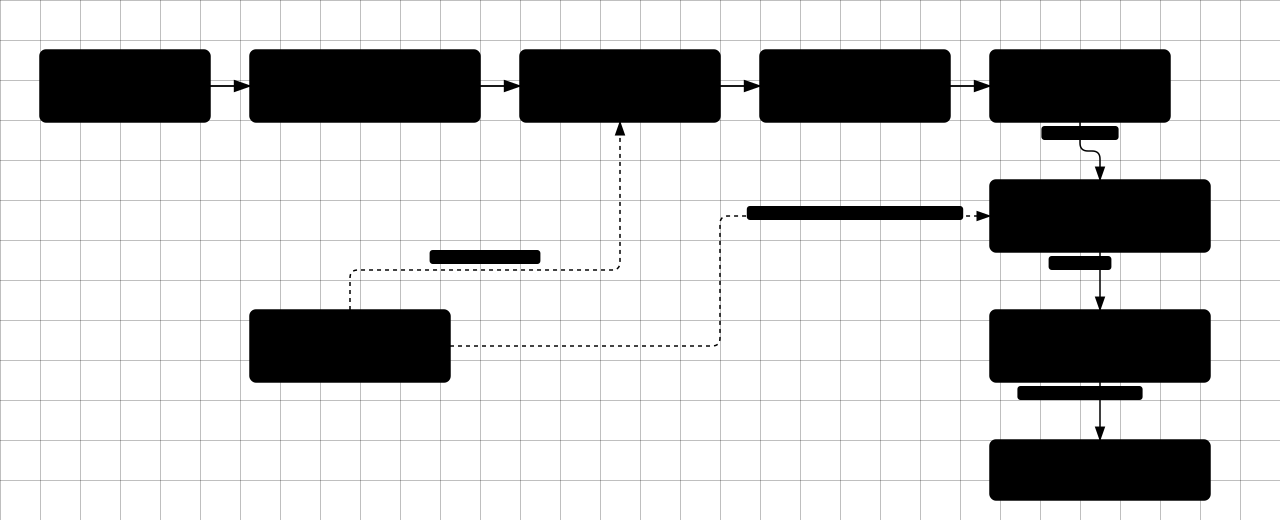
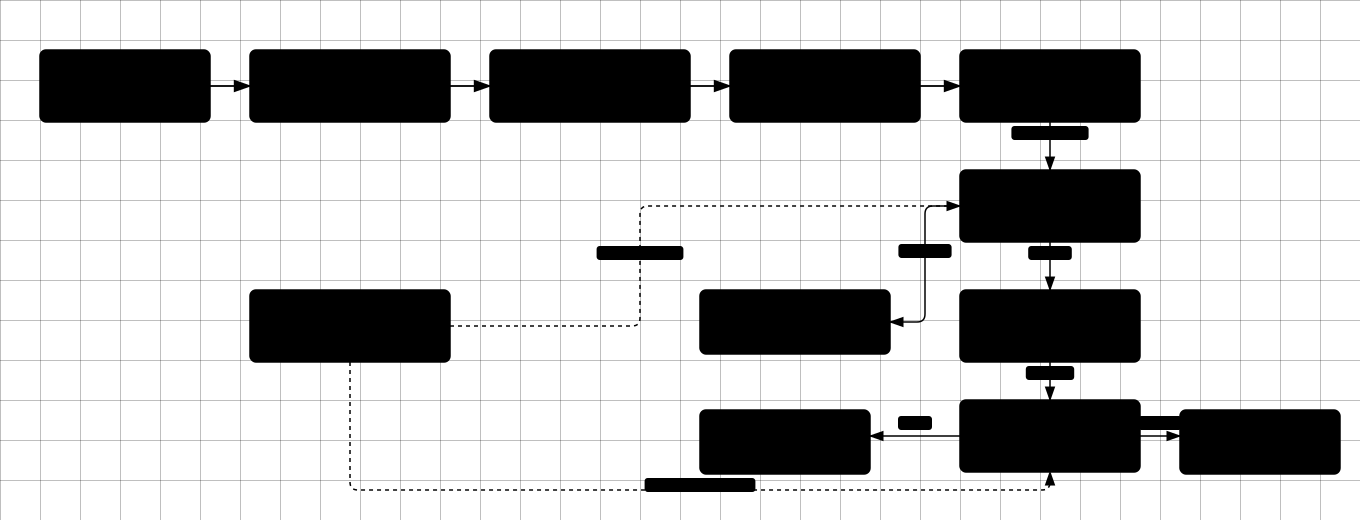
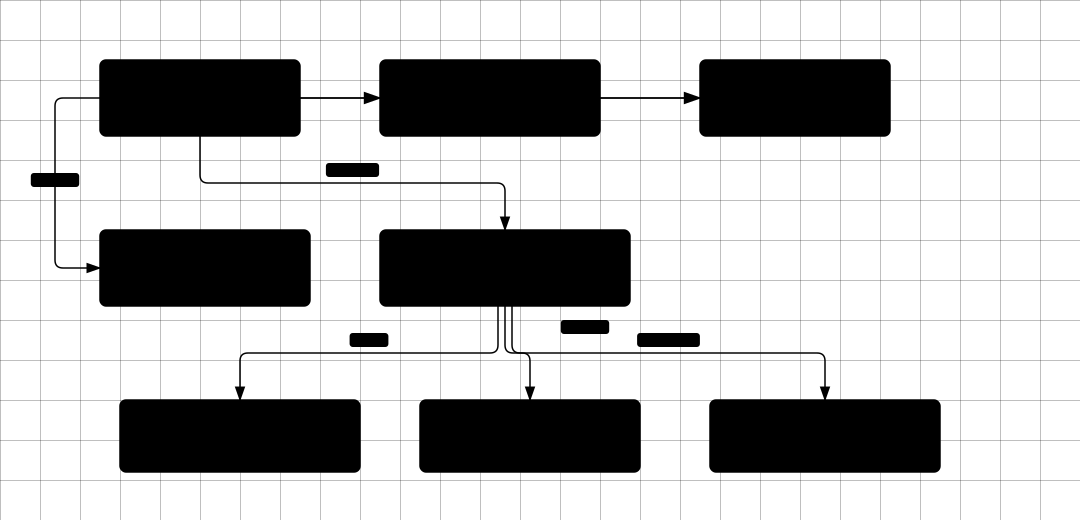
Client → api (auth + rate-limit + validate) → loom (run) → ledger (resolve profile via the repo trait) → sisters (fan out) → oracle (merge → normalized Ensemble) → ledger (persist) → 200 OK.
loom — orchestration: persists via the LoomStore port / LoomPersistence adapter. ingest — signal pipeline: processes incoming signals. scry — sentiment: the reference port SentimentReader / PgSentimentReader. eval — regression harness: continuous evaluation. warden — auth: JWT access/refresh, Google OAuth, IP-binding. whisper — HMAC-signed webhooks with exactly-once delivery.
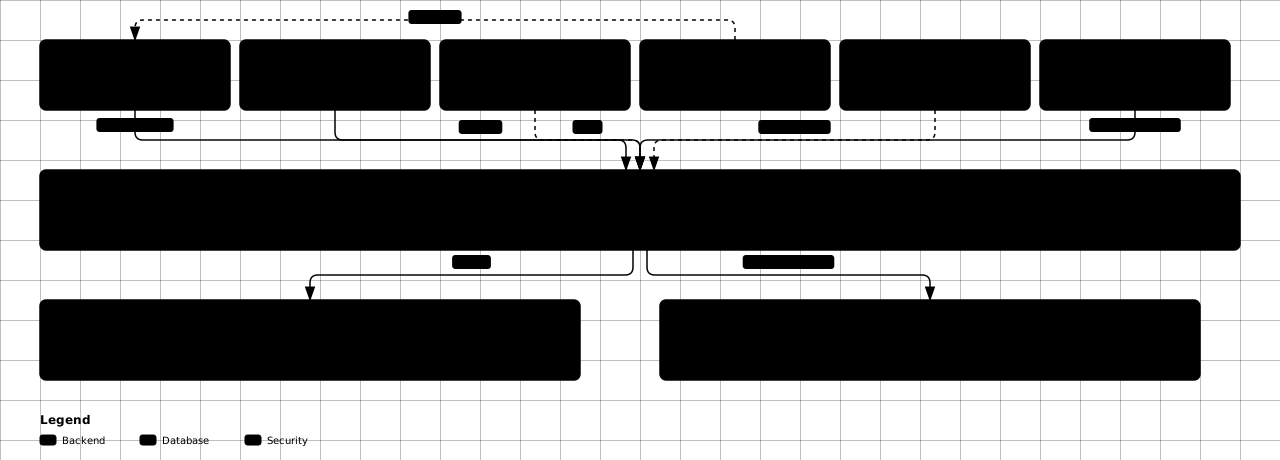
Incoming request → Trace + request_id → Timeout 60s → 408 → CORS + compression → route subtree with 5 branches.
Public (probes/register/login/refresh) · Eye-Key (HMAC, sliding 60s rate limit) · user-JWT (warden, Console) · Atlas WS (self-auth, per-user caps).
can(role, action) as a const fn: Owner → true; Profile Read/Write Self → true; explicit match on (role, action); the rest → Owner-only. AUTHORIZE in the handler → 403 on denial.
timescale/timescaledb-ha:pg17 + pgvector (vector(1024) + HNSW). One pool. Six data domains: Ledger, Simulations, Users, Embeddings, geo_signals, Jobs. Health check: pg_isready in docker-compose (service_healthy).
Repository TRAIT · Pg*Repository (all the SQL lives here) · MockRepository (tests without a DB) · AppState: Arc<dyn Repository> · use-cases call the TRAIT.
Edit .up.sql + .down.sql (paired) → just sqlx-prepare → commit .sqlx/*.json (107 queries) → build/CI with SQLX_OFFLINE=true and no live DB.
docker-compose: postgres (pg_isready, 10s/5s/10) → dragonfly (redis-cli ping, 10s/3s/10) → api (service_healthy). app/admin: health check disabled (distroless/static). CI: SQLX_OFFLINE=true with the .sqlx/ cache committed.
TideBroker: SSE with composite topics, broadcast 256, keep-alive 15s, Last-Event-ID reconnect. GeoHub: WS with DashMap[Tile → broadcast 64], viewport steering, gzip opt-in.
Persists via the LoomStore port / LoomPersistence adapter.
Processes incoming signals into the system.
The reference port SentimentReader / PgSentimentReader.
Continuous quality evaluation.
JWT access/refresh, Google OAuth, IP-binding.
Durable, exactly-once delivery.
Password hashing (bcrypt), rotating JWT access/refresh, Google OAuth, sessions with IP-binding for anomaly detection.
The user-JWT boundary for Console + Atlas WS. The token is written to localStorage('everythink:auth') after a single sign-in at /auth.
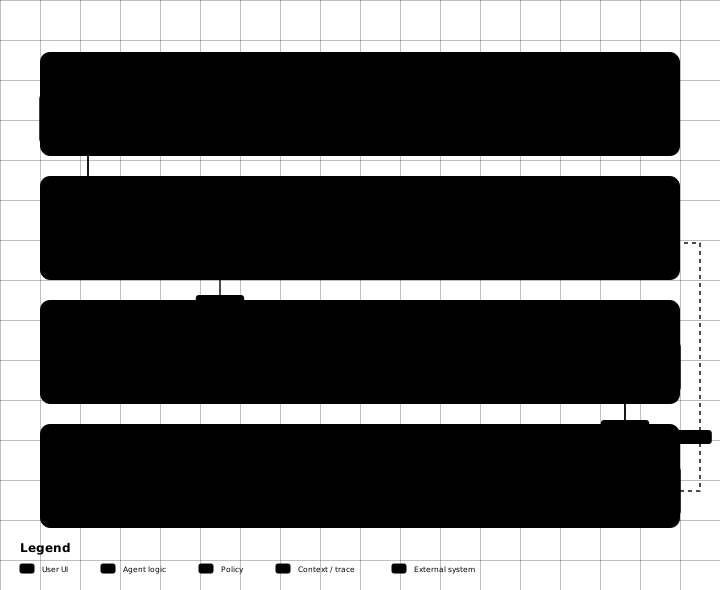
Delivery worker with the WhisperStore port / PgWhisperStore adapter. HMAC signature for payload verification at the receiver.
Exponential retries, exactly-once semantics, dead-letter queue for persistent failures.
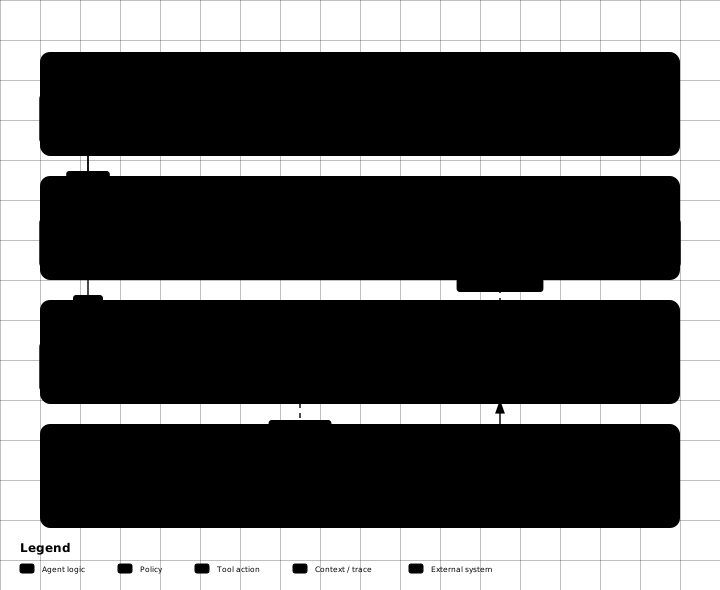
JSON-RPC over HTTP with an agent task envelope, status polling, and result retrieval. Lets a Sister move out-of-process without changing callers.
Brevo adapter or a logging no-op. Template rendering + delivery tracking for system notifications.
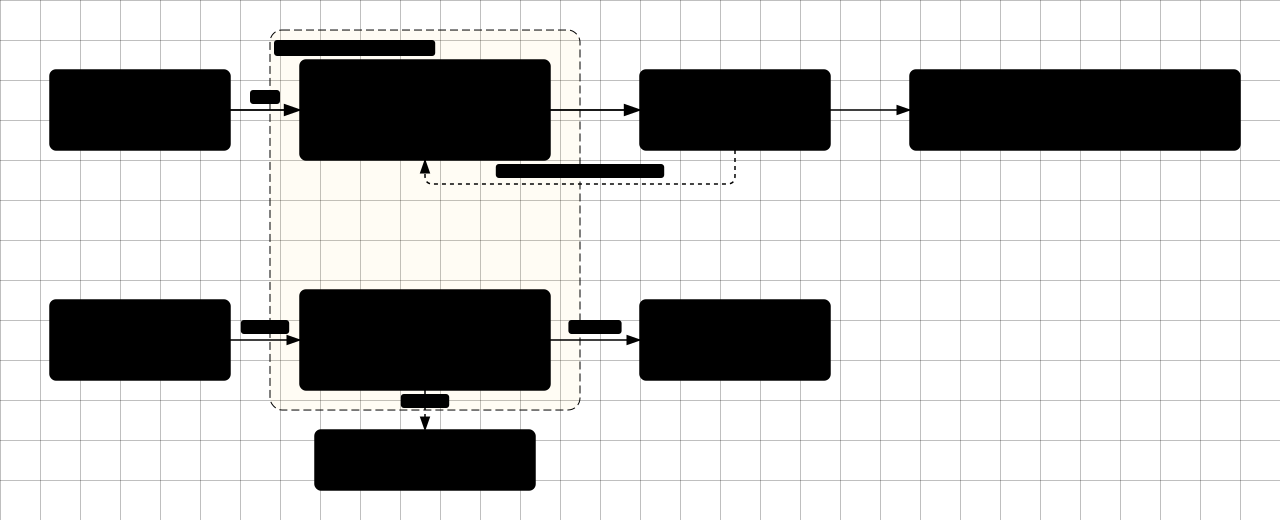
new-key bootstrap-mints Eye Keys: generates a local Ed25519 pair, fingerprint → Postgres, plaintext shown once in memory, HMAC for auth.
backend/crates/everythink-sdk: coupled to everythink-core, depends only on core (ZERO I/O), for domain consumers.
In exactly one place: everythink-oracle::ensemble. sum(prob) ≈ 1.0, scenarios sorted descending, entropy in nats.
Only the HMAC + fingerprint go to Postgres. The plaintext is shown once, in memory.
They return SisterOutput; the Loom persists. A clear separation between generation and storage.
Every .up.sql has its .down.sql. just migrate-add NAME creates both.
Tests use mocks. Depend on the trait, never on the concrete adapter.
Never a concrete Pg* outside its adapter. Slice-owned ports for private tables.
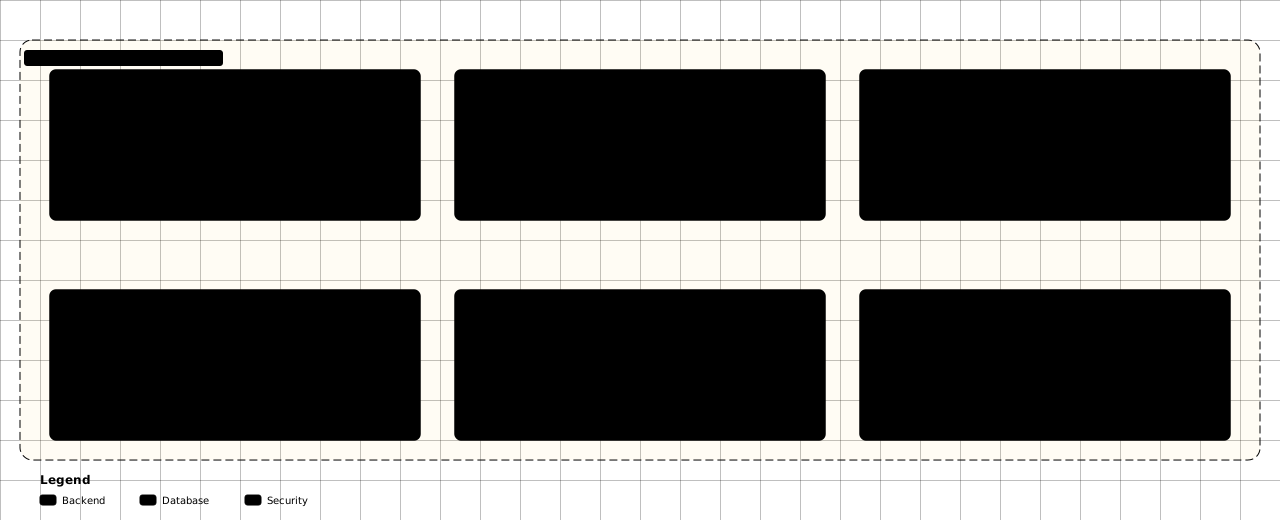
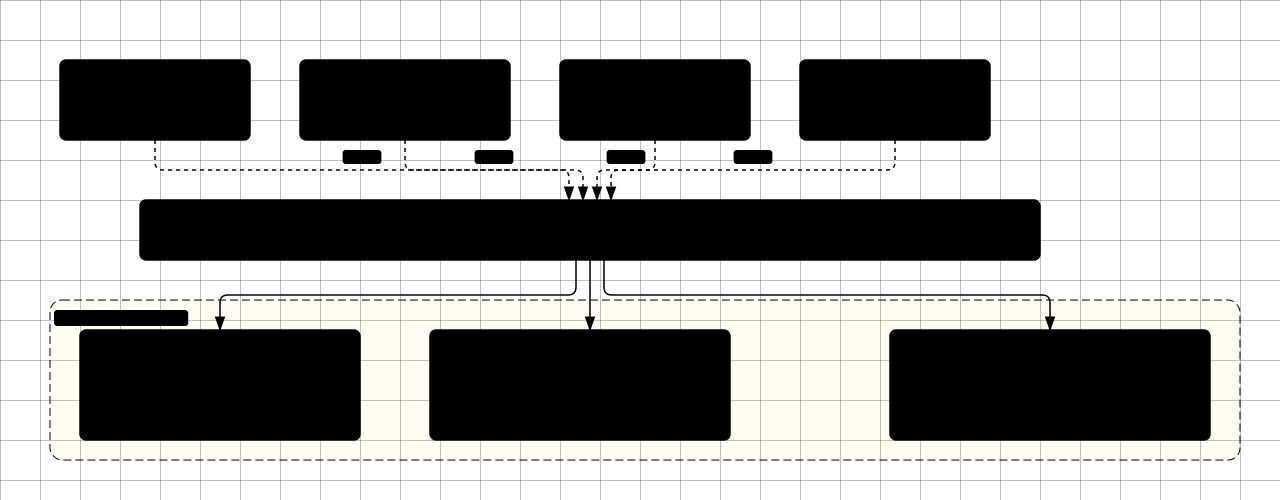
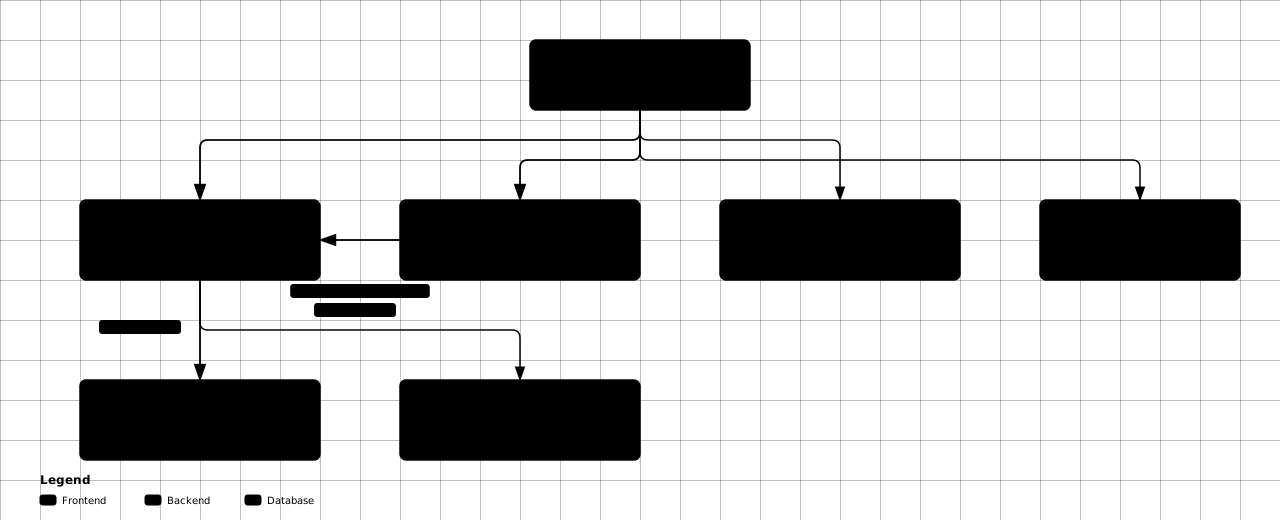
web (:3000) · app (:3001) · admin (:3002) · mobile (Expo). Packages: types, sdk-core + facades, domain, ui, auth, api-client, telemetry, config.
Actors: end user (guest → authenticated) · developer (Eye-Key) · admin/operator (staff). Surfaces: web/app/admin/mobile. Backend API (REST + SSE under /api/v1).
4 apps + SDK layer (6 facades) + services (4) + design system + tooling + types (leaf). Use the zoom to explore.
sdk-core (HttpClient, consumeSSE, TokenProvider) · sdk-guest · sdk-auth · sdk-atlas · sdk-eye · sdk-admin.
domain (mappers) · telemetry (outbox) · api-client (legacy) · auth (NextAuth v5 + RBAC) · ui (kit + tokens) · config (eslint presets) · types (Zod, leaf).
Endpoints live ONLY in the facades; sdk-core validates every response with Zod against @everythink/types; an SdkError tree with ContractViolation on drift.
Screen (View) → View-model hook → feature.repository.ts (THE only door to the SDK). ESLint boundary no-restricted-imports (INV-1). FSD layers: shared → entities → features → widgets → app.
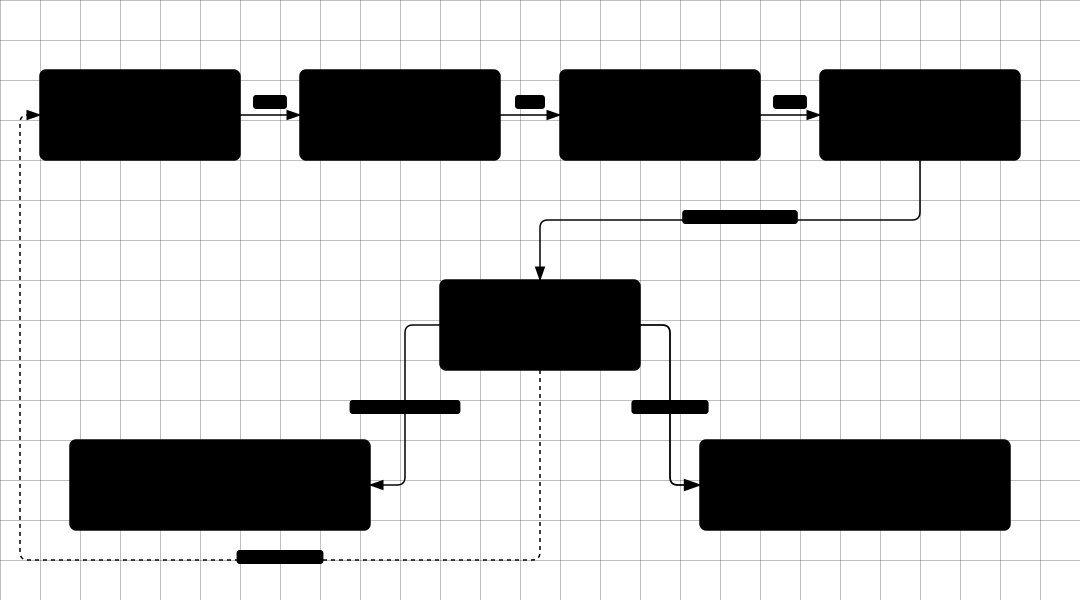
apps/web /auth (one origin) → httpOnly cookie 'everythink_at' → token in memory + localStorage seed → EverythinkAuthGuard + resolveMe (GET /api/v1/auth/me) → role-based gate.
3 layers: (1) per-app auth.ts allowedRoles → (2) middleware → (3) can() in the UI + server actions. Mirrors everythink_core::rbac from the backend.
A single source of truth for design: CSS tokens in :root, semantic mapping via @theme (Tailwind v4), and NativeWind for mobile with mirrored tokens. The apps consume semantic components (bg-accent, text-foreground, font-display/mono), never raw hexes. Cosmic-purple palette: --gold: #d9ab5c, --violet: #9d7df5, --emerald: #10B981.
Wire types are defined once in @everythink/types with Zod. The SDK validates every backend response (z.parse(response)); an invalid payload throws ApiError, never a crash. Components never see raw JSON: *.repository.ts parses, @everythink/domain maps DTO → model, and the view-model exposes typed state to the View.
React Native with expo-router (file-based routing) and NativeWind (Tailwind for RN). The theme system mirrors the web design-system tokens (tailwind.config.js + src/theme/index.ts). It consumes sdk-guest, sdk-auth, sdk-atlas, domain, and telemetry. Excluded from web CI: --filter=!@everythink/mobile.
Rules verifiable by ESLint + TypeScript, not conventions: (1) INV-1: only *.repository.ts imports an SDK (no-restricted-imports); (2) FSD layers: imports flow DOWN (shared → entities → features → widgets → app), cross-feature only through the public barrel; (3) Shared sign-in: web + app share localStorage('everythink:auth') + resolveMe(); (4) 3-layer RBAC: auth.ts allowedRoles → middleware → can(role, action) in the UI + server actions.
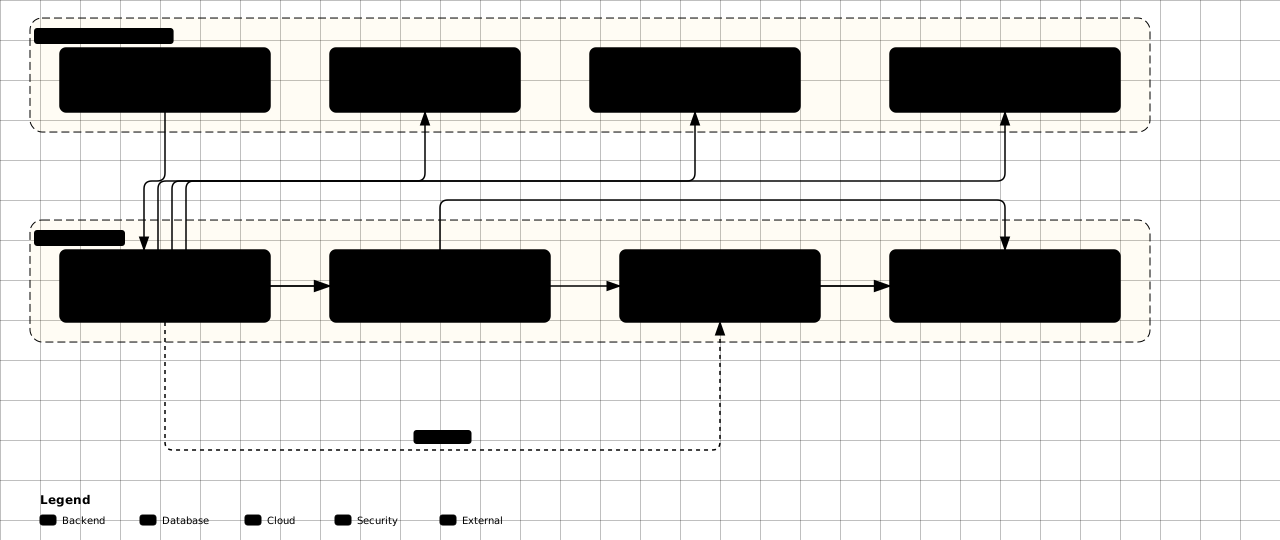
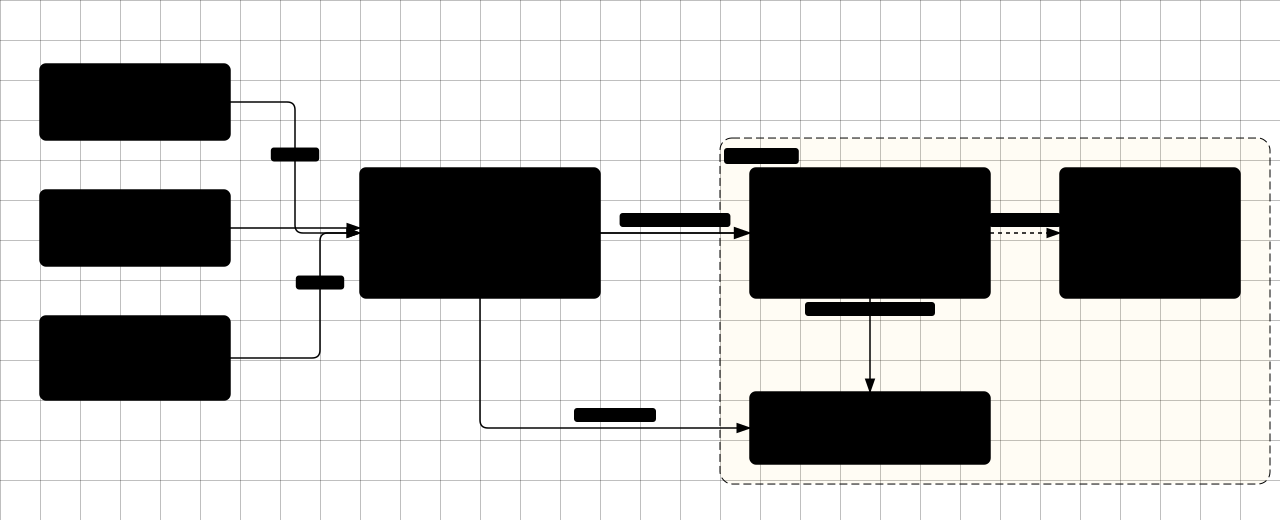
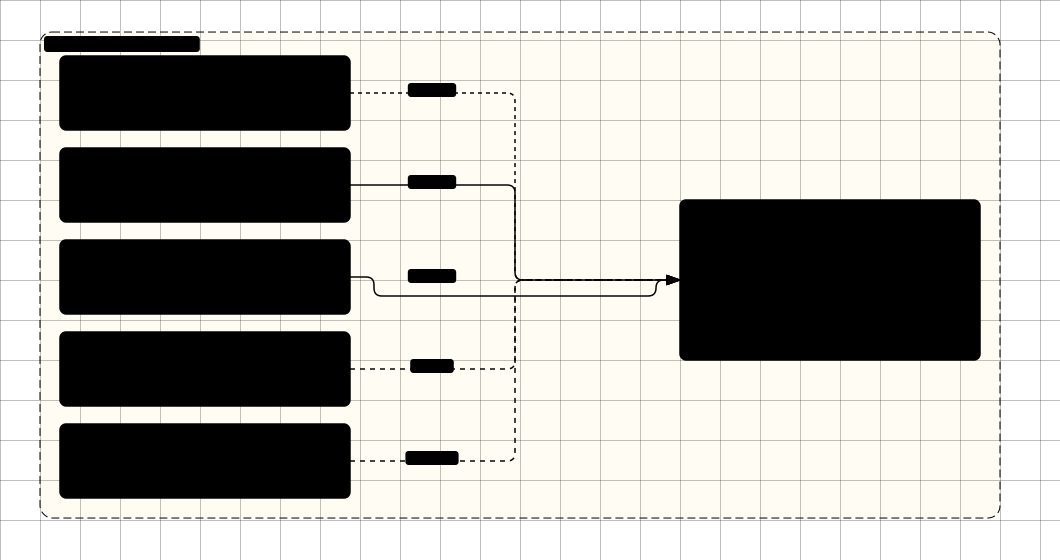
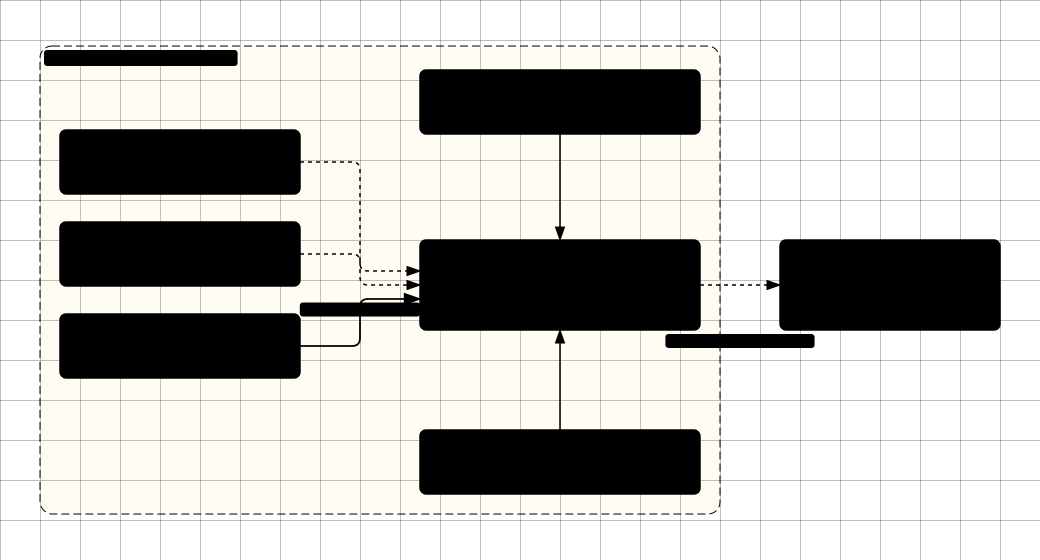
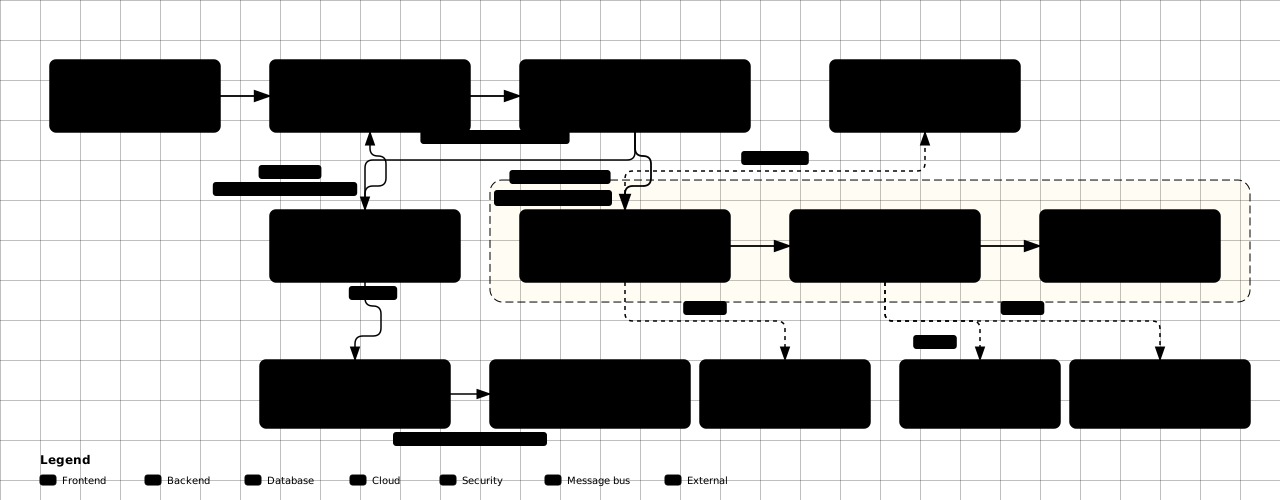
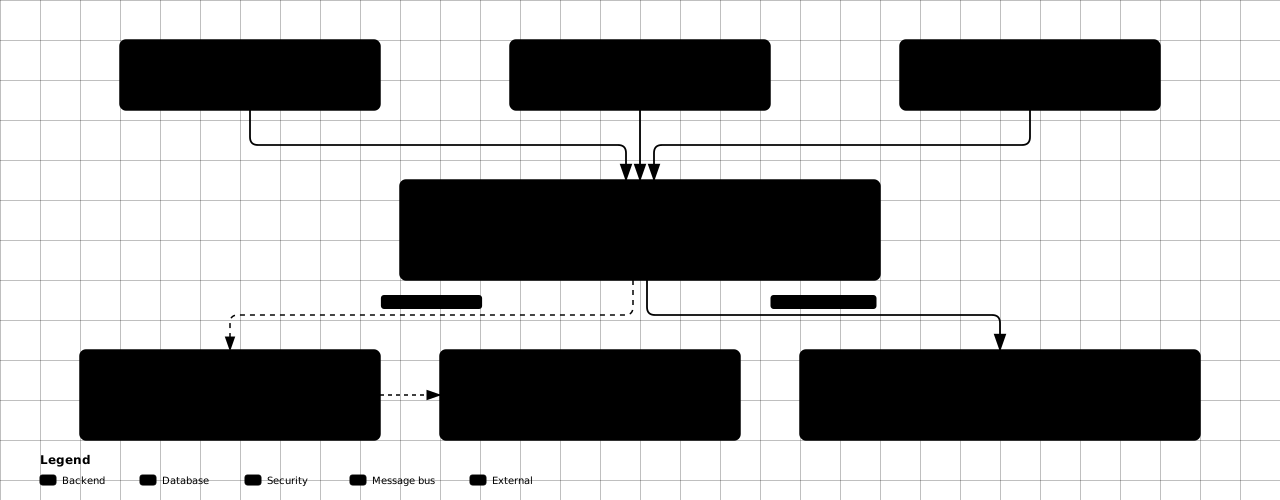
ALB → nginx :80 → api/web/app/admin + postgres + dragonfly. A single Postgres for everything (TimescaleDB pg17 + pgvector). Dragonfly for cache, jobs, and SSE fan-out.
ALB (TLS) → nginx :80 → api (:18081, migrations on startup) · web (Next standalone) · app/admin (static distroless) · postgres (timescale/timescaledb-ha:pg17 + pgvector) · dragonfly (Redis-compatible). 7 services: postgres · dragonfly · api · web · app · admin · nginx.
nginx :80 is the only internal entry point. It routes /api/v1/* → api:18081, / → web:3000, /app/* → static, /admin/* → static. web talks to api via EVERYTHINK_API_INTERNAL_URL (http://api:18081). api depends on postgres and dragonfly with condition: service_healthy.
docker-compose.prod.yml mounts backend/.env via env_file on the api and web services. api holds all the secrets (JWT_SECRET, EYE_KEY_HMAC_SECRET, GOOGLE_CLIENT_ID, BREVO_API_KEY). web only receives NEXT_PUBLIC_* variables — it never holds BREVO_API_KEY. app/admin are static distroless with no secrets in the build.
Two deploy paths: preprod deploys directly from the working tree (without going through main); prod requires a merge to main and the integrity gate. The rule is critical: do NOT use the deploy workflow for preprod, because it pulls :latest from main and overwrites the direct deploy.
A 2-tier pipeline: the PR tier runs only what is affected (backend: ci-affected-crates.sh; frontend: turbo --affected), the main tier runs full integrity (complete backend + frontend/mobile + E2E + security). main stays green and deployable.
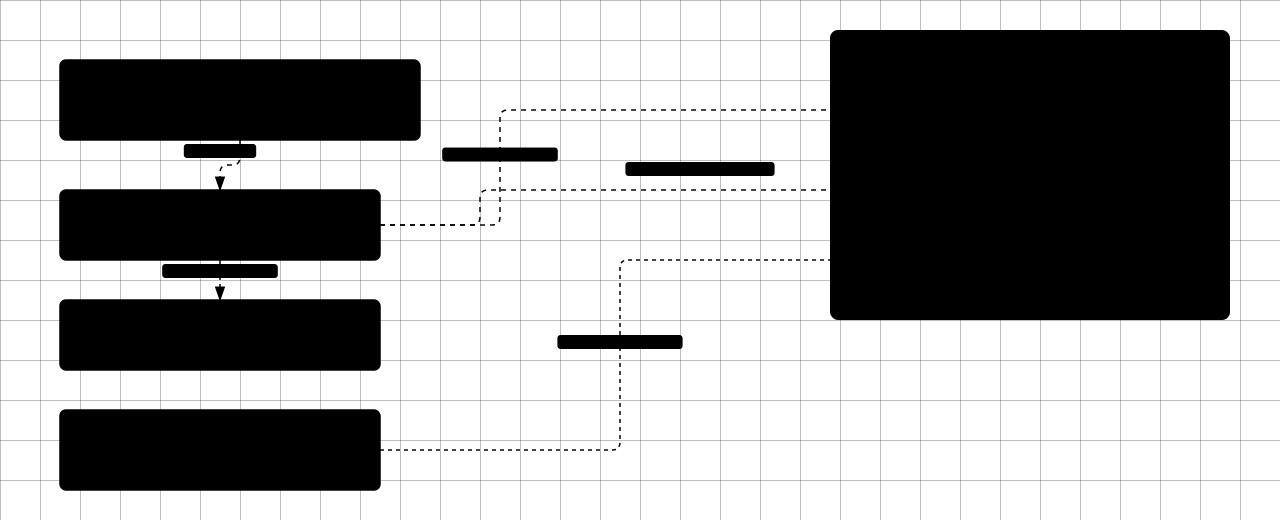
Roadmap direction for v2. None of the following is an existing capability. Flow: the operator generates a local Ed25519 pair → only the fingerprint goes to the controller (BYOK) → self-hosted node → ledger anchoring → federation over public projections only → network DAO.
| Phase | Item | Depends on | Deliverable |
|---|---|---|---|
| 1 | BYOK | — | crate everythink-byok · table node_keys · Ed25519 identity + webhooks · controller holds fingerprints only |
| 2 | Ledger anchoring | Phase 1 | crate everythink-anchor · table anchor_commitments · notarization job · chain = operator decision |
| 3 | Federated self-hosted nodes | Phases 1–2 | node Docker image (postgres, dragonfly, api, web, app, admin, nginx) · federation protocol |
| 4 | Per-network DAO | Phase 2 | crate everythink-dao · network_proposals/network_votes/provenance_log append-only |
| 5 | Wallet + governance | — | crate everythink-wallet · wallets/network_memberships · employee/entrepreneur/self-employed personas |
Each phase: a .up.sql + .down.sql migration, an offline .sqlx cache refresh, TDD (80%+), green just ci. The organization-type structure is implemented (5-value OrgKind, DB CHECK, onboarding of 7 legal structures).
Architecture reference for notarizing Postgres ledger hash commitments: Solana v0.8.13 (Yakovenko) — PoH as a cryptographic clock, PoS consensus with bonds/slashing, PoRep for storage. Chain selection is an explicit operator decision; this is a reference, not an implementation.
From vision to implementation: topology and the HAI engine (production since 2016), a Rust backend with 17 hexagonal crates, a Next.js 16 frontend with FSD/MVVM, Postgres + pgvector, 2-tier CI/CD, deployment. Boundary note: the forecasting engine (sisters/oracle/loom) is another product by the same author, in-workspace.
aap-human-agent template — the human-agent interaction patterns package (escalation, delegation, proxy agents, authority boundaries). Agents execute the download; authority remains with the human.
Everythink Studio · Carlos Matias Baglieri 2026 · docs/architecture.md · backend/README.md · frontend/README.md · COLLABORATION.md · cto.md